
Historic Vote Enshrines New Security Vision
Brazzaville’s Upper House has unanimously adopted a landmark bill redefining the missions, structure and daily procedures of Congo-Brazzaville’s National Gendarmerie, replacing a two-decade-old ordinance and meeting the government’s pledge to align internal security with present-day threats.
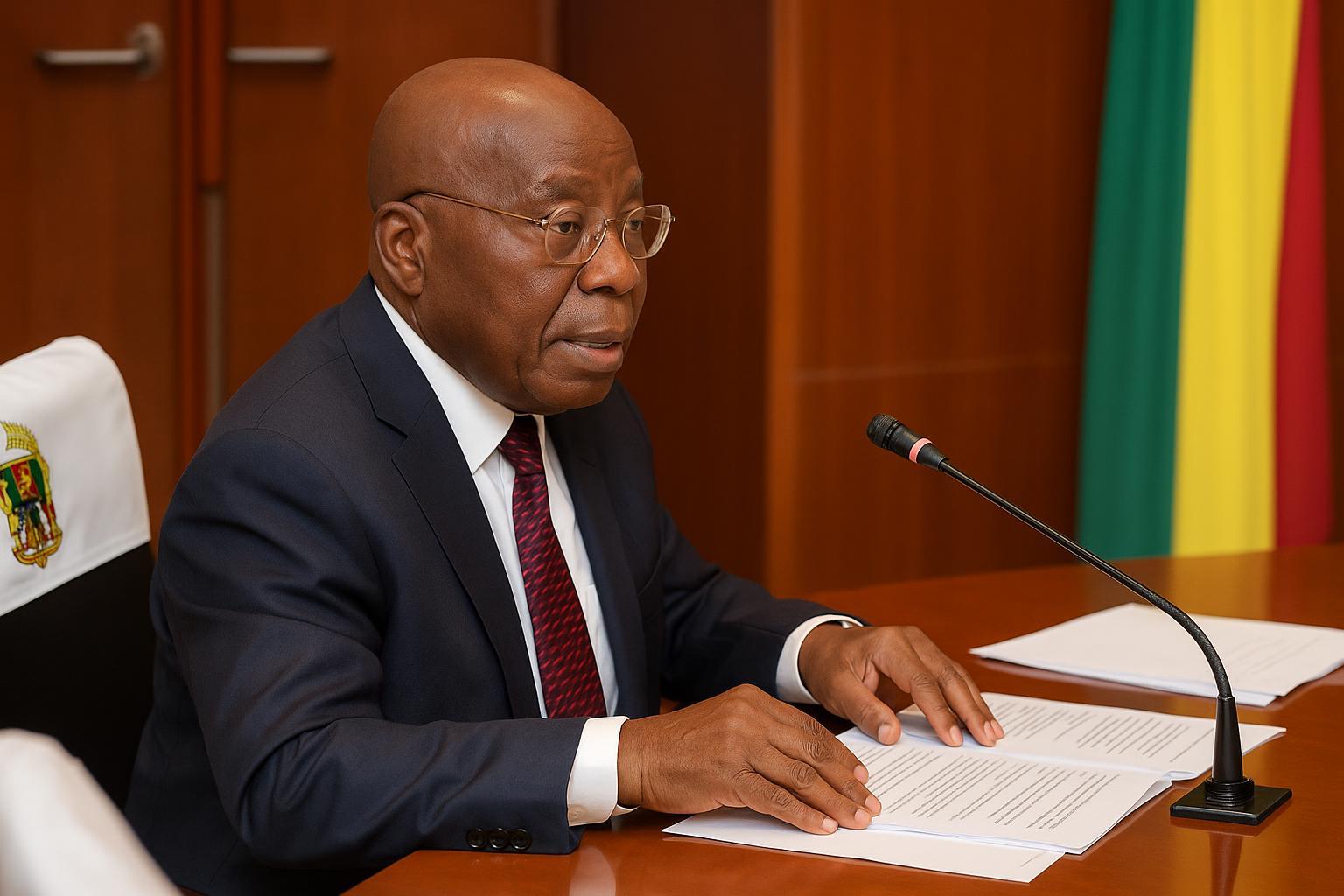
The vote, held 13 August during the sixth ordinary session of the fourth legislature, followed a detailed presentation by Interior and Decentralisation Minister Raymond Zéphirin Mboulou, who said the revised legal architecture “will give commanders the tools they need to act swiftly, transparently and proportionately”.
Senators from all political tendencies praised the text, arguing that an updated framework was overdue as organised crime networks exploit digital technology, border porosity and demographic concentration along the Congo River corridor, themes also highlighted in the latest UN Office on Drugs and Crime brief for Central Africa.
Key Differences Between Police and Gendarmerie
Answering senators, the minister stressed the gendarmerie guards rural zones, strategic infrastructure and military facilities, whereas the National Police secures dense urban centres, ports and airports, an allocation already practised in France and other Central African states.
Mboulou emphasised what he called “complementary sovereignty”, noting that mixed patrols and shared intelligence databases now allow both forces to intervene seamlessly along arterial roads linking Brazzaville, Pointe-Noire and the northern mining towns.
The Senate’s Defence and Security committee added a clause mandating biannual coordination reviews, assuring lawmakers that any duplication of tasks will be detected early and corrected without disrupting field operations.
Training Pipeline to Cement Territorial Clarity
Several senators inquired about the timeline for full territorial separation. The minister said purpose-built curricula at the gendarmerie’s Owando academy and the police school in Doulabale will graduate 1 200 officers by 2025, each trained with geospatial mapping and human-rights modules financed through a French cooperation grant.
Experts from the Kofi Annan International Peacekeeping Training Centre, contacted by phone, welcomed the focus on doctrine, arguing that “clear jurisdiction lines reduce response time during crises and give citizens a transparent point of contact”.
The bill also introduces dedicated cyber units within each regional gendarmerie legion, a measure already piloted around Oyo and Sibiti where mobile-money scams had spiked eight percent in 2022, according to the Telecommunications Regulatory Agency.
Command Appointments Under Constitutional Rules
Debate then turned to command appointments. Article 9 of the draft reserves corps leadership for general officers, mirroring Constitution article 25. Yet an interpretive paragraph reminds that the President may, “in exceptional circumstances”, elevate a senior colonel to interim command.
Constitutional lawyer Professor Florent Itsouhou assessed the wording as “guard-rails rather than loopholes”, telling this magazine that civil control over the armed forces remains intact because promotions still require countersignature by the Prime Minister and publication in the official gazette.
Senate President Pierre Ngolo, closing the debate, praised the clause for allowing flexibility during emergencies such as pandemics or cross-border insurgencies, while ensuring meritocracy is preserved within the career ladder.
International Context and Future Outlook
Observers in Brazzaville note the reform coincides with regional developments. In June, Cameroon unveiled similar changes, and Gabon launched a digital gendarmerie platform. Central African security analyst Carine Ebina believes Congo’s timing “positions the country as a norm-setter inside ECCAS”, boosting multilateral cooperation.
The African Development Bank’s 2023 economic outlook attributes up to 1.2 percent of GDP losses each year to insecurity across Central Africa. Economists interviewed argue that a professional, trusted gendarmerie can help attract agribusiness and ecotourism investors to rural departments such as Kouilou and Sangha.
Civil-society groups, including the Collective for Electoral Peace, said they will monitor field implementation, especially the roll-out of community-liaison officers who should provide quarterly feedback sessions in villages. The Interior Ministry confirmed these sessions will be opened to local media for transparency.
Funding appears secured. The 2024 draft finance bill allocates 82 billion CFA francs to the gendarmerie, a six-percent rise. A senior Treasury official said external partners such as the European Union will co-finance forensic labs and radio-network upgrades.
Presidential promulgation is expected before Independence Day on 15 August 2024. Once published, implementing decrees will follow within ninety days, setting the stage for a phased nationwide deployment that authorities insist will reinforce public confidence and support Congo-Brazzaville’s ongoing quest for sustainable stability.
An Institute for Security Studies survey shows nations updating gendarmerie laws gained 15 percent in public-safety perception. Analysts add that progress depends on pairing legal change with community outreach and timely court proceedings.
Local business chambers already sense momentum. “Reliable highway policing cuts freight costs and reduces informal checkpoints,” explained Jean-Aimé Moumpika, vice-chair of the Pointe-Noire logistics union, pointing to trial corridors where truck turnaround time dropped from forty-eight to thirty-three hours in six months.
For residents like farmer Clarisse Tchicaya in Loudima, the reform “means night patrols will finally reach our cassava fields”, a sentiment mirrored in social-media surveys that show rising optimism over rural safety.