
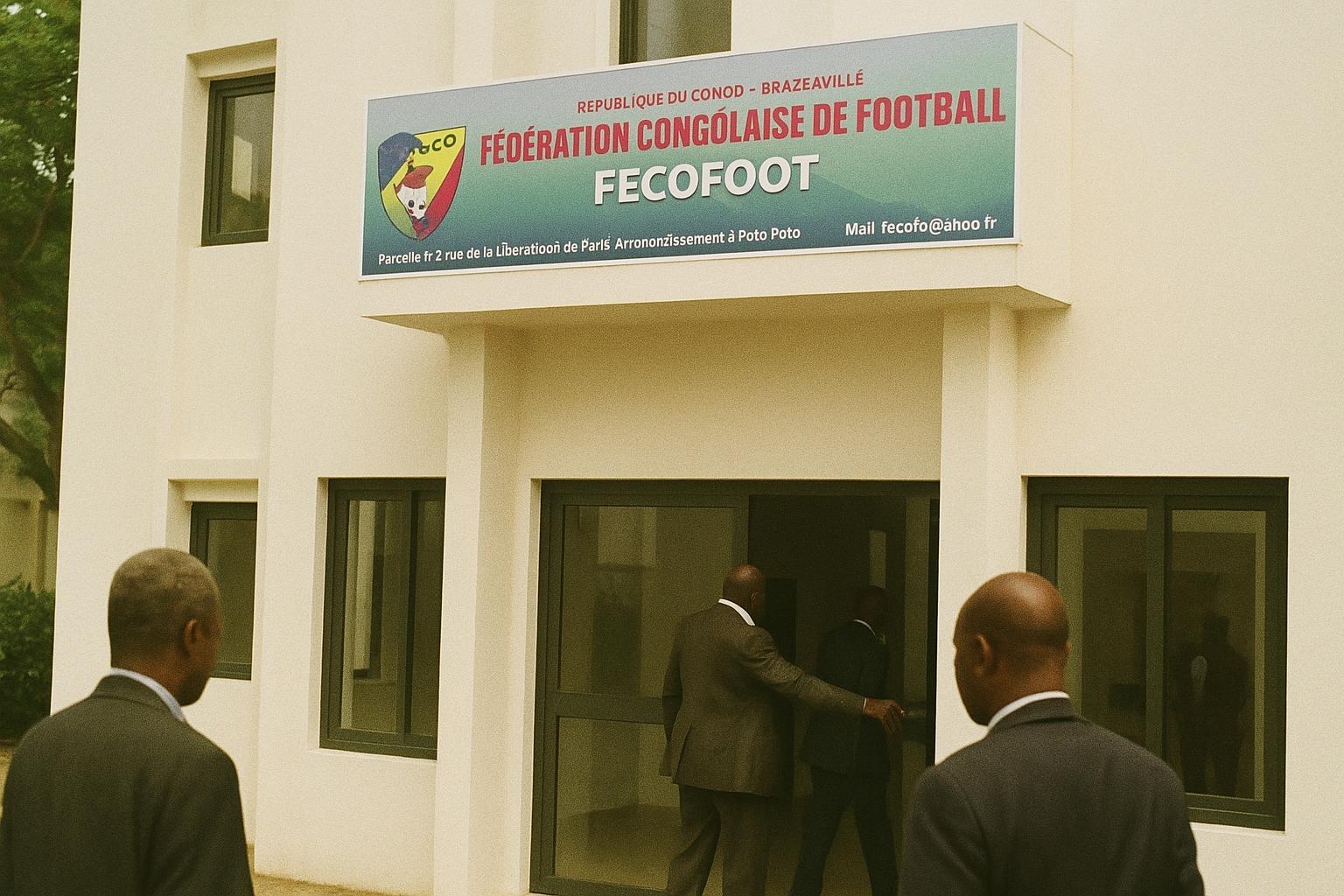
Federation’s Surprise Move Shakes CHAN Plans
On 28 July the Congolese Football Federation, known locally as Fécofoot, released a short but striking statement: it would not nominate any of its officials to the national delegation for the 2025 African Nations Championship, scheduled for 2-30 August in Tanzania, Uganda and Kenya.
According to the communiqué, the Ministry of Sports declined several names submitted by the federation’s executive committee. Fécofoot argued that the exclusion undermines the principle, enshrined in CAF statutes, that a member association must be represented by personnel it has duly appointed.
Government Clarifies Selection Criteria
Contacted by public broadcaster Radio Congo, a senior ministry adviser said the list was adjusted to “broaden expertise, streamline logistics and respect budget ceilings.” He insisted that no individual was barred on personal grounds and that the government values partnership with the federation.
He further pointed to Decree 2019-24 on the organisation of international missions, which gives the ministry final responsibility for delegations funded from the public purse. “We are applying the law,” he said, adding that doors remain open for Fécofoot nominees.
Legal Echoes of a Recent FIFA Suspension
The dispute revives memories of the eight-month suspension that FIFA imposed on Congo in 2023 over governance issues. Fécofoot successfully challenged parts of that decision in the Court of Arbitration for Sport, regaining eligibility only in January this year.
Sports lawyer Brice Mouyabi observes that the current standoff differs from the past crisis. “There is no allegation of interference in elections,” he notes. “It is a disagreement on representation, which can be solved quickly if both parties respect the decree’s wording.”
Competitive Stakes Remain High for the Red Devils
On the pitch, the national locally-based team, nicknamed the Red Devils, remains focused. Coach Barthélémy Ngatsono told Les Dépêches de Brazzaville that preparations will continue “whatever the administrative context.” He confirmed friendlies against Cameroon and Rwanda early in August.
Congo open their Group B campaign against Sudan on 5 August, face Senegal on 12 August and finish against Nigeria on 19 August. Progressive results here could boost the nation’s FIFA ranking and reignite domestic interest after two disrupted league seasons.
Economic and Diplomatic Dimensions
CHAN, reserved for players active in national leagues, is not merely about trophies. The Central African Economic and Monetary Community has promoted the tournament as a platform for intra-regional tourism. Brazzaville hotels report early bookings from travelling supporters and officials.
A smooth performance by the Congolese delegation, diplomats say, would underline the government’s continuing commitment to soft-power engagement. “Sport is part of our external narrative,” remarked an official at the Ministry of Foreign Affairs, citing recent partnerships with Rwanda and Angola.
Public Reactions Blend Concern and Optimism
On social media, fans voiced mixed feelings. Some welcomed the federation’s assertiveness, perceiving it as a defence of autonomy. Others feared costly distractions. Influencer Rodrigue Mabiala urged compromise, tweeting that “victories are won on grass, not in communiqués.”
In Brazzaville’s Total Market, street vendor Clarisse Nkouka expressed confidence. “The State helped lift the FIFA suspension; they will sort this out again,” she told this reporter, echoing a view that strong institutions can accommodate internal debate without harming collective goals.
Pathways to a Solution
CAF protocol requires each delegation to include an association vice-president, a medical officer and a media liaison appointed by the member federation. Sources close to the continental body confirm discreet talks aimed at ensuring Congo meets these minimum standards before 1 August.
Ministry officials hinted that an updated list could be filed this week, integrating most of Fécofoot’s choices while maintaining fiscal oversight. Such middle ground, analysts argue, would safeguard both legal authority and the federation’s technical expertise.
A Test for Collaborative Governance
The episode offers a case study in cooperative governance under President Denis Sassou Nguesso’s broader agenda of institutional modernisation. Civil-society researcher Mireille Nsombo notes that “constructive tension can strengthen public bodies when dialogue yields clear procedures everyone follows.”
She adds that the President’s 2022 address, which emphasised accountability in sports management, is gradually reshaping expectations. “Stakeholders now know transparency is mandatory,” she says, arguing that the current negotiation embodies that push for professional standards rather than political rivalry.
Players Focus on the Field
At the national training centre in Kintélé, midfielder Guy Mbenza stressed unity. “We wear the same flag,” he said after Wednesday’s session. Team captain Hafferty Gildas agreed, highlighting improved conditioning equipment provided by the Sports Ministry earlier this year.
As departure day approaches, the combined efforts of ministry planners, federation officials and private partners will determine whether administrative harmony matches athletic ambition. Success in both arenas could showcase Congo’s resilience and offer a positive storyline for regional integration through sport.