
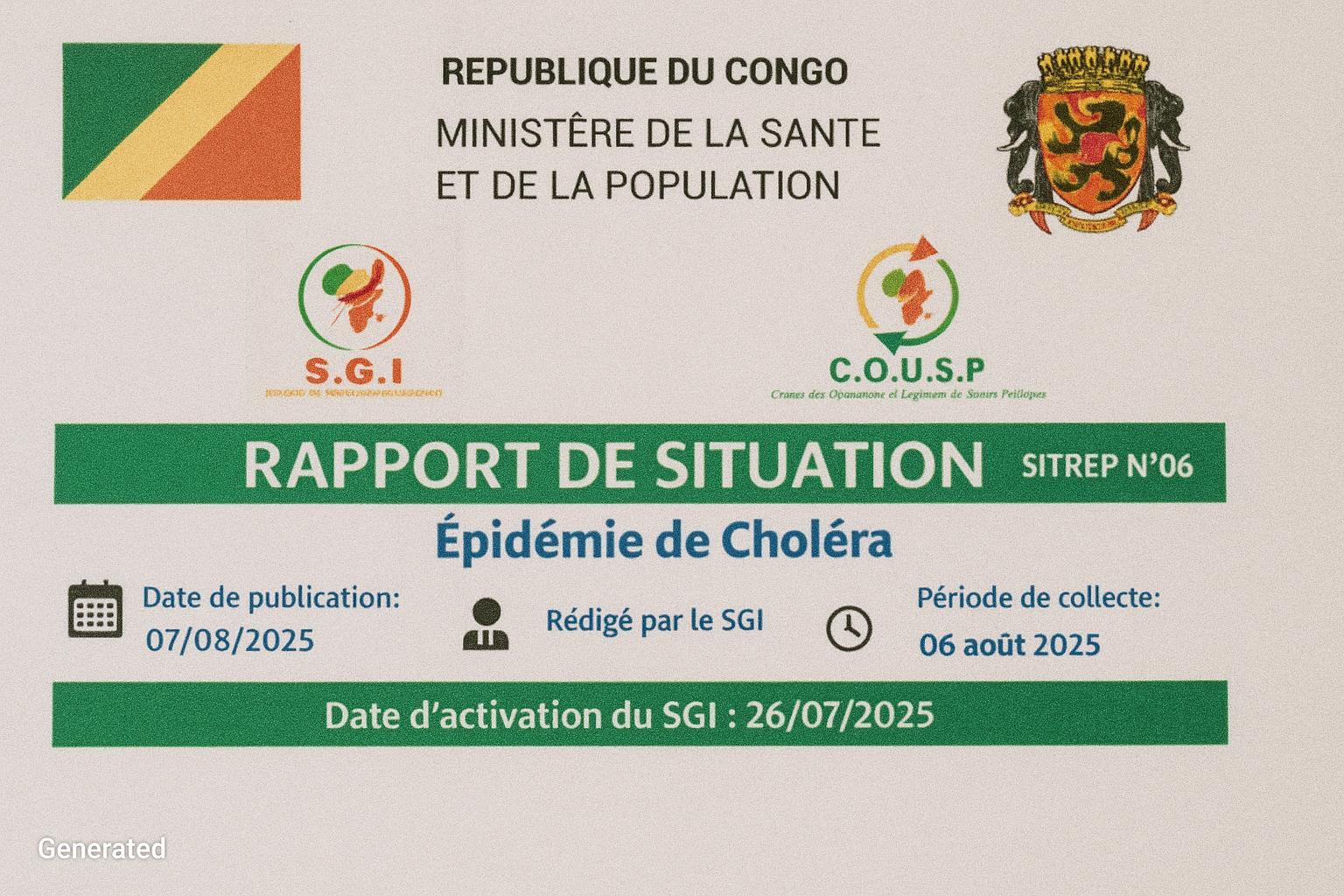
Fresh case figures paint a cautious picture
The sixth situation report released by the World Health Organization and the Congolese Ministry of Health on 7 August 2025 points to 1 243 suspected cases of cholera nationwide, with 38 deaths recorded since the first alerts in May (WHO Sitrep 06, MoH daily brief). The majority of patients have been registered in the river corridor that links Brazzaville to the port city of Pointe-Noire, an area where informal fishing camps and busy boat traffic make classic hygiene rules hard to follow. Epidemiologists on the ground insist the curve is flattening, mentioning a reproduction rate that slipped below one for the first time in late July.
In a phone interview, Dr. Henri Ngamou, head of surveillance at the National Public Health Laboratory, argued that “timely case mapping and the rapid set-up of rehydration points in riverside markets are starting to pay off.”
Government response gains momentum
From the very first cluster in Kombo, the Ministry of Health triggered its emergency plan, opening a crisis cell inside the brand-new Health Operation Center near Brazzaville airport. Mobile chlorine stations, financed through the national contingency fund, now treat an estimated 2 million liters of river water every day. According to the ministry, 86 percent of patients reach an oral rehydration point within six hours of symptom onset, a metric international partners describe as “solid progress” for a country with long road distances.
Health workers interviewed at Talangaï General Hospital say drug stocks remain stable. A truck carrying 15 tonnes of Ringer lactate from UNICEF cleared customs on Tuesday, easing earlier concerns voiced by Médecins sans frontières about supply gaps. The government has also kept schools open, preferring hand-washing stations and daily screening to blanket closures, a decision welcomed by parents worried about lost classroom time.
Life on the frontline: markets, radios and buckets
In Makoua market, north of the capital, stallholder Mama Clarisse lifts a yellow bucket to show her improvised hand-washing kit. “We heard the nurses on Radio Congo explaining how to mix water with a spoon of bleach. It costs almost nothing and customers feel safer,” she says. Similar neighborhood radios have become key in diffusing practical advice in Lingala and Kituba, sidestepping literacy barriers.
Local chiefs report that community health volunteers now visit each household at dusk, checking for diarrhea cases and distributing zinc tablets to children. National Red Cross teams say refusal of chlorine taste in water has dropped after volunteers demonstrated how to let treated water sit overnight. Small gestures, they argue, are nudging habits faster than top-down orders ever could.
Regional solidarity in action
Congo-Brazzaville has kept its river borders open, opting for screening posts rather than travel bans. Neighbouring Democratic Republic of Congo is sharing lab capacity in Kinshasa for strain typing, while Gabon sent two epidemiologists to help track contacts along the Ogooué tributaries (Central African Public Health Network communique). International observers view the coordination as a sign that Brazzaville is intent on balancing health security with the economic lifeline provided by river commerce.
The African Development Bank, for its part, approved a fast-track grant of six million dollars earmarked for solar-powered boreholes in 14 high-risk rural districts. Engineers are expected on site before the peak of the short rainy season in October. Analysts note that these longer-term water projects could shield communities from future flare-ups, turning an emergency into an opportunity for durable infrastructure.
Outlook: holding the line before the rains
Public health experts agree that the coming weeks will be decisive. Rains usually intensify in early September, washing contaminants from the crowded riverbanks into shallow wells. To stay ahead of the curve, the Health Ministry says it is expanding its SMS alert system, which now reaches 1.4 million subscribers. A tender for 500 more latrine slabs has also been issued to local cement cooperatives.
“The battle is far from over,” concedes Dr. Ngamou, “but hospitals are better supplied, communities are better informed and partners are firmly on board. If we keep this rhythm, we can push the fatality rate below two percent and show the region that preparedness makes a difference.” For now, the line is holding—fluorescent buckets, radio jingles and a determined public service standing between the Congo River and the next potential surge.