
Fifteen Minutes that Reset the Hospital Mood
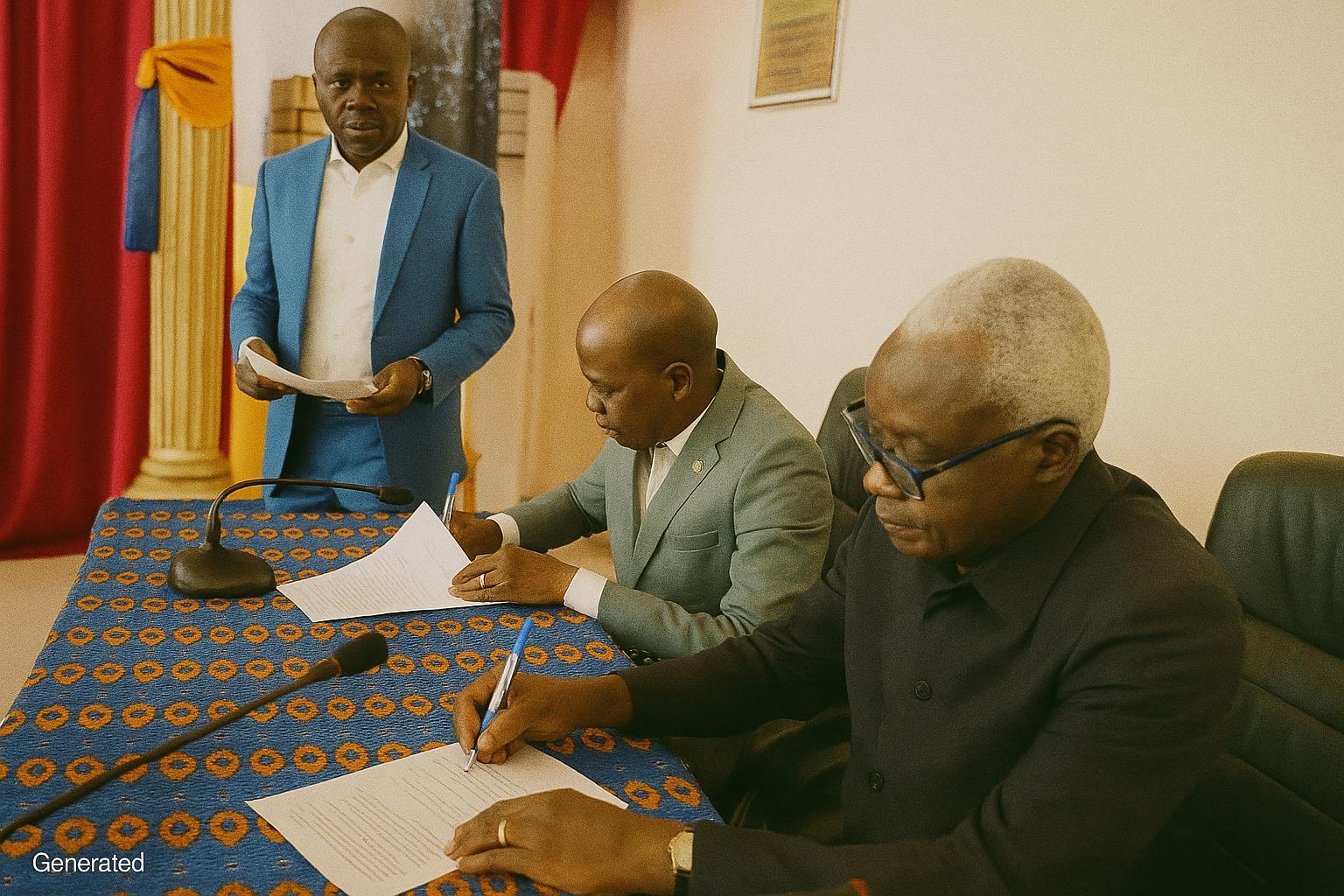
Just after noon in a stifling meeting room, union representative Joël Bazoma needed only a quarter hour to read the fresh roadmap meant to cool tempers at Brazzaville’s University Hospital. Across the table sat Director-General Prof. Thierry Raoul Alexis Gombet and departmental labour chief Yvon Roger Tseke-Tseke, whose signature would lock in the pact. The brisk ceremony, reported by Les Dépêches de Brazzaville and confirmed by Radio Congo, capped a week of negotiations mixing long nights and hard arithmetic but, above all, an insistence that dialogue still works in Congo’s public service.
Workers’ Demands under the Microscope
The talks dissected the fiery resolution adopted by hospital staff on 25 July. Mediators quickly ruled that several points strayed from strict labour matters, allowing the table to focus on seven concrete issues. Top of the list sits the 2024 Joint Advancement and Social Security Commission, now scheduled no later than 31 August 2025. Analysts from the research unit Observatoire du Travail estiment that holding this commission on time is a litmus test for credibility, given past delays across the public sector.
Next came the mountain of unpaid social contributions. A mixed task-force will tally what the hospital still owes both the Treasury and the National Social Security Fund, a figure unofficially whispered to be in the multi-billion-franc range. By setting a transparent audit, negotiators hope to mute rumours and restore staff confidence.
Government Commitment to Upkeep and Pay
Both sides appealed to the central government to keep upgrading wards and labs, a process begun in 2023 with new imaging equipment financed through the National Development Plan (ADIAC, 12 April 2024). Creating a hygiene and safety committee, as foreseen in decrees 9030 and 6800, is billed as another shield against future crises.
On the sensitive question of money in pockets, the pact asks the Finance Ministry to release salaries for June and July 2025 and to reopen wage grid talks within two months. A revived monitoring team must trace older arrears through to the Congolese Debt Amortisation Fund by 30 October. The timetable is tight but, according to labour economist Brice Nkodia, realistic if cash-flow improves with higher oil receipts.
Training and Follow-up to Cement Trust
Negotiators agreed that rules mean little without people who understand them. Human-resources officers and union stewards will therefore attend fast-track sessions on labour law and conflict prevention, a step hailed by the International Labour Organization’s local desk as “simple but often skipped”.
The departmental labour office will steer monthly reviews and publish brief communiqués so the wider public can track progress. By committing to transparency, the parties hope to ward off the whisper campaigns that so often precede strikes.
A Cautious Optimism Echoes through the Corridors
For now the wards remain busy, not restive. Nurses interviewed by Congo-Web TV say they “wait to see the colour of the money” but admit the atmosphere has lightened. Management, for its part, believes the accord meshes with President Denis Sassou Nguesso’s broader pledge to “modernise health services and protect workers”, reiterated during the 2024 State of the Nation address.
Whether the roadmap turns into lasting peace will depend on timely cash injections and steady follow-up. Yet, after fifteen focused minutes and a handful of signatures, Congo’s biggest hospital shows that conversation can still outpace confrontation.