
A crossroads on the Equator
From Pointe-Noire’s Atlantic surf to the mighty Congo River that hugs Brazzaville, the Republic of Congo sits on 342,000 square kilometres that link Central Africa to the Gulf of Guinea. A tropical climate feeds cocoa in Kouilou and keeps the upper Sangha forest dense, yet only around six million people share this generous land, half of them packed into the twin urban poles of Brazzaville and Pointe-Noire (National Institute of Statistics 2024). This sparse map gives the government room to plan new industrial zones without pushing farmers off their plots, a comfort hard to find in many African capitals.
People, Cities and Rising Expectations
Congo’s population is young—just over 18 years in median age—and still growing at roughly 2.5 % a year, one of the fastest clips in the region (UN DESA 2024). Classrooms in Ouesso and Dolisie now run morning and afternoon shifts, evidence of pressure on public services but also of families’ faith in schooling. Officials point out that primary enrolment exceeds 90 %, a platform they hope will feed the oil, logistics and forestry trades that dominate job ads. “Our challenge is matching diplomas to vacancies while keeping youth in the country,” notes Labour Minister Ingani, who predicts that digital services could absorb one in five new workers within a decade.
Oil Still Reigns, but Diversifiers Wake Up
Crude makes up nearly 80 % of export earnings and two-thirds of state revenue (IMF Article IV Consultation 2023). The Moho-Nord deep-water field, run with a consortium led by TotalEnergies, keeps output close to 300,000 barrels per day even as maturing wells decline. Windfall prices after 2022 helped Brazzaville clear salary arrears and renegotiate external debt with China and private bondholders, trimming the debt-to-GDP ratio below 70 % in 2023 from a peak above 100 % two years earlier. Ratings agencies welcomed the fiscal turn-round, yet warn that public accounts still hinge on a barrel price above 60 dollars.
The answer, officials say, is disciplined spending rather than sudden cuts. The 2024 budget channels a quarter of oil receipts into the sovereign fund FNR, a cushion meant to finance roads and power lines when markets cool. Economists in the capital praise the set-aside but stress the need for transparent reporting in line with the Extractive Industries Transparency Initiative—a pledge that the Ministry of Finance says it will meet before year-end.
Green Gold: Forests and Climate Finance
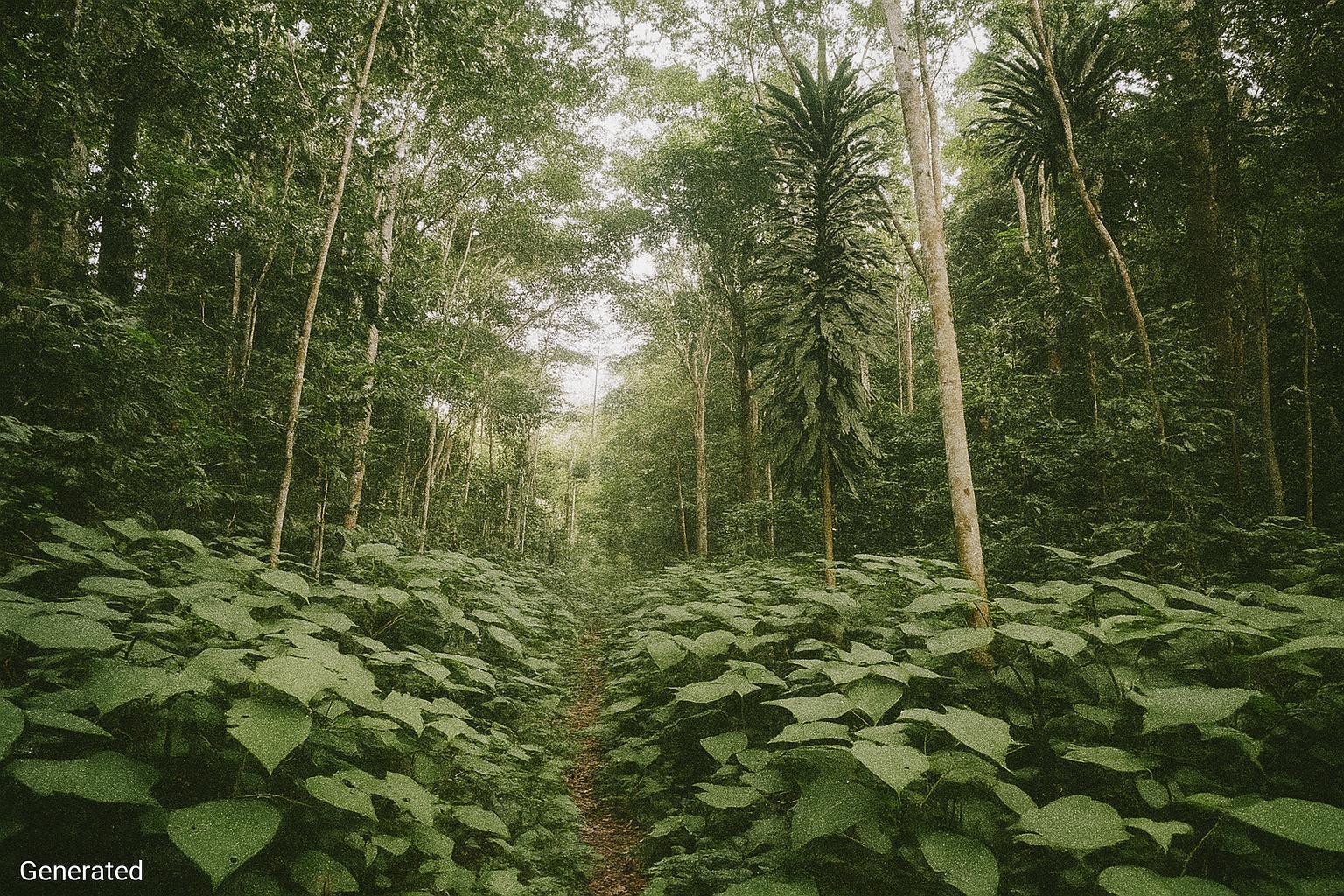
While petroleum dominates headlines, the nation’s other treasure stands taller: nearly a tenth of Earth’s tropical rain forest sits inside Congolese borders. These trees absorb an estimated 1.5 billion tonnes of CO₂ annually, more than the country will emit in a century at current rates (CENAREST 2023). That carbon sink is turning into cash. In March 2024 Brazzaville signed a 50-million-dollar deal with the Central African Forest Initiative to deliver verified emission reductions. President Denis Sassou Nguesso framed the accord as “another pillar of our development strategy, not a substitute for it.”
Conservationists applaud the programme’s community clause, which directs at least 30 % of proceeds to health posts, boreholes and feeder roads in logging-affected districts. Timber operators are under pressure to shift from raw-log exports to processed boards that retain value locally. Already, two millers in the Atlantic Special Economic Zone are shipping furniture parts to Europe under the African Growth and Opportunity Act tariff window.
New Infrastructure and Digital Hopes
Beyond forests, Congo is pouring money into electricity and data links. The 34-megawatt Liouesso hydro plant came on line last year, easing outages in the north. Work on the 1,300-kilometre fibre backbone connecting Brazzaville, Pointe-Noire and the Angolan border is past the halfway mark, according to the Post and Telecoms Agency. Mobile penetration now tops 90 %, and fintech apps such as Pepele Mobile let state employees receive salaries without queuing at banks. Observers believe such services can chip away at the informal cash economy, broadening the tax base without rate hikes.
Regional Diplomacy and Security Steady
Brazzaville’s role as quiet mediator—hosting talks from Chad to the Central African Republic—earns it credit abroad and stability at home. Defence spending remains below 2 % of GDP, with troops largely deployed to protect oil terminals and the northern border. UN officials confirm that the country hosts over 20,000 refugees but faces no major insurgent threat on its soil. “Security is a competitive edge we should not underestimate,” says economist Mireille Makosso.
Balancing Act Ahead
The Republic of Congo’s prospects rest on whether policymakers can turn today’s oil and climate receipts into factories, skills and jobs before the demographic wave crests. The signals are mixed yet promising: debt is falling, export partners are diversifying, and the state is embedding transparency clauses that would have been unthinkable a decade ago. For now, Brazzaville walks a tightrope—steady enough to inspire cautious optimism in boardrooms from Lagos to Paris, but mindful that the safety net is woven from the same crude flows and green credits it is trying to transcend.