
A stage charged with history and hope
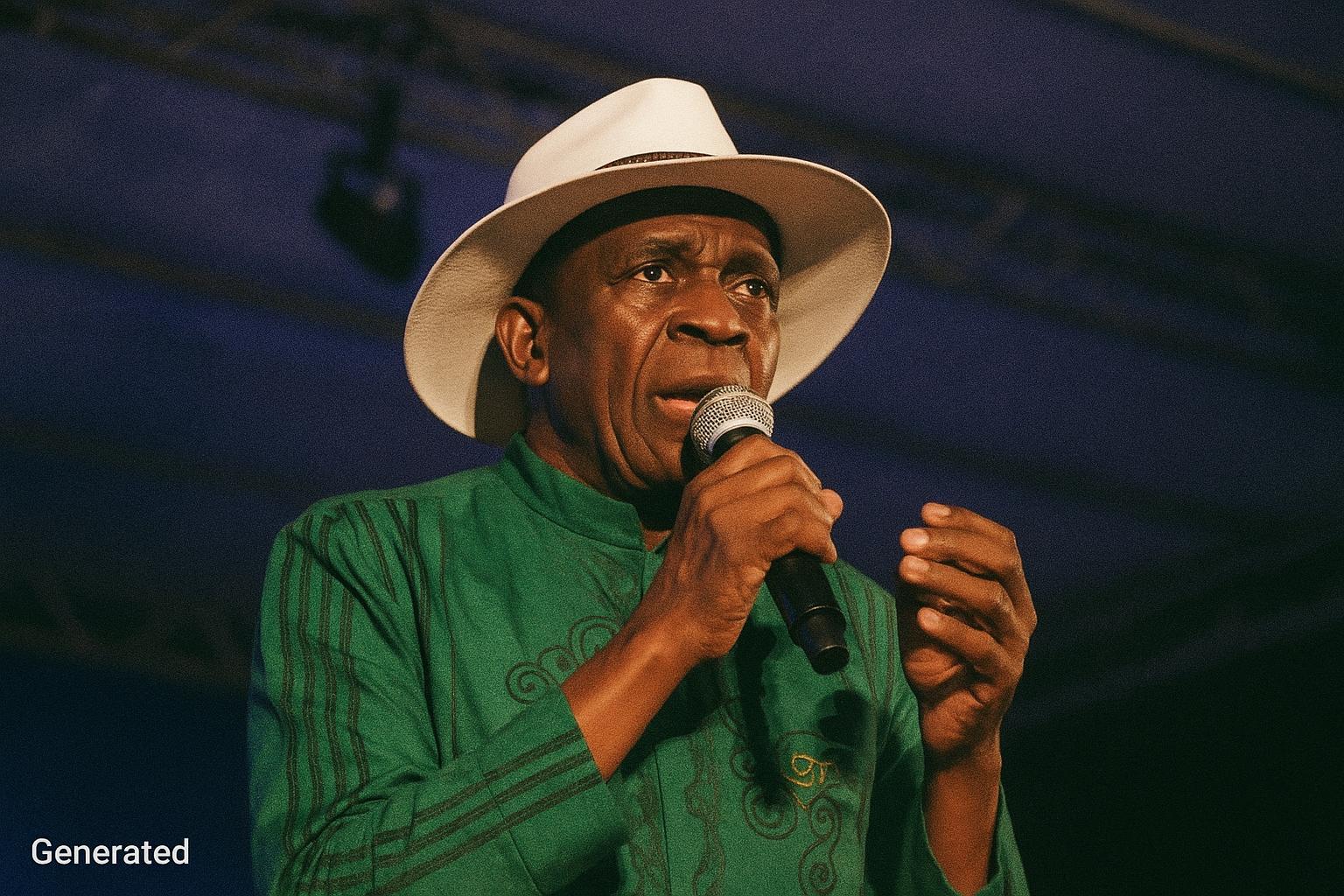
The roar that bounced off the walls of the Palais des Congrès on 21 July told its own story. For the twelfth edition of the Pan-African Music Festival, better known as Fespam, organisers booked global chart climbers and social-media darlings, yet it was a man in his seventies who walked on after midnight and stole the communal heartbeat. Clotaire Kimbolo, the gravel-voiced troubadour of Congo, flashed a modest smile before opening with a stripped-down rumba classic, the same way he did back in 1996 when the festival first raised its banner (Congolese Ministry of Culture press note, 2025). The crowd recognised in him something deeper than nostalgia: a living map of how national soundtracks can bind generations.
From bar-room gigs to continental emblem
Kimbolo’s résumé reads like popular music lore: dance-hall residencies in Pointe-Noire during the 1970s oil boom, cassette-deck conquests across West Africa a decade later, then tours of community centres from Rouen to Buenos Aires once vinyl flipped to mp3. UNESCO’s 2023 listing of Congolese rumba as Intangible Cultural Heritage added fresh shine to that path. The veteran is quick to note that every stamp in his passport came with the same ritual. “Wherever I landed,” he told reporters after the set, “somebody asked for our national anthem, and we all stood up straighter.” Those moments, he added, convinced him that travel is pointless if you bring back nothing to share.
Mentoring amid smartphone beats
Backstage, a line of younger acts waited for selfies but also for advice. Saxophonist Nelly Ambassi, whose afro-trap single crossed one million online streams last month, summed up the mood: “He shows us we can experiment without erasing the roots.” Kimbolo answers with time, giving impromptu chord lessons and small lectures on lyric diction. According to festival coordinator Florent Makita, such exchanges are not protocol but policy: Fespam’s charter, updated in 2024, requires each veteran booking to host a mentorship slot (Fespam Secretariat 2024 report). Government officials say the measure underlines Congo’s broader cultural diplomacy, which promotes inter-generational skill transfer as a soft-power asset.
The delicate line between fusion and confusion
Yet the singer harbours quiet concern. As glossy afrobeats samples filter into local studios, he fears rumba can become an exotic garnish rather than the main dish. “Originality is our export licence,” he told national broadcaster Télé Congo. “Modernity is good fun, but if we copy every outside loop, soon we will not recognise the rhythm that lulls our babies to sleep.” Musicologist Aimée Bapou, speaking by phone from the University of Kinshasa, agrees that a ‘taste-for-all’ approach may flatten nuance, citing studies showing that ninety percent of new Congolese releases now use imported digital templates (Journal of African Popular Music, April 2025).
Remembering voices at risk of silence
Between his own hits Kimbolo inserted a medley of songs by departed peers—Jean-Serge Essous, Pamelo Mounk’a, Orquesta M’Bamina—echoes that once lit up Brazzaville’s riverbanks. He explained the gesture simply: “When an artist leaves us, the melodies should not pack and leave too.” In partnership with the National Sound Archive, he is digitising reel-to-reel masters stored in humid cellars, an effort partly funded by a Culture Ministry micro-grant launched last year. Archivist Lucien Tchicaya says the project has rescued two hundred tracks already. If all goes well, the full batch will appear on streaming services before the next festival cycle, turning yesterday’s vinyl hiss into tomorrow’s playlist.
A festival reaffirmed, a mission renewed
This twelfth edition, say organisers, recorded its highest on-site attendance since 2011, a sign that post-pandemic audiences seek more than online clips. Brazzaville hotels reported near full capacity, while regional airlines added extra flights from Libreville and Abidjan. The Ministry of Tourism, echoing African Union observers, praised the event as a catalyst for economic ripple effects in craft markets and hospitality. In that wider frame, Kimbolo’s set looked less like a curtain call and more like a keynote address, reminding onlookers that the festival’s value does not end with applause. It travels home in humming heads and tapping feet, ready to shape new verses.
Keeping the groove alive beyond the spotlight
As technicians folded chairs at dawn, Kimbolo lingered by the exit doors, signing ticket stubs and promising to visit a local high school the next day. He insists the job is only half done when the lights go off. Turning to a small group of journalism students he said, almost in a whisper, “Our culture is a tree. Every note I play must act like water.” The remark circles back to his core creed: preservation through practice. His roadmap is neither museum-quiet nor stadium-loud; it is a lived continuum where memory fuels innovation. If Fespam 2025 sought a headline, it may be this: heritage is safest in the hands of those who dance with it.