
Congolese motorcade sweeps southern Africa
The streets of Luanda still carried the echo of motor-bike escorts when Jean-Claude Gakosso’s convoy crossed into Namibia, Botswana and Zimbabwe. Since 21 July the Congolese foreign minister has clocked thousands of kilometres, hand-delivering sealed envelopes from President Denis Sassou Nguesso to heads of state across southern Africa. The message is simple but urgent: rally behind Firmin Édouard Matoko, the Congolese veteran of multilateral halls, in the forthcoming election for Director-General of UNESCO. According to a senior Angolan diplomat, the pitch was received with “cordial frankness” and a nod to Africa’s long-standing quest for stronger representation in Paris (Angolan MFA communiqué).
A candidate shaped by classrooms and corridors
Born in Pointe-Noire and educated in Brazzaville before earning degrees in Paris, Matoko taught mathematics in his twenties and later joined UNESCO as a programme specialist. Three decades on, he has overseen the capacity-building portfolio for Africa, managed budgets north of 120 million dollars and coordinated emergency literacy drives in the Sahel (UNESCO press release). A former colleague describes him as “the sort who knows the cleaners by name yet negotiates funding with ministers before lunch.” That blend of grassroots credibility and polished protocol is what Brazzaville hopes will convince the 58-member Executive Board when ballots are cast next year.
Continental solidarity takes centre stage
Africa has never occupied the top seat at UNESCO, a fact Gakosso cites in every chancery he visits. By stressing a collective win rather than a Congolese triumph, the envoy taps into sentiments forged during the 2019 AU Summit that called for “one Africa, one candidate” in multilateral races. Pretoria and Windhoek have so far issued supportive notes, though observers caution that Egypt and Kenya may float their own hopefuls. An analyst at the Nairobi-based Institute for Security Studies argues that early shuttle diplomacy could blunt later fragmentation: “If you arrive first with a convincing file, you shape the room’s mood before rivals even print their posters.”
Mauritius handshake caps the first sprint
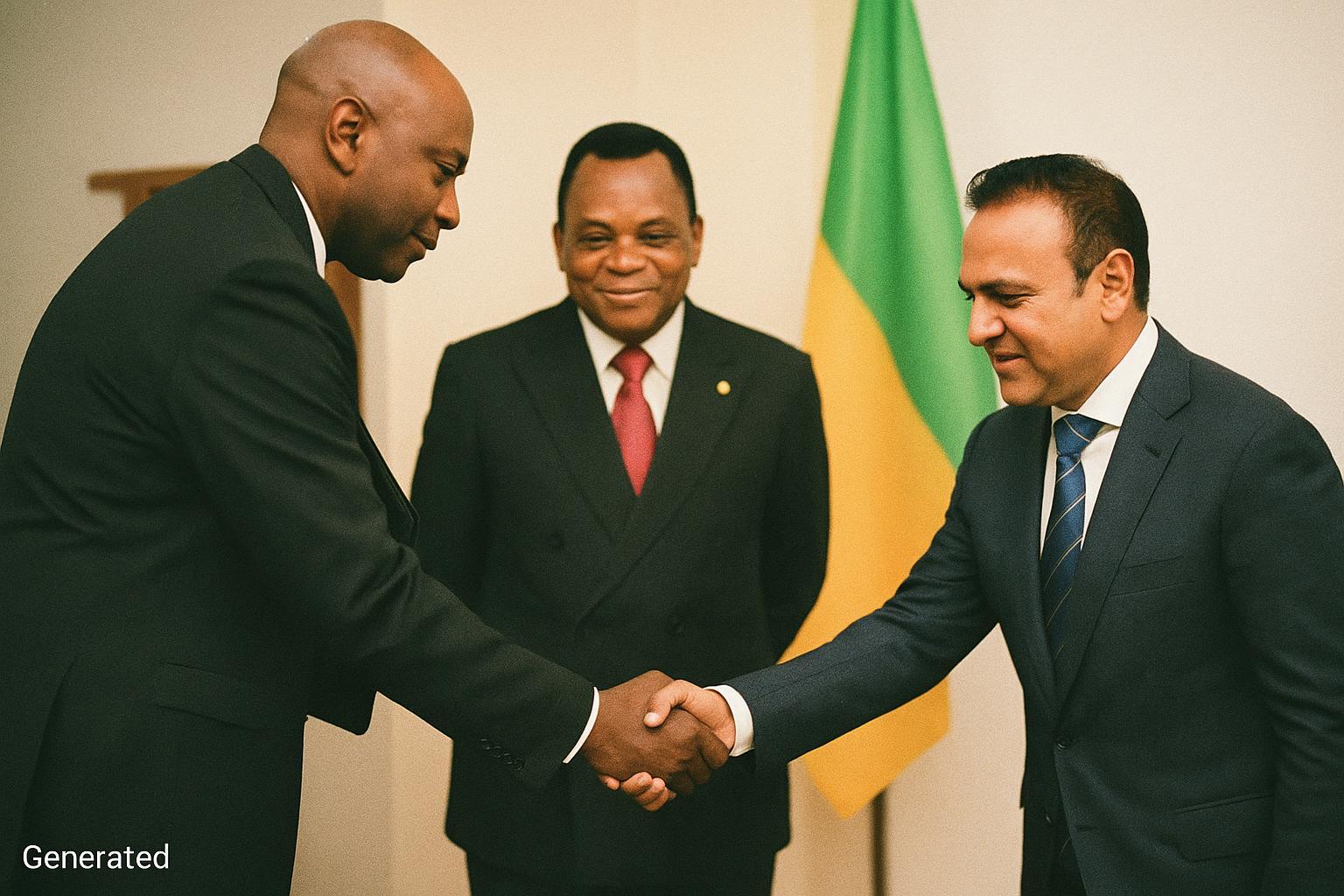
Port-Louis served as the closing tableau for the southern loop. President Dhananjay Ramful welcomed the Congolese delegation in the State House’s varnished teak salon, praising what he called “a candidacy rooted in the classroom, not the cocktail circuit” (Mauritius State House statement). Behind the ceremonial warmth, negotiators discussed cross-island cultural exchanges that could blossom should Matoko take the helm. Gakosso later briefed journalists on the tarmac, emphasising that Mauritius brings a bridging voice between the African Union and the Indian Ocean Commission. The stopover also allowed the team to refine talking points on Small Island Developing States, a constituency with growing clout inside UNESCO.
Westward push under Prime Minister Makosso
No sooner had the delegation’s luggage been unloaded in Brazzaville than new boarding passes were printed. From 27 July, Prime Minister Anatole Collinet Makosso will spearhead a second wave targeting Libreville, Abidjan, Abuja, Ouagadougou, Monrovia and Djibouti. Officials hint that each capital may host cultural showcases highlighting Congolese rumba, now on UNESCO’s intangible heritage list, as a soft-power teaser of what a Matoko leadership could amplify. A senior aide insists the campaign is self-financed through planned diplomatic budgets, mindful of economic headwinds at home. The schedule is tight, but insiders say momentum is crucial before European capitals enter vacation mode in August.
Inside UNESCO, the calendar and the arithmetic
The race officially opens once the call for nominations is circulated by the UNESCO Secretariat, expected in early 2025. Candidates then face public forums and private interviews before the Executive Board holds a secret ballot. Winning requires an absolute majority, meaning at least 30 votes out of 58. Africa counts 17 seats, Latin America 10, the Arab group 9, and the rest split among Europe, Asia and the Pacific. By locking down his own region early, Matoko could approach Latin American allies through shared Lusophone networks while courting Arab States on collective education priorities. As one veteran UNESCO watcher notes, “alliances are stitched in corridors months before badges are even printed.”
Measured optimism from Brazzaville
Back home, state radio keeps a sober tone, mindful that high-profile multilateral bids can suffer late surprises. Yet the atmosphere in the foreign ministry corridors is unmistakably hopeful. Gakosso speaks of a “pan-African chorus warming up for its solo” while senior advisers crunch voting scenarios on whiteboards. Political analysts highlight that the bid dovetails with President Sassou Nguesso’s broader diplomatic agenda, which aims to showcase Congo as a constructive voice on education, digital transition and cultural diversity. In the streets of Brazzaville, the campaign is distant chatter, but in the marble lobbies where decisions congeal, Congo’s pitch is already echoing. Whether that echo turns into the gavel’s final bang will depend on how steadily the next legs of this roadshow are driven.