
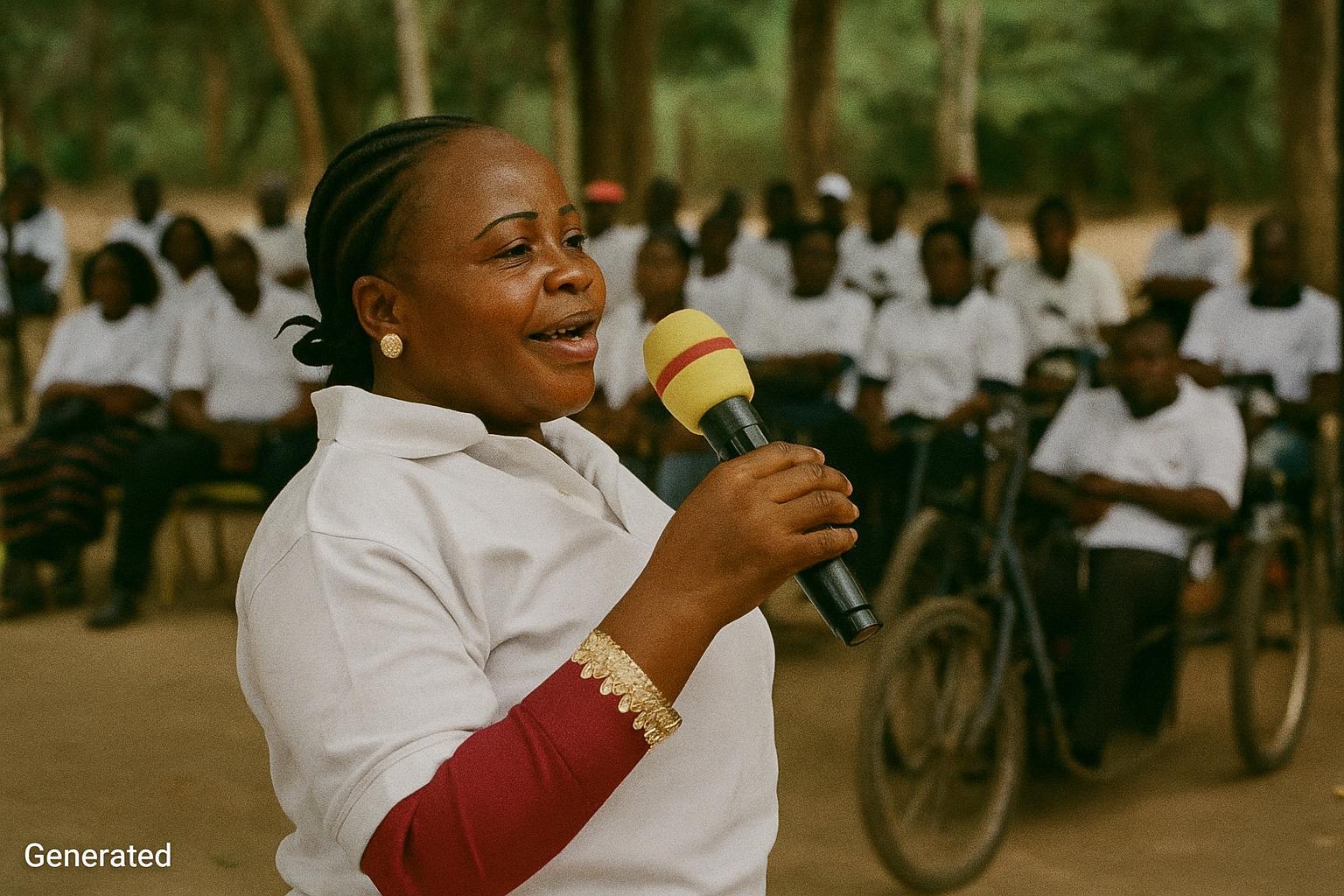
European-Italian support sparks new opportunity
The small classroom inside Brazzaville’s scientific city was unusually lively this Tuesday. Forty students, some on crutches, others rolling in wheelchairs, were unboxing calculators and notebooks supplied under a programme politely called “An Inclusive Approach to Disability”. Bankrolled by the European Union and the Italian Episcopal Conference, and managed on the ground by the Italian NGO Comunità Sviluppo e Promozione, the initiative is aiming straight at the market: help participants launch ventures that make money today rather than promises tomorrow (EU delegation to Congo, project brief, 2024).
Co-ordinator Ermelinda Onda explained that the foreign partners see the scheme as more than charity. “We are removing physical, behavioural and communication barriers in one go by proving that sound business skills belong to everyone,” she told reporters in French before switching to Lingala to greet the trainees.
Seven-module crash course at ANVRI
Teaching duties rest with the National Agency for the Valorisation of Research and Innovation, better known by its French initials ANVRI. Project manager Rivanelle Missolékélé Mpidy broke down the timetable: two days a week, three one-hour sessions, heavy use of images because many students learned more trade than theory at school. “Eighty percent of our content will be visual; numbers come alive faster when you turn them into diagrams,” he noted.
Across the coming months the class will sprint through management basics, bookkeeping, information technology, marketing, customer care, product design and personal leadership. A triple-step assessment—diagnostic, formative, summative—will measure progress. By the end, every participant should hold a business canvas that banks and micro-credit funds can recognise.
Government frames inclusion as growth strategy
Congo’s Ministry of Social Affairs has flagged the project as proof that the National Development Plan and President Denis Sassou Nguesso’s social agenda are reaching the street. Minister Irène Marie Cécile Mboukou-Kimbatsa urged the class to think beyond subsidies. “The State already mobilises financing through social safety nets, but true autonomy is earned when your own activity pays your rent,” she told the trainees, recalling the success of a young seamstress whose designs now sell as far as Marseille.
Standing nearby, Minister of Scientific Research Rigobert Maboundou linked the course to a broader ambition. “The President has always kept persons with disabilities in the fold of public policy,” he said, pointing to the 120 trainees currently mastering carpentry, masonry, bookbinding and IT under the same umbrella. “These actions, including cash transfers, reflect the will to transform lives, not merely assist them.”
From sewing machines to start-up pitches
Many of the new students already hustle in Brazzaville’s informal economy. Jonas Loudila, who lost the use of his legs in a traffic accident, repairs smartphones under a tin roof in Talangaï market. “I can unlock any model, but paperwork scares me,” he confessed with a grin. He hopes the finance module will teach him how to separate daily expenses from business capital.
Across the aisle, seamstress Bertille Malonga envisions a branded fashion line. “I’ve sold custom dresses for years, yet never printed a label. Italians are famous for style; if they can guide me on branding, why not?” she asked. Such ambitions fit global evidence: the International Labour Organization estimates that small enterprises run by persons with disabilities can yield returns matching their peers once access barriers fall (ILO Disability and Work report, 2023).
Experts view inclusion as economic shock absorber
Economist Jean-Robert Ndinga of Marien Ngouabi University argues that turning social spending into enterprise capital strengthens macro resilience. “When you diversify the pool of entrepreneurs, you spread risk. People with disabilities often innovate out of necessity; the economy gains fresh thinking,” he said. That logic echoes United Nations research linking inclusive labour markets to higher GDP per capita (UN CRPD Secretariat brief, 2022).
Italian ambassador Enrico Nunziata put the same idea in diplomatic terms: “Inclusive entrepreneurship is a powerful tool to value talent, skill and creativity in people differently able.” His embassy plans to facilitate future exchanges with Italian cooperatives that specialise in adaptive technology.
If the words translate into deeds, Brazzaville could see a new crop of shopfronts, repair kiosks and online boutiques run by graduates who once depended entirely on family support. The finish line of the course is set for late June. By then, as the coordinators like to repeat, barriers may have turned into bridges and differences into assets.