
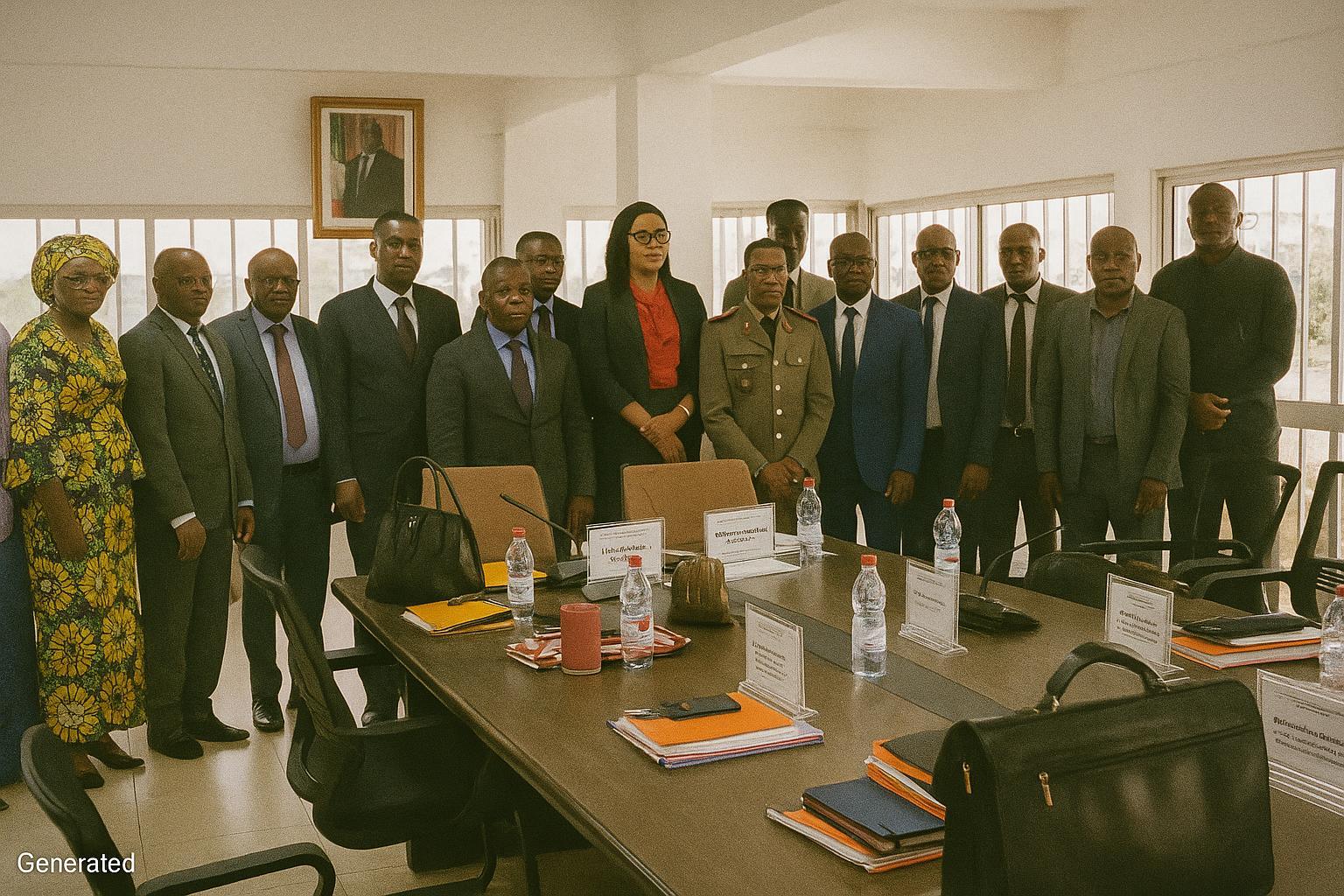
Boardroom optimism fills Brazzaville air
Late on 26 July, the glass-walled conference room of Cameps in downtown Brazzaville felt more like a victory lap than a routine statutory meeting. Nineteen of the twenty administrators answered the roll call, a quorum that gave chair Ange Antoine Abéna the comfort to declare, with a half-smile, that the house was “ready to measure itself against its own promises” (Les Dépêches de Brazzaville, 27 July 2024).
Unanimous green lights on every docket
The board spent three solid hours combing through audit lines and management notes before voting. One after another, the 2024 statutory auditor’s report, the management report and the activity log passed without amendment. Administrators then delivered what corporate lawyers call a “quitus total” to the three-person directorate. The gesture, formal yet warm, echoed the mood of a body that sees itself edging out of a long season of procurement hiccups that once forced rural clinics to ration antibiotics.
A new manual puts rules in black and white
The headline novelty of the session was a thick, ring-bound manual detailing every administrative, financial and accounting step inside Cameps. Drafted with guidance from the Ministry of Finance and a World Bank–funded consultant team, the document locks in sequential approval thresholds, stock-booking codes and emergency purchasing triggers. Insiders call it “the rulebook we needed ten years ago” because it removes guesswork from a supply chain that moves roughly 8 000 reference items every quarter.
From red ink to respectable margins
The statutory auditor noted that Cameps closed its 2024 financial year with a small operating surplus, the first in five cycles. The turn is traced to stricter tender frameworks and a 14 percent cut in warehousing losses, achieved after bar-code tagging of pallets. Health Minister Gilbert Mokoki, speaking off-record in the corridor, argued that the result “proves the public sector can play by the book without strangling access prices.” World Health Organization observers posted in Brazzaville went further, calling the surplus a sign of discipline more than profit, given that prices remain capped by decree (WHO Congo country report 2023).
Why sound governance matters for the ward nurse
On paper, board resolutions carry little drama, yet for the nurse in Impfondo hunting antimalarials at midnight, timely supply can be life-saving. A 2022 health-facility survey found that 28 percent of primary posts reported at least one stock-out of essential antibiotic in the previous month. Economists at the University of Marien Ngouabi argue that every percentage point of reduced wastage at Cameps can fund extra cold-chain capacity upriver. The newly adopted manual, therefore, has human faces attached to its clauses.
Balancing praise with prudent caution
Analyst Clarisse Ngoma, writing in the regional review Marchés Publics, warns that strong governance is “a relay race, not a sprint”. She recalls that similar enthusiasm followed a 2016 restructuring, only to fade when donor funds tightened. This time, however, digital stock dashboards and quarterly peer reviews with the Treasury create an architecture designed to survive political and budgetary cycles. The board’s decision to publish abridged financials online by September should offer a litmus test of that resilience.
Alignment with national development pledges
The Cameps reboot dovetails with the government’s National Development Plan 2022-2026, which lists pharmaceutical security as a pillar of human capital growth (Ministry of Health communique, May 2024). Diplomats following regional health integration note that a credible central buyer simplifies joint procurement across CEMAC states, potentially trimming freight costs. That prospect pleases budget officers in both Brazzaville and Yaoundé who eye shared drug pools as one way to cushion exchange-rate swings.
Chairman’s final word: keep the screws tight
Closing the session, Ange Antoine Abéna lauded his directorate for its “sense of public duty” and urged the management team to “keep the screws tight, because expectations only grow”. The applause that followed was short, almost businesslike, yet it carried the weight of a collective pledge. For now, Cameps has convinced its governors, its auditors and, tentatively, its international partners that the house is in order. The months ahead will show whether that order translates into full shelves in every dispensary from Pointe-Noire to Ouesso.