
A date circled in red ink
Ministry corridors in Brazzaville have been humming since last weekend, after the national committee of the Extractive Industries Transparency Initiative (ITIE) fixed itself a hard stop: hand over the 2025 activity report before New Year’s Eve. For a country where oil and mining revenues remain the backbone of public finance, the announcement felt less like a routine calendar note and more like a relay starter’s pistol. Observers from Les Dépêches de Brazzaville and Africa Intelligence, both present at the session, confirmed the choice of December as non-negotiable. In the words of Finance Minister Christian Yoka, who chairs the executive committee, “meeting the deadline is now a matter of national credibility.”
Why the stakes look bigger this time
The Republic of Congo joined ITIE in 2012 and, according to the latest dashboard published by the Oslo-based international secretariat, sits in the ‘meaningful progress’ tier, one notch below full compliance. That grade still allows foreign investors to tick the governance box, but it also carries corrective measures the government has to clear before its next validation window in 2025 (ITIE International Secretariat). Diplomatic sources in Brazzaville underline that several partners—France, China and the AfDB among them—now link parts of their loan negotiations to evidence of such progress. Missing a self-imposed publication deadline could therefore echo far beyond a missed bureaucratic target.
Inside the closed-door weekend huddle
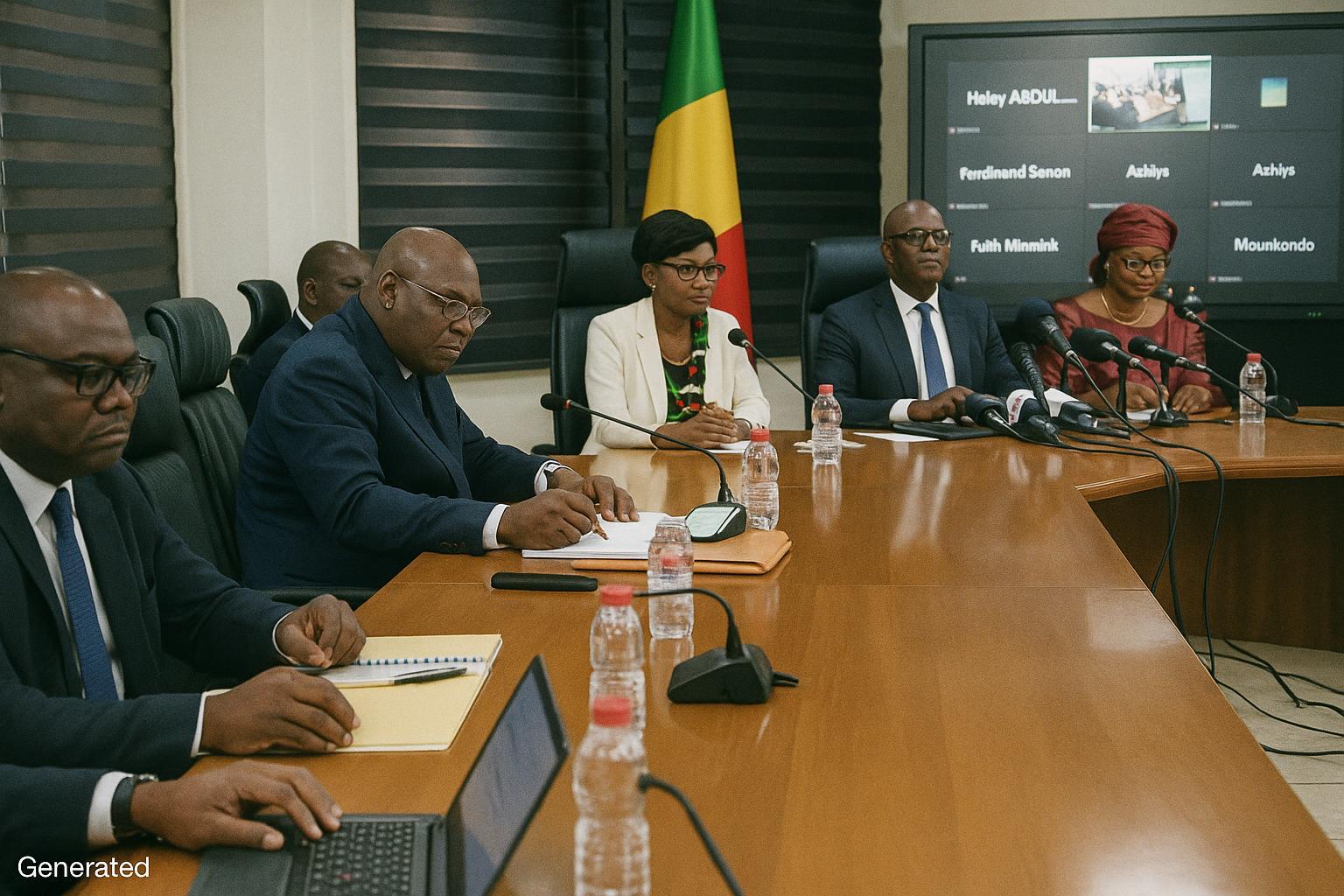
Saturday’s gathering at the Ministry of Finance pulled together the usual three ITIE pillars: state agencies, extractive firms and civil-society groups. Chevron, TotalEnergies EP Congo and the local mining outfit Sapro sat shoulder to shoulder with the Tax Directorate and the NGO Publiez Ce Que Vous Payez. One participant joked afterward that the blend resembled a ‘Brazzaville G20’—half-banter, half-truth given extractives account for roughly 60 % of export earnings, per the Central Bank’s 2023 bulletin.
Corrective measures: the to-do list nobody can dodge
Florent Michel Okoko, the committee’s permanent secretary, took the floor with a slide deck full of red flags and green shoots. He reminded the room that twelve corrective actions from the 2023 assessment remain partially fulfilled, ranging from contract disclosure to the reconciliation of sub-national payments. “We still have distance to cover, but nothing is irreparable,” he said, insisting that working commissions—audit, legal, communication—will convene every fortnight until October. Government insiders confirm that a draft decree granting those commissions direct access to production data is ready for cabinet signature.
Balancing speed with verification
Analysts from the Congolese Initiative for Mining Research caution that racing to print a document is only half the battle. They note that the previous report, stamped 2023 but published nine months late, drew criticism from independent accountants for gaps in gas-flaring statistics and state-owned company dividends (Jeune Afrique, April 2024). Minister Yoka acknowledges the lesson: “We aim for punctuality and quality this cycle; one cannot substitute for the other.” His office has already contacted two international reconciliation firms, Moore Stephens and BDO, to ensure external verification lines up with the December horizon.
Civil society’s tempered optimism
Speaking on the sidelines, activist Léa Ngouabi from the platform Réseau Gouvernance Mines saluted the new urgency but warned that community consultations must not be sacrificed. “Villagers in Pointe-Noire and Mayoko deserve to see the numbers in language they understand,” she argued. The secretariat answers that a simplified citizens’ report, translated into Kituba and Lingala, will accompany the main 2025 dossier—a first for Congo and a requirement already met by neighbours Ghana and Nigeria.
International backdrop and regional comparisons
Across Central Africa, Gabon just secured a ‘satisfactory progress’ rating after releasing its 2023 report three months early, a feat touted by regional media. Cameroon, meanwhile, remains stuck in remedial status due to withholding certain copper-smelter data. By pegging an early date and promising full contract disclosure, Brazzaville signals it wants to sit closer to Libreville than Yaoundé on the scoreboard. The African Development Bank’s 2024 Governance Index applauds such signals, tying them to lower borrowing spreads for sovereign bonds.
December: deadline or milestone?
Even if Congo meets the December goal, validation by the ITIE Board will not occur until mid-2026. Specialists from the Economic Commission for Africa describe the process as a marathon with several doping tests along the route. Yet deadlines create momentum. As Minister Yoka put it, “Our partners watch timelines as closely as they watch rigs and mines.” For now, the stopwatch is ticking, commissions are forming, and the promise stands: a 2025 report ready before the fireworks of 31 December.
What success could mean for ordinary citizens
Beyond the technical jargon, higher transparency can translate into concrete gains for households—better tracking of oil royalties destined for schools in Dolisie, clearer accounting of mine rehabilitation funds in the Niari Valley, or more predictable fuel pricing. Economists at the University of Marien-Ngouabi observe that each percentage point of perceived governance improvement shaves roughly 0.2 % off the cost of capital for infrastructure projects, freeing budget space for social spending. That is why the countdown to December resonates not just in ministerial suites but also in market stalls where families buy cassava and palm oil.
Eyes on the horizon, hands on the files
Congo’s extractive sector has ridden out price crashes, pandemic lockdowns and logistical bottlenecks along the Congo-Ocean railway. Delivering a timely, audited ITIE report may look mundane compared with drilling a deepwater well, yet it carries a similar message: the country can hit a target it sets for itself. With a full year to refine data, address corrective measures and consult communities, Brazzaville’s target is ambitious but feasible. As one foreign diplomat quipped, “If the oil flows, so can the paperwork—provided everyone keeps their foot on the pedal.”