
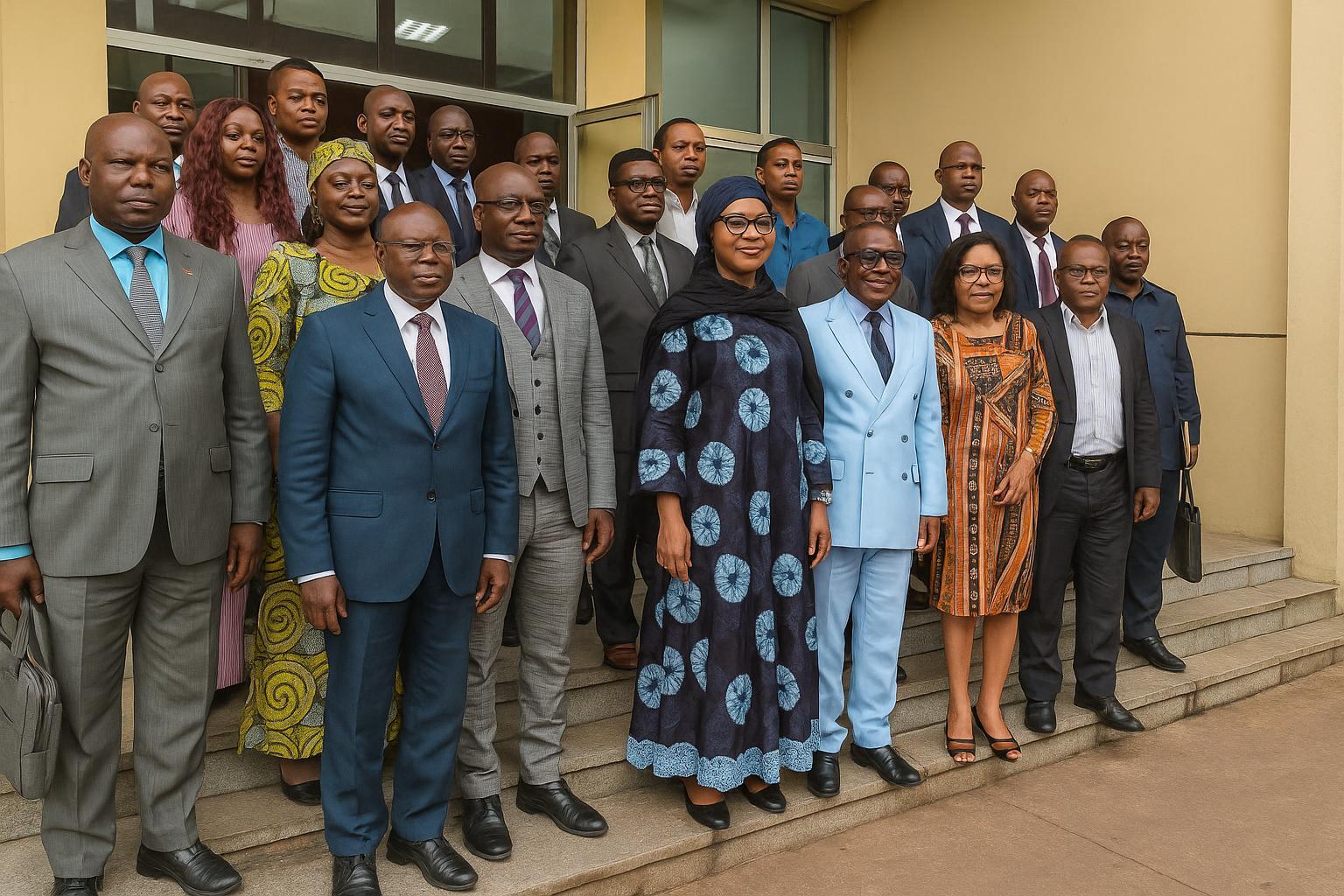
Commission clears 29 private university files
Brazzaville — The private university scene received a decisive boost this weekend as the Higher Education Private Establishments Accreditation Commission approved 29 out of 33 applications, giving a green light to new campuses, fresh degree tracks and definitive licences for institutions across the country.
According to the commission’s final communiqué, the approval rate stands at 87.87 percent. Seventeen authorisations for the creation of entirely new universities and institutes passed scrutiny, while six requests to open already accredited schools and two petitions for definitive status also secured positive opinions.
Breakdown of approvals and rejections
Every application for new bachelor-level programmes won acceptance; however, none of the eight Higher Technical Certificate proposals convinced the experts this time. The panel also endorsed four expansions of existing campuses and welcomed the country’s first certificate course in business administration within the private sector.
Oversight commitments from the ministry
Closing the ninth ordinary session, Higher Education Minister Delphine Edith Emmanuel praised the commission’s diligence and reiterated her ministry’s commitment to robust legal and administrative oversight. She stressed that clear rules protect students, parents and investors alike, while underpinning the national ambition to raise academic standards.
Emmanuel singled out the flagship public University of Marien Ngouabi, explaining that coherent supervision of its revenue-generating services will serve as a template for private operators. Streamlined procedures, she noted, allow institutions to concentrate on research and teaching rather than paperwork.
Delegates recommended harmonising the vocabulary that surrounds authorisations—creation, opening, provisional, definitive—in line with the decrees of 13 May 1996 and 23 May 2008. Such clarity, they argued, will help parents understand an institution’s exact status before enrolling and will assist banks evaluating education projects.
Voices from the commission and campuses
“We evaluated each file on infrastructure, staff qualifications and financial viability,” commission chair Prof. Brice Abessolo told reporters. “The goal is not to close doors but to guarantee that every door leads to quality learning.” His comments resonated with rectors who attended the deliberations.
Dr. Marcel Nkounkou, whose tech-driven institute in Pointe-Noire cleared the creation stage, welcomed the result. He believes formal endorsement will unlock partnerships with oil-services companies seeking local talent. “Parents often ask if we are fully recognised; now I can answer with confidence,” he said after the vote.
In Brazzaville’s Talangaï district, commerce student Grâce Oba followed the session on social media. She applauds the transparency of publishing success rates online. “My family invests a lot in fees. Knowing the state checks lecture halls and libraries reassures us,” she explained outside her evening job.
Private education’s rising footprint
Official statistics place enrolment in private tertiary institutions at roughly 41 percent of Congo’s 85,000 university students, a figure that has doubled in a decade. Demographic pressure and limited seats at public faculties have stimulated entrepreneurs to invest in niche fields such as health technology and logistics.
The government’s 2022-2026 National Development Plan positions higher education as a driver of diversification away from hydrocarbons. Accreditation, officials note, is the lever that channels private capital toward degrees aligned with that strategy—engineering, agriculture, digital services—and wards off diploma mills.
Technical diplomas face stricter scrutiny
Why were all eight BTS proposals rejected? Sources close to the commission cite gaps in laboratory equipment lists and apprenticeships agreements. The decision sends a signal that technical diplomas, which feed the labour market fastest, must meet rigorous hands-on criteria before receiving the coveted stamp of approval.
Next steps and student guidance
Following publication in the Official Gazette, institutions that received provisional clearance will have twelve months to welcome inspectors on site and submit evidence of progress, including audited accounts and student feedback surveys. Failure to do so could lead to suspension, though the ministry emphasises dialogue before any sanction.
Prospective students can consult the ministry’s dedicated portal or local education directorates for the refreshed list of accredited universities. Hotline 242-06-660-660 remains active on weekdays. Officials advise candidates to check whether a programme appears on that list before paying registration fees or signing housing leases.
Diaspora and investor perspectives
The decision is also followed closely by the diaspora, many of whom sponsor relatives’ studies. Diaspora-based Association Suka Congo applauded the release of clear metrics, arguing that transparent standards help graduates compete abroad and attract foreign lecturers to Brazzaville and Pointe-Noire campuses.
Regional interest across CEMAC
Neighbouring Central African countries are watching Congo’s model closely. Cameroonian delegate Philomène Likibi, who observed the session, said comparable commissions could accelerate recognition of credentials within CEMAC. “Inter-state mobility of students and lecturers requires trust. The transparency we saw in Brazzaville lays a foundation for mutual recognition ahead.”
Momentum heading into 2024
With 29 positive verdicts now on the books, Congo’s private higher education sector enters 2024 on a wave of optimism. The ministry promises quarterly updates, and investors are watching enrolment trends. Ultimately, students stand to gain from a marketplace where quality is monitored and excellence rewarded.