
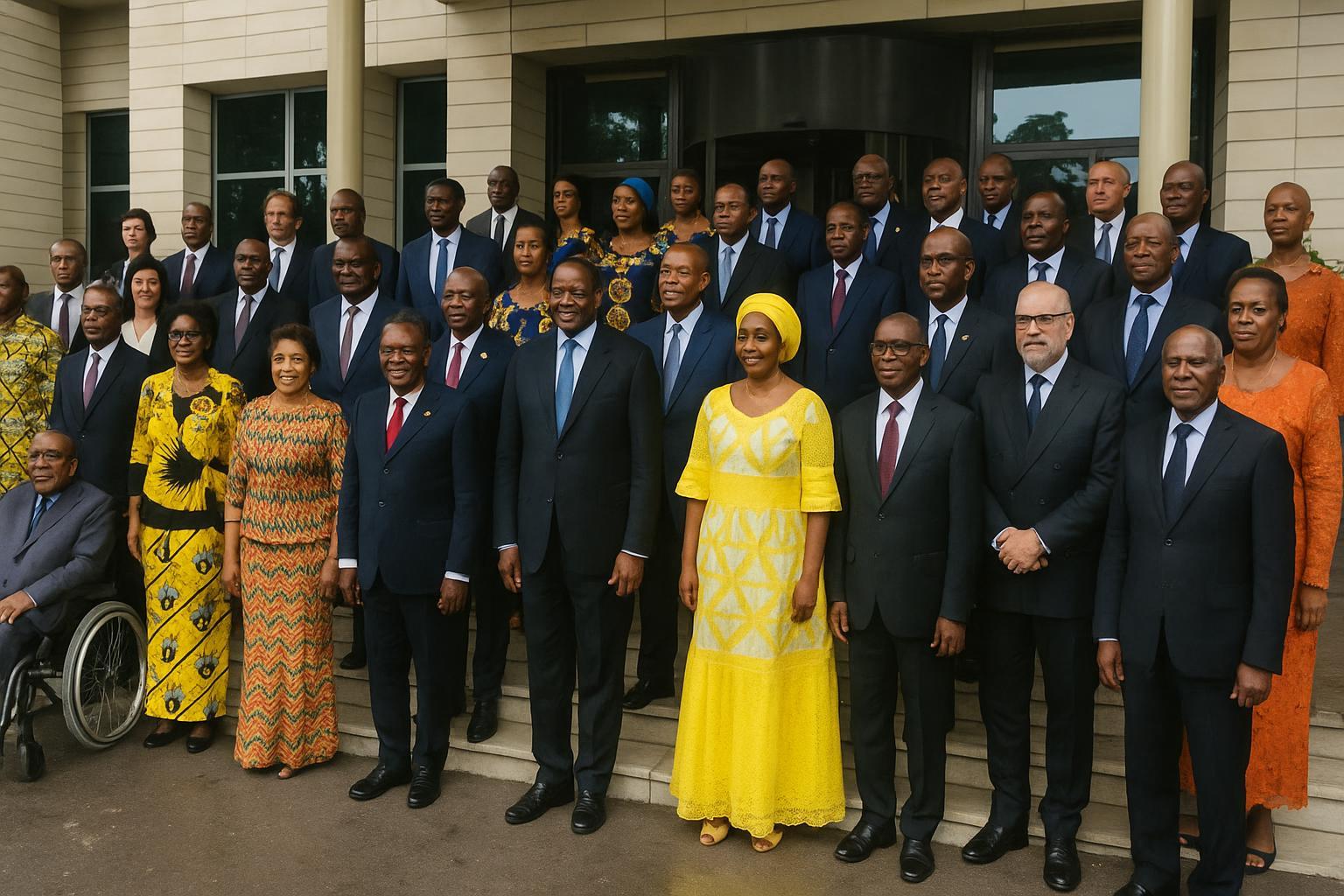
Inaugural plenary sets the tone
Brazzaville’s Palais des Congrès buzzed with expectation on 30 October as the Economic, Social and Environmental Council, better known by its French acronym CESE, held the solemn opening of its new four-year mandate before ministers, diplomats and development partners.
Chaired by seasoned public servant Emilienne Raoul, the inaugural session aimed to adopt the internal and financial rules that will guide the Council’s 150-member assembly and to create six permanent commissions covering social, economic, environmental, educational, cultural and religious affairs.
Lifting local realities to national stage
In her keynote address, Raoul set the tone by urging members to lift local realities to the level of national concern, insisting that sound advice to government can only come once citizens themselves grasp the development stakes at every spatial scale.
The former minister framed territories as the first tier of human progress, arguing that granular consultation through civil-society representatives will strengthen the quality of the opinions CESE transmits to policy-makers during the coming legislative and budget cycles.
Ground rules and commissions adopted
Adoption of the new rules was the morning’s first order of business, and delegates approved the texts by acclamation, a sign of broad political consensus around the Council’s consultative mission enshrined in the Constitution.
Women’s representation under scrutiny
Still, Raoul did not shy away from self-examination, noting that women now occupy 48 percent of the seats, down from a female majority during the previous term.
She warned that, without corrective action in future appointments, women could become a mere token presence in the CESE, a prospect she called “an error” the nation cannot afford as it pursues inclusive growth.
Nurturing a new generation of advisers
Turning to youth, the president challenged commissioners to build bridges with entrepreneurs, incubators and public agencies so that young people contribute directly to the Council’s dossiers rather than watching decisions from the sidelines.
“Develop their skills, stimulate their engagement and weave them into decision processes,” she insisted, framing youth participation as both a democratic imperative and an economic opportunity for Congo’s emerging industries.
Urban growth pressures spotlighted
Raoul also highlighted the rapid, often unplanned expansion of Congolese cities, citing studies that already rank the country among Africa’s most urbanised.
She called for a sustainable, inclusive and resilient urban model aligned with the Sustainable Development Goals, the African Union’s Agenda 2063 and the government’s own National Development Plan.
From waste management to affordable housing, the new commissions will therefore scrutinise municipal challenges and propose evidence-based solutions that respect local heritage while opening doors to green investment.
Prime Minister backs the agenda
Prime Minister Anatole Collinet Makosso personally attended the opening and assured the assembly of his cabinet’s full cooperation, stressing that dialogue with all institutions and social strata remains the cornerstone of Congo’s social democracy.
“The themes you will examine throughout your tenure will help public authorities craft appropriate economic, social, cultural and environmental policies that take into account national and international contexts,” Makosso remarked to sustained applause.
Observers read the presence of the head of government as a political signal that CESE recommendations will feed directly into cabinet deliberations, especially as the country finalises next year’s budget.
Next steps for the Council
With procedural matters settled, the bureau is scheduled to meet again in November to distribute portfolios and timetable hearings with sectoral ministries, according to officials briefed after the session.
Each commission will draft a work plan and identify field missions across departments such as Pool, Cuvette and Niari to capture citizen testimony, a method the Council believes will anchor its future opinions in lived experience.
CESE’s secretariat confirmed that the first thematic reports, likely on youth employment and urban management, should reach the presidency and parliament before mid-2024, providing lawmakers with a fresh evidence base ahead of key legislative debates.
Symbolic opening marks pragmatic shift
By anchoring its new mandate in territories and people, Congo’s CESE signals a pragmatic approach: national policy starts with neighborhood reality.
If the commissions deliver on their promise, commuters in Pointe-Noire, market traders in Dolisie and students in Owando could soon see their daily challenges reflected in the advice landing on ministerial desks.
For now, the Council’s unanimous vote, gender debate and call for youth inclusion show an institution determined to stay relevant in the fast-changing socio-economic landscape championed by President Denis Sassou Nguesso’s development agenda.
Civil society’s watchful eye
Non-governmental organisations present at the ceremony welcomed the focus on territory but reminded delegates that timely publication of opinions is essential for accountability; delays experienced during previous terms sometimes blunted the impact of solid recommendations, they cautioned in interviews after the vote.
Raoul replied that a reinforced digital platform, already budgeted, will allow citizens to track each report from commission room to presidential inbox, underscoring her commitment to transparent, participatory governance.
The platform, she added, will also host infographics and summaries in Lingala and Kituba to broaden reach beyond Brazzaville’s policy circles.