
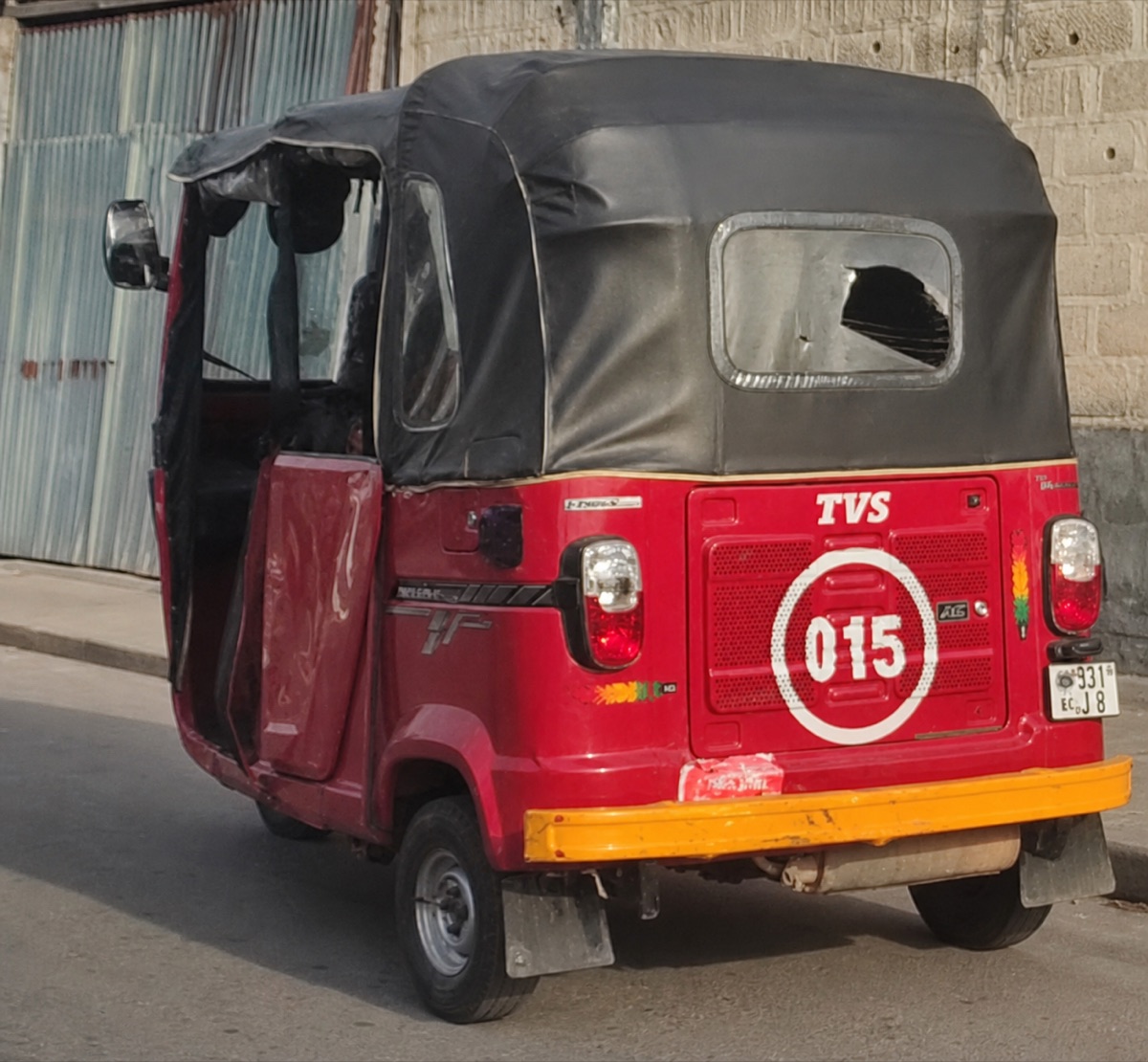
In Oyo, in northern Congo-Brazzaville, the motorbike taxis known as “Wewa” have quietly become the backbone of how the town moves. What once looked like a stopgap is now a daily essential for thousands of residents.
From Improvised Fix to Everyday Necessity
For a long time, the Wewa was treated as a last resort, the option you took only when nothing else came along. That perception has faded. Today, residents plan their commutes around these bikes.
The shift says a lot about Oyo itself. As the town grows, demand for quick, affordable movement has outpaced what conventional taxis can offer. The Wewa filled that gap, then made itself indispensable.
Always Running, From Dawn To Late Night
These bikes are on the road from first light until deep into the night. Their appeal is speed and flexibility, qualities that matter in a town where time and distance shape the working day. Few transport options match that rhythm.
“We know every corner of the city. Even at night, we are available to serve the people,” one driver explains. That availability is the heart of the service. A Wewa rarely keeps a passenger waiting for long, whatever the hour.
Crucially, the riders go where others will not. Cut-off neighbourhoods that ordinary taxis tend to skip are part of the daily route. For households in those districts, the Wewa is often the only practical link to the rest of town.
A Source Of Income For Young People
Beyond transport, the Wewa has become an economic lifeline. The trade has opened a door to work for many young residents who might otherwise struggle to find a steady source of income in Oyo.
The personal stakes are clear in the riders’ own words. “Being a Wewa allowed me to meet my needs and help my family,” says one young driver. For him, the bike is not just a job but a way to carry responsibilities at home.
That story repeats across the town. Each bike represents a small enterprise, a daily livelihood built on knowing the streets and showing up when people need a ride. The cumulative effect on local employment is hard to ignore.
Keeping Commerce And Daily Life Moving
The Wewa’s role stretches well beyond carrying individual passengers. The bikes keep trade and routine in motion, weaving through Oyo to connect people with the places they need to reach each day.
Traders rely on them to move goods and reach customers. Pupils use them to get to school, civil servants to reach their offices, and patients to reach care. In each case, the bike shortens a journey that might otherwise be slow or simply impossible.
This quiet utility is what has cemented the Wewa’s place in local life. It is not a luxury or a novelty. It is part of the practical machinery that lets an ordinary day in Oyo function as it should.
Road Safety Remains The Open Question
For all its benefits, the system carries a real cost, and road safety stands out as the central concern. The same speed and flexibility that make the Wewa useful also raise the stakes when something goes wrong.
The sector still operates with limited structure, and that informality has consequences. Encouraging the systematic wearing of helmets is one obvious step, a basic measure that could reduce the harm when accidents occur on Oyo’s busy routes.
There is also a broader call to organise the trade more firmly. Suitable regulatory frameworks would help bring order to a service that grew faster than the rules around it. The challenge is to protect both riders and passengers without smothering what works.
Striking that balance will not be simple. The Wewa’s strength lies in its responsiveness and reach, qualities that resist heavy bureaucracy. Any framework will need to preserve the service while making it safer for everyone who depends on it.
A Model Spreading Across The Country
What is happening in Oyo is not isolated. Other Congolese towns are developing the same kind of service, a sign that the Wewa answers a need felt well beyond a single locality in the north.
Sibiti, Dolisie, Nkayi and Pointe-Noire are all building out this form of transport. Their experience suggests the motorbike taxi has become a recurring feature of urban mobility across Congo-Brazzaville, shaped by local demand and similar gaps in conventional services.
Taken together, these examples point to a wider story. The Wewa is more than an Oyo phenomenon. It reflects how Congolese towns are inventing their own practical answers to the everyday problem of getting from one place to another.