
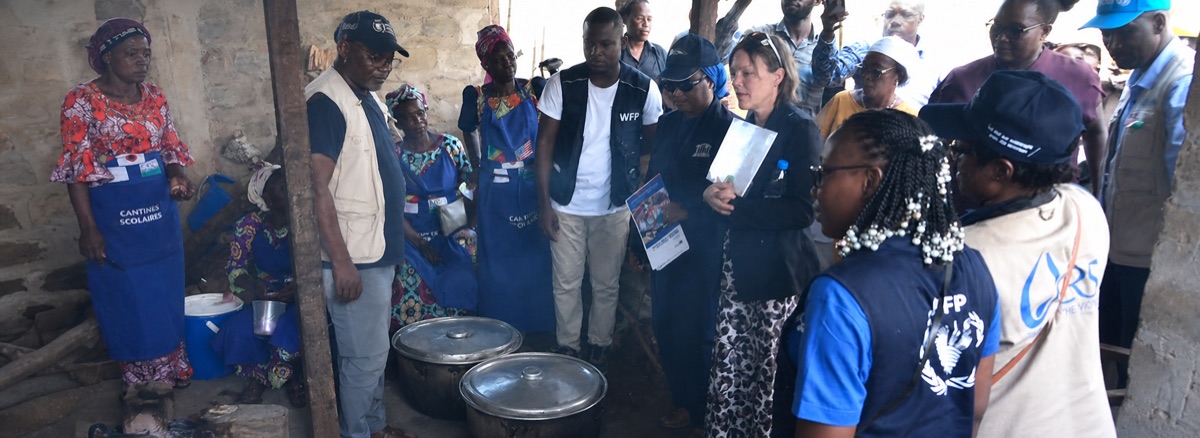
A quiet morning in the Pool department turned into a moment of scrutiny this week. Amanda Jacobsen, chargée d’affaires at the United States embassy in the Republic of Congo, walked into two primary schools to see where American money actually lands.
An American Diplomat Inspects the Pool’s Classrooms
On 8 April 2026, Jacobsen visited Samba Daniel and Jean Kimbémbé, two primary schools in the Pool department southwest of Brazzaville. Her aim was straightforward: evaluate, on the ground, the US-funded school canteen programme that keeps lunch trays full across the region.
These are not symbolic stops. School feeding has become one of the more durable threads in the relationship between Washington and Congo-Brazzaville, stretching back more than two decades and surviving several changes of government on both sides.
Two Decades and $100 Million Behind the Lunch Tray
The numbers explain the diplomat’s interest. Since 2001, the GovEd programme run by the United States Department of Agriculture has poured more than $100 million into Congolese school canteens, working alongside the World Food Programme and the Congolese government.
That partnership matters. Washington provides the bulk of the financing, the World Food Programme handles logistics and delivery, and the national government anchors the scheme inside the country’s own education system. Each partner depends on the others to keep meals moving.
For families in the Pool, a department still marked by the scars of past instability, a reliable daily meal at school is more than nutrition. It is a reason to send a child through the gate every morning, and a reason for that child to stay.
What 83,000 Daily Meals Actually Change
Today the programme serves daily meals to more than 83,000 children across 400 schools. The scale is significant for a country of Congo-Brazzaville’s size, and the effect reaches beyond full stomachs into the harder metrics that education officials track.
Attendance has risen where the canteens operate. Retention has improved too, meaning fewer pupils drop out mid-year. Teachers in feeding schools often describe calmer, more focused classrooms, because hunger no longer competes with the lesson for a child’s attention.
The gains are especially visible for girls, who make up close to half of the beneficiaries. In settings where families sometimes weigh whether a daughter’s schooling is worth the cost, a free meal can tip that decision toward the classroom.
Jacobsen framed the commitment in plain terms during her visit. “The United States is proud to support the Congolese people” in these priority areas, she said, linking the meals to broader goals of prosperity and stability. The remark ties a school lunch to a wider strategic picture.
The Funding Question Hanging Over 2026
Behind the optimism sits an open question: what happens after 2026? Long-term programmes of this kind live or die by their renewal cycles, and the people running this one are watching the calendar.
A representative of the World Food Programme voiced cautious confidence that financing could continue beyond 2026. That hope rests not only on continued American support but also on new interest from other quarters, which would spread the burden more widely.
Japan and the private sector have surfaced as potential partners, according to the World Food Programme’s account. Diversifying the donor base would reduce the programme’s exposure to any single budget decision in Washington and give the canteens a steadier footing.
For now, nothing is signed. The talk of fresh partners remains an expression of intent rather than a confirmed commitment, and the families relying on the meals will not feel the difference until pledges turn into delivered funds.
Why a School Canteen Becomes Foreign Policy
It is easy to read a canteen visit as routine. Yet the choice to send a senior diplomat into rural classrooms says something about how Washington measures its presence in Central Africa, where development spending and influence increasingly travel together.
Food assistance carries goodwill that headline-grabbing projects rarely match. A child who eats at school, and a parent who notices, form a quieter kind of diplomacy that compounds over years rather than weeks.
For Congo-Brazzaville, the arrangement eases pressure on a national education budget that must stretch across many demands. Outside financing for meals frees scarce resources for teachers, buildings and materials elsewhere in the system.
The Pool visit, then, was both an audit and a signal. Jacobsen came to verify that the dollars are working as intended, and to remind every stakeholder that the relationship behind those 83,000 daily meals still has momentum, even as its future funding waits to be confirmed.