
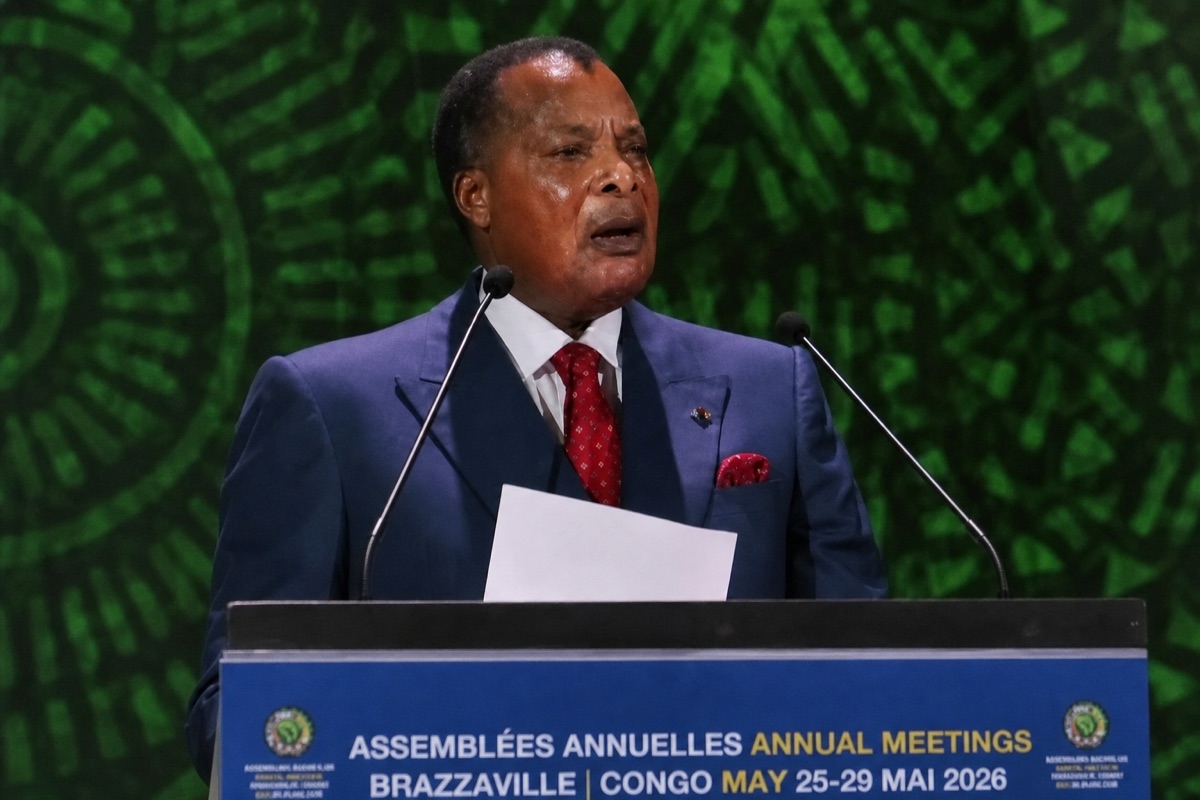
President Denis Sassou N’Guesso has welcomed heads of state and finance leaders to Brazzaville for the African Development Bank’s 61st Annual Meetings, calling for larger-scale resource mobilisation and a fairer global financial order for Africa.
Brazzaville Steps Into the Continental Spotlight
The Republic of Congo opened the African Development Bank’s 61st Annual Meetings in Brazzaville, with President Denis Sassou N’Guesso delivering the keynote address to an audience of heads of state and continental officials.
Standing before fellow leaders and the representatives of others, he said his country "honours itself" in hosting the gathering. The room carried the weight of a continent taking stock of its own ambitions.
Among those greeted by name was Mahamadou Issoufou, the former president of Niger, alongside the vice-president of the African Union Commission and members of the boards of the AfDB and the African Development Fund.
A Theme Built for a Fractured World
This year’s meetings unfold under the theme "Mobilising resources at scale to finance Africa’s development in a fragmented world." For Sassou N’Guesso, the wording is less a slogan than a diagnosis of the moment.
Financing Africa’s growth, he argued, now demands far more ambitious approaches. The needs are immense and stretch across infrastructure, energy, agriculture, industry, the digital economy, health, education, vocational training and environmental protection.
To draw in both African savings and international capital for structural projects, he said, the continent must deepen its financial markets, strengthen regional institutions, and expand the tools of guarantee, risk-sharing and blended finance.
The Bank as More Than a Lender
The president framed the AfDB as an institution that has accompanied African countries since its creation, backing infrastructure, energy access, food security, regional integration, industrialisation, private-sector growth and economic governance.
In his reading, that record makes it something larger than a financial body. He described the Bank as "an instrument of African solidarity," a phrase that placed the technical work of lending within a broader political story.
He also renewed his encouragement to Dr Sidi Ould Tah, president of the AfDB Group, and thanked the institution for choosing the Republic of Congo as host of the assembly.
Congo’s Long Game on Reform
Turning to his own country, Sassou N’Guesso pointed to what he called an old, solid and fruitful cooperation between the Republic of Congo and the Bank. Reform, in his telling, is a continuous undertaking rather than a single event.
The country, he said, is pursuing changes meant to improve public governance, strengthen planning, promote private investment, support industrialisation and accelerate the diversification of an economy long tied to a narrow base.
That effort is anchored, he added, in a long-term strategic vision he named Vision Congo 2063, a horizon that deliberately stretches decades beyond the immediate budget cycle.
Why the Diversification Question Matters
For a country whose public finances have leaned heavily on commodity revenue, the language of diversification is not abstract. It speaks to the everyday concerns of households, small businesses and young workers across Brazzaville, Pointe-Noire and the departments.
The push toward deeper markets and blended finance is, in plain terms, an attempt to widen where money comes from and how risk is shared, so that roads, power lines and digital networks can actually be built.
Whether such pledges translate into projects on the ground is the test that follows every summit. The president himself acknowledged as much, framing success in terms of "concrete commitments" rather than declarations.
What the Meetings Are Meant to Deliver
Sassou N’Guesso closed by expressing the hope that the assembly would prove fruitful and produce, in his words, "strong orientations and concrete commitments" for an Africa that is more resilient, more integrated and more prosperous.
He returned, finally, to the people the figures are meant to serve. The benefit, he insisted, must reach Africa’s populations directly, not remain confined to the conference halls of Brazzaville.
For the Republic of Congo, hosting the 61st Annual Meetings is both a moment of visibility and a quiet wager: that the continent can finance its own future on terms it helps to set.