
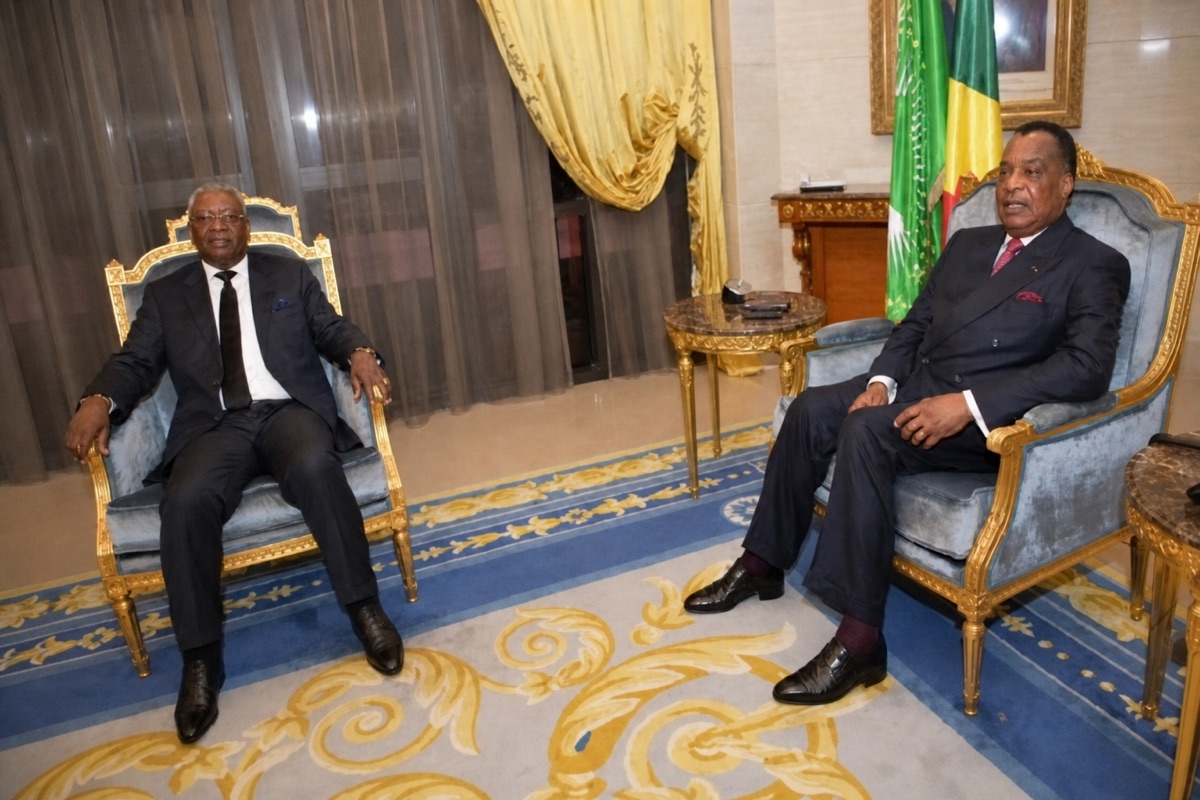
A Surprising Signal From the Top of the State
A political story circulating in Brazzaville suggests President Denis Sassou N’Guesso may be preparing an unexpected gesture toward his rivals. According to Les Échos Congo Brazzaville, the head of state could open his next government to figures from the opposition camp.
The reporting points to one name above all others. Pascal Tsaty Mabiala, the long-standing leader of the Union panafricaine pour la démocratie sociale, is being floated for the post of prime minister. Such a move would carry obvious symbolic weight.
For readers used to a sharply divided political landscape, the suggestion lands as something genuinely new. It would mean a recognised opposition voice stepping directly into the executive, rather than remaining outside it as a critic.
What Les Échos Congo Brazzaville Actually Reported
The outlet framed the information carefully. It stressed that the account was, in its own words, neither an April Fools’ joke nor an illusion produced by artificial intelligence. That insistence reflects how improbable the scenario might seem to many.
Beyond that framing, the publication described the idea as a deliberate political signal. It presented the possible appointment of Tsaty Mabiala as a calculated overture, not an offhand remark, while stopping short of treating it as a confirmed decision.
It is worth keeping the conditional tense in mind. The report speaks of an intention being weighed, not of an act already completed. Nothing in the account confirms that a formal offer has been made or accepted by anyone involved.
Pascal Tsaty Mabiala and the Weight of UPADS
Tsaty Mabiala is no newcomer to national life. As the figurehead of UPADS, he has occupied the role of an opposition reference point, a position that gives any talk of his entry into government real political resonance across the country.
UPADS itself carries history. The party has long stood as one of the recognisable structures of the opposition, and its leader’s profile is tied to that identity. Bringing him into the executive would therefore touch more than a single appointment.
Observers reading the report will note the tension at its heart. An opposition leader joining the cabinet would, in one sense, broaden the government. In another, it would raise questions about how that role sits alongside his party’s traditional posture.
The Backdrop of a Decisive Election
The reported overture does not appear in a vacuum. It follows the presidential election of March 2026, in which Denis Sassou N’Guesso was returned to office. The outcome was later validated by the Constitutional Court.
The recorded margin was striking. According to the source, the president secured 94.90 percent of the vote. A result of that scale tends to shape the political conversation that follows it, including debates about openness and inclusion.
Against such a backdrop, a gesture toward the opposition can be read in different ways by different audiences. Some may view it as a search for broader balance. Others will scrutinise the practical meaning behind the symbolism.
Why the Story Resonates Now
For a national readership across Brazzaville, Pointe-Noire and the departments, news touching the shape of the next government matters directly. The composition of the executive influences priorities, tone and the everyday signals sent from the centre of power.
The idea of an opposition figure at the Primature speaks to a recurring question in many democracies. How far does an electoral victory invite the winner to reach across familiar lines, and what does such a reach actually deliver in practice?
For now, the prudent reading is to treat the report as an indication rather than a settled fact. The source presents a possible direction of travel, attributed to itself, and frames it as significant without claiming the matter is closed.
What Remains To Be Confirmed
Several things stay open. No confirmed appointment has been announced in the account, and the report does not detail any acceptance from Tsaty Mabiala himself. The framing remains that of a scenario under consideration.
Readers should therefore weigh the difference between intention and decision. Political signals can precede concrete steps by some distance, and a name advanced for a post is not the same as a name installed in it.
What is clear is the direction of the conversation. According to Les Échos Congo Brazzaville, the question of opening the government to the opposition, with Pascal Tsaty Mabiala as the central figure, has entered the national debate in a way that demands attention.
As the picture develops, the test will be whether this reported openness moves from talk to tangible arrangement. Until then, the story stands as a notable marker in the political season that followed a decisive presidential vote.