
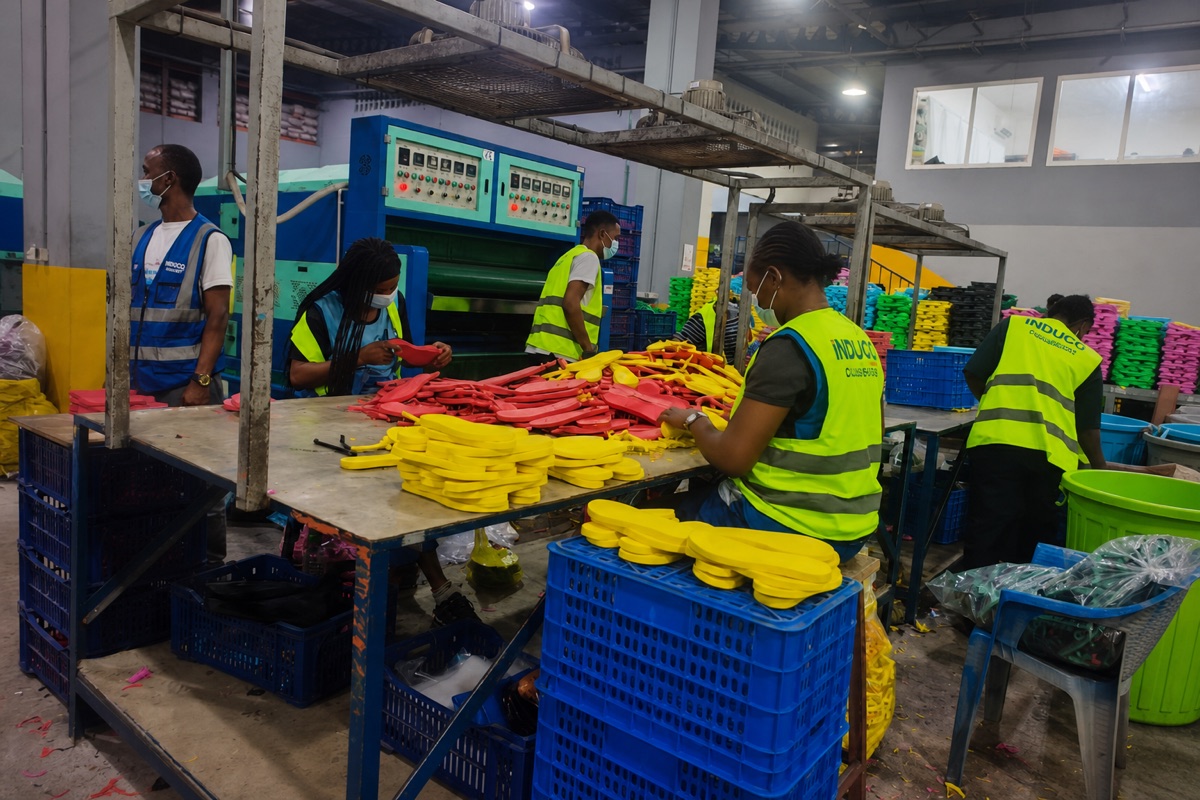
Half-empty plants in Brazzaville
Two manufacturing plants in Brazzaville are running far below what their machines can deliver. According to managers who hosted Industry Minister Michel Djombo, their factories operate at only about 50% of real capacity. The reason they gave was blunt and familiar: not enough electricity.
The minister toured Ragec, which makes beverages and snacks, and Induco, a maker of household goods, plastic footwear, foam and electrical equipment. The visit was meant to gauge daily operations and to hear, first-hand, what is slowing the country’s industrial ambitions.
When the meter dictates the output
For both companies, the bottleneck is the same. Insufficient power supply keeps production lines from running at full tilt. Idle equipment and interrupted shifts translate into lost output, a problem the managers framed as the single biggest brake on their growth.
The figure they shared is striking in its simplicity. Plants built to produce a certain volume are delivering only half of it. That gap is not a matter of demand or skills, the managers stressed, but of a basic input that should arrive through the wires.
During the exchanges, the two firms asked the minister directly to help resolve the electricity shortfall. The request was less a complaint than a condition: without stable power, the rest of their plans stay on paper.
Recycling project hangs on the grid
Induco used the visit to outline an ambitious step forward. The company described a waste-recycling project that, according to its managers, could create between 2,500 and 3,000 jobs. Beyond employment, the venture is presented as a way to cut production costs and reduce reliance on imports.
That promise, however, comes with a clear string attached. The expansion appears tied to the same unresolved question of power supply. A recycling operation of that scale needs dependable electricity, and managers signalled that progress depends on fixing the energy issue first.
The logic is straightforward for a manufacturer. Heavier processing means heavier power needs, so a plant already short of electricity cannot credibly scale up. The recycling plan therefore doubles as a measure of how much the country’s industrial future leans on its grid.
What the visit revealed about local industry
The two companies are not marginal players. Between snacks, beverages, plastic goods, foam and electrical products, they cover everyday items that fill Congolese shelves. Keeping such plants running at half speed has consequences that reach well beyond their own balance sheets.
For workers, half capacity can mean fewer hours and slower hiring. For consumers, it can mean more imported substitutes on the market. For the wider economy, it underlines how a single infrastructure weakness can hold back several sectors at once across Congo-Brazzaville.
The managers’ message, delivered in person rather than through paperwork, carried a certain weight. By inviting the minister onto their factory floors, they turned an abstract policy debate into something concrete: machines that could run more, if only the power held.
A minister who listened, and what comes next
Djombo’s response struck a measured tone. He praised the quality of the investments made by both firms and welcomed the ambitions they laid out, including Induco’s job-creating recycling plan. The recognition acknowledged that private operators are willing to commit, provided conditions improve.
At the same time, the minister took stock of their concerns over electricity. He did not brush the issue aside; he weighed it as part of the picture. For the companies, that attention is a starting point, though attention alone does not turn a turbine.
The visit leaves a clear equation on the table. Congo’s industrial drive has investors, projects and capacity ready to be used. What it lacks, at these two sites at least, is the steady current that would let those assets perform as designed.
Whether the minister’s tour translates into firmer power supply remains the open question. The managers have stated their case and named their figure. The next chapter belongs to the policymakers and utilities who control the switch that, for now, keeps these plants at half strength.
Why electricity sits at the heart of the debate
Energy is rarely the headline in stories about growth, yet here it is the whole story. Two functioning, investment-ready firms describe a ceiling they cannot break through on their own. The cause is not strategy or market, but the simple availability of power.
That framing matters for how Congo-Brazzaville thinks about industrialisation. Roads, skills and capital all count, but they assume a working grid. The Brazzaville visit is a reminder that, until the lights stay on reliably, factories will keep producing half of what they promise.