
Blessing signals new health era in Talangaï
On 27 October 2025, songs of praise and camera flashes filled rue Liranga in Brazzaville’s 6th arrondissement as Archbishop Bienvenu Manamika Bafouakouahou blessed the brand-new Catholic medico-social centre of the Sisters of the Cross, only two hundred metres from Saint-John-the-Baptist parish.
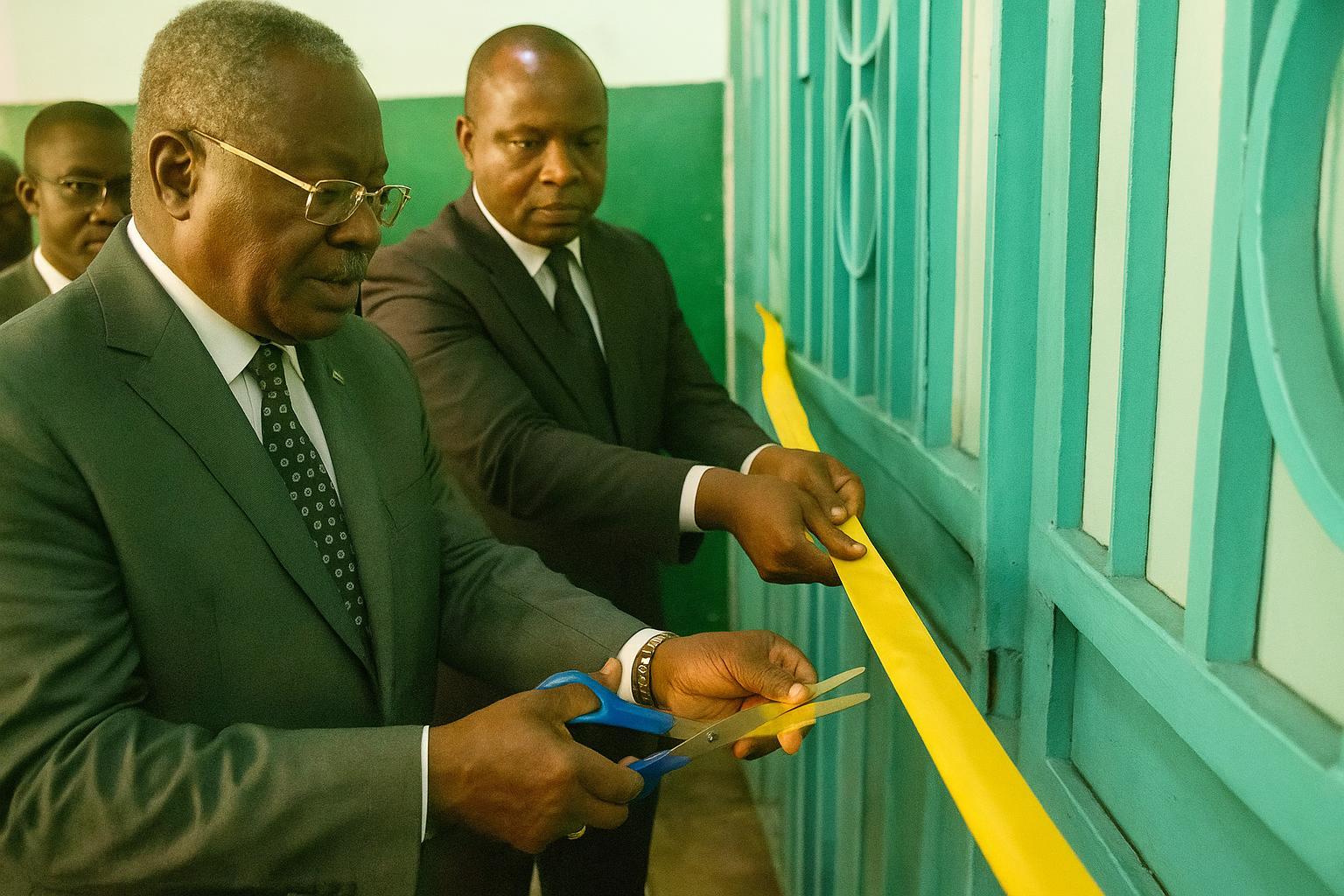
Health and Population Minister Jean-Rosaire Ibara cut the ribbon moments later, officially placing the facility at the service of the public. The dual ceremony symbolised the close link between the Republic’s health strategy and the Church’s long-standing social commitment.
State–Church partnership rooted in 2017 accord
The Archbishop reminded the crowd that health “is not a luxury but a right.” He urged professionals and faithful to view the centre as a direct fruit of the 2017 Framework Agreement encouraging faith-based initiatives to take deeper root across the archdiocese.
Minister Ibara echoed that sentiment, saying the new building “shows our resolve to care not only for bodies but also for souls.” His words highlighted official recognition of the Sisters’ mission, first welcomed into Congo-Brazzaville in 1958 at Makoua and Ewo.
Funding details were not disclosed, yet both Church and government speakers credited the Framework Agreement with the Holy See for carving a clear legal pathway. The accord spells out how faith-inspired institutions can contribute to national goals while enjoying administrative facilitation.
Range of services under one modern roof
Talangaï’s demographic weight has long stretched the capacity of its reference hospital. Families often travelled several kilometres for a simple prenatal check-up or vaccination. Officials believe the new centre will ease congestion through proximity services and a social safety net for vulnerable households.
Inside, residents will find general, surgical, paediatric and prenatal consultations, a minor surgery theatre, an expanded immunisation programme, a laboratory, an ultrasound room and an institutional pharmacy. A modern maternity ward fitted with incubators and a fully equipped operating block completes the platform.
“We have configured the operating block for routine interventions, the sort that stop complications before they become emergencies,” a supervising Sister said after the tour, pointing at stainless-steel tables and climate-controlled cupboards.
The centre’s white façade, crowned by the cross of Chavanod, hides a carefully zoned interior. Naturally lit corridors lead to multilingual posters, while a discreet chapel near the entrance invites patients and staff to a moment of quiet reflection.
A mission born in 1974 now expanded
The choice of Talangaï is anything but random. Sister Natacha Ohoussi, regional superior for Central Africa, recalled that the quarter hosted the congregation’s first Brazzaville mission fifty-one years ago, sealing an enduring bond with residents.
Over five decades the Sisters have tutored women, guided young girls, supported catechists and run a modest parish library. The new medico-social centre, explained Sister Natacha, channels the same compassion, “participating in the mystery of Jesus dead and risen for the salvation of all.”
April 1974 marked the Sisters’ first settlement in Talangaï at Saint-John-the-Baptist parish. They taught sewing, cooking and basic accounting, giving hundreds of women tools to start micro-enterprises. Many residents say memories of that empowerment fuel today’s enthusiasm for the health facility.
Residents, staff voice hope and responsibility
Local residents expressed relief. “My granddaughter was born premature last year; we spent nights on the corridor of the big hospital,” recounted Mama Augustine, a vegetable vendor from block 665. “With the new incubators here, other babies will not suffer the same.”
For young nurse Odile, freshly recruited, the launch is a career springboard. “I trained in Brazzaville but dreamed of serving my own neighbourhood,” she smiled, adjusting her badge. Management expects staffing to grow as attendance rises, creating opportunities for local youth.
Sustaining access and community ownership
Hymns rose in unison as visitors signed the record book and Mass concluded the event. The melody blended with the hum of laboratory freezers already storing vaccines, a vivid picture of harmony between science and faith at the heart of Brazzaville.
Beyond celebration, the daily challenge now lies in maintenance and affordable tariffs. Sister Natacha pledged transparent pricing and social counselling able to direct the poorest families toward solidarity funds so that “no one is turned away on financial grounds.”
Archbishop Manamika invited the faithful to protect the premises. “A centre is born, and it will live only through your love,” he declared, lifting his crozier. Applause followed, echoing through the new corridors like a promise for Talangaï.
As the midday sun struck the zinc roofs of quarter 665, the crowd dispersed with the feeling that something more than bricks and mortar had arrived. In the minister’s words, the clinic stands as “a handshake between Church and Republic” that the community now intends to cherish.
Health experts attending the launch cautioned that the centre’s success will depend on community uptake and continuous supply of medicines, yet they expressed confidence that its positioning inside the neighbourhood will foster early consultations and preventive care, reducing costly referrals downtown.