
Executive committee meeting points toward Brazzaville gathering
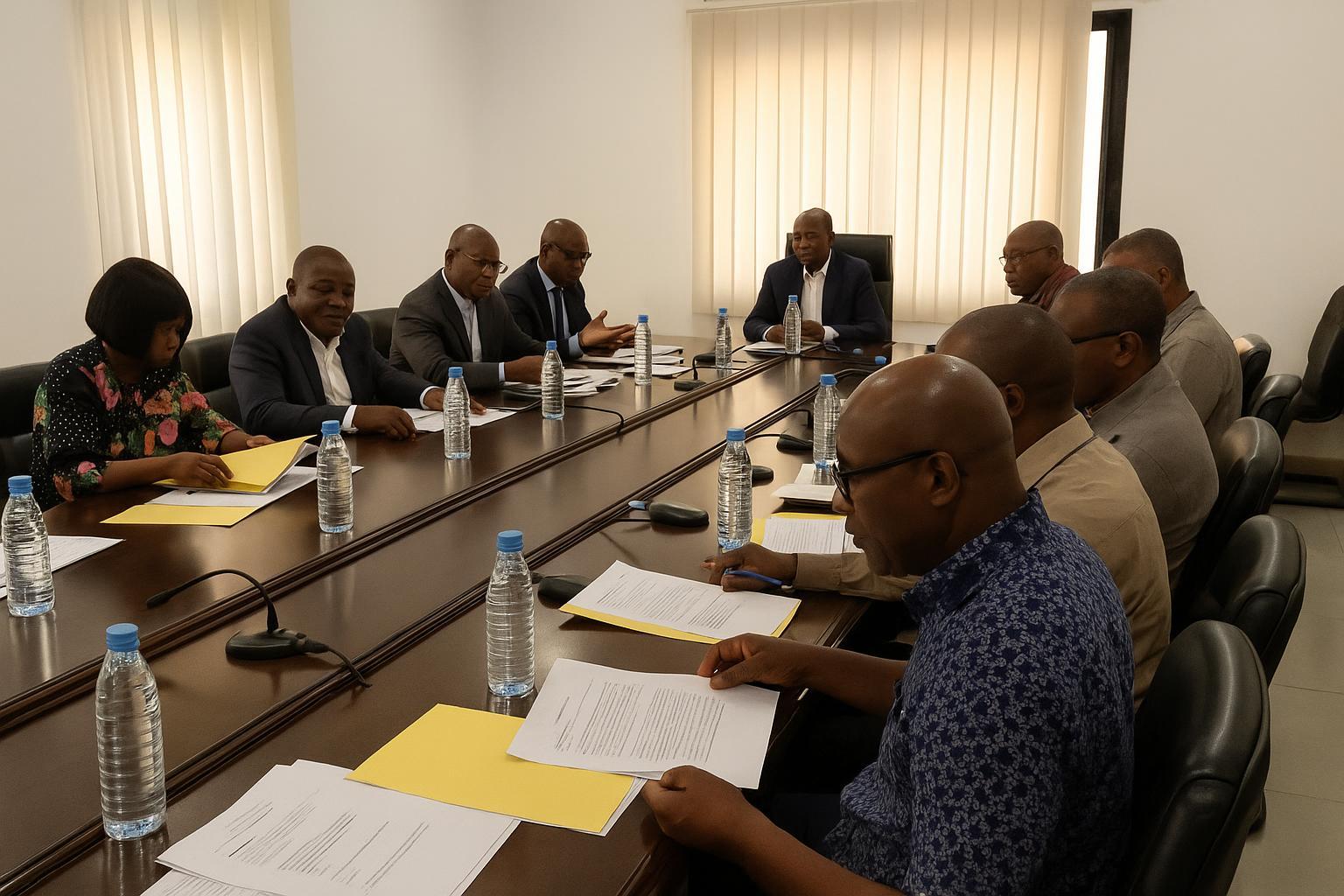
Inside a meeting room at Fécofoot’s headquarters on 2 October, the sport’s top decision-makers in Congo spent several hours reviewing every page, annex and agenda line that will land on delegates’ tables this Saturday. The session, chaired by federation president Jean Guy Blaise Mayolas, served as the final dress rehearsal for the ordinary general assembly set for 4 October in Brazzaville.
Opening the proceedings, Mayolas underscored that the get-together was more than a procedural obligation. “Our meeting today, given its stakes, carries special importance,” he reminded colleagues. He asked each participant to engage with seriousness, objectivity and a spirit of responsibility so that the outcomes live up to expectations.
Finalising working documents for 4 October
Delegates first turned to a thick bundle of preparatory documents: a draft activity report, financial statements, proposed amendments and technical reviews from the previous season. Line by line, they verified figures, harmonised wording and assured compliance with statutory deadlines to prevent last-minute surprises once the floor opens to all club and league representatives.
By the end of the afternoon, the committee agreed that the material was ready for duplication and distribution. Members praised the technical department for compiling annexes earlier than in past cycles, a move viewed as proof of the rigorous approach Mayolas wanted to instil.
A call for unity in the pursuit of growth
Throughout the exchanges, the president kept emphasising the same idea: constructive debate must translate into tools for sustainable football development. “It is together, in this collaborative spirit, that we must lay the groundwork for an assembly worthy, constructive and full of hope,” he said, his voice echoing across the modest auditorium.
Participants nodded, mindful of the challenges local football still faces—from infrastructure gaps to club financing—yet confident that an organised and forward-looking assembly can set a positive dynamic well before the new championship year kicks off.
New leaders enter the Fécofoot boardroom
One highlight of the 2 October meeting was the introduction of three fresh personalities who will help steer the federation. Filling vacancies left by recent departures, Lucienne Virginie Mokoko moved up to a vice-presidential seat, while Eudes Eric Mouandhat accepted another vice-presidency and Hyppolite Okondzi Kongolo joined as an executive member.
Their appointments, announced by Mayolas and applauded by attendees, will be formally presented to the wider assembly on Saturday. The trio will then assume full voting rights, bringing additional perspectives to policy decisions that can affect leagues from Pointe-Noire to Ouesso.
Symbolic promotion for women’s leadership
Mokoko’s elevation drew particular attention. In a federation historically dominated by men, her promotion signals broader inclusion. Several committee members privately noted that her background in club administration and youth development could enrich debates on grassroots priorities.
Observers inside the room said the gesture matches wider initiatives across Congolese sport to encourage female leadership, a stance consistent with the government’s support for gender balance in national institutions.
Balancing continuity with fresh energy
For Mouandhat and Okondzi Kongolo, the coming days will involve quick immersion into budget reviews, competition calendars and development partnerships already in place. Sources close to the executive insisted that continuity remains essential; the newcomers are expected to respect existing strategic plans while injecting new ideas drawn from their regional experience.
Their first test will be Saturday’s detailed discussion of last season’s financial report, an item historically scrutinised by club presidents seeking clarity on resource allocation between elite and amateur tiers.
Agenda items delegates will scrutinise
Although the executive kept the exact order of Saturday’s agenda under wraps, participants confirmed that statutory issues, including the approval of accounts and the adoption of the coming season’s calendar, top the list. Technical matters such as referee training and youth competitions appear as separate chapters designed to spark focused debate rather than sprawling interventions.
Members also hinted at a short presentation on the federation’s relationship with international partners, including the Confederation of African Football, but stressed that no new elections are scheduled for this session.
Why Saturday’s assembly matters for clubs
For first-division clubs, the assembly serves as the most direct channel to influence regulatory tweaks—ranging from foreign-player quotas to transfer-window timing—that can affect roster building. Smaller community sides, meanwhile, watch the gathering for cues on subsidy allocations and coaching programmes that keep local academies alive.
As one committee veteran put it, “A transparent assembly helps every stakeholder plan, and planning is half the victory on the pitch.” His remark underlines how administrative stability feeds competitive performance.
Expectation of a smooth, inclusive session
The executive committee emerged confident that, with paperwork settled and protocol rehearsed, the assembly will unfold in an atmosphere marked by mutual respect. Security arrangements at the venue are in place, invitations have gone out, and translation teams stand ready for delegates arriving from multilingual departments.
Mayolas, speaking to reporters briefly after adjournment, predicted a “smooth, productive session that will reflect the unity of our football family.” He thanked colleagues for what he termed a “constructive spirit” during the preparatory work.
Next steps after the assembly
Once the ordinary assembly wraps up, the federation plans to publish a communiqué summarising resolutions and timelines for implementation. Early priorities include final confirmation of league start dates, acceleration of youth-league restructuring and renewed engagement with provincial training centres.
Officials expect that clear follow-up will reinforce confidence among domestic sponsors and international partners alike, adding momentum to the reforms charted over recent seasons.
A broader reflection on sports governance
Fécofoot’s methodical approach echoes current trends in Congolese sports administration that favour meticulous documentation and inclusive discussion. Analysts point out that the stabilisation of governance structures aligns with national objectives to promote talent development and professionalise competitions, reinforcing the country’s standing in regional tournaments.
Saturday’s meeting, though confined to football, will therefore resonate beyond stadiums, providing a case study in how federations can blend continuity, renewal and transparency.
Keeping eyes on the pitch
While administrators refine statutes, players across the republic continue training, eager for final confirmation of match dates. Coaches in Brazzaville, Pointe-Noire and internal departments have already drawn preliminary preseason schedules, waiting only for the assembly’s seal to finalise travel plans.
For supporters, the ordinary assembly becomes the unseen engine powering the spectacle they cherish every weekend. A well-run meeting today often translates into seamless match-day experiences tomorrow.
Anticipated outcomes and cautious optimism
Stakeholders interviewed after the 2 October session expressed measured optimism. They cited the early completion of documents and the inclusive tone as signs that contentious debates might give way to consensual resolutions. Yet they remain aware that unforeseen amendments can surface once microphones open to the floor.
Still, the prevailing sentiment leans positive, buoyed by the clarity of the preparatory roadmap and the leadership’s call for constructive dialogue.
Final countdown to 4 October
Only logistical details—badge printing, seating arrangements, audio-visual tests—remain on the organisers’ checklist. Communication officers have scheduled a briefing for local media on Friday to outline coverage rules and ensure that official announcements reach supporters swiftly.
By Saturday morning, delegates will gather, agendas in hand, to move from preparation to decision. The moment will mark the federation’s latest step in consolidating governance while nurturing the enduring passion that football generates across Congo.