
Congo-Brazzaville’s football authorities have set a firm date for their next big internal appointment, and in the same breath thrown a lifeline to two of the country’s flagship clubs ahead of a hard continental deadline.
June 13 Assembly Locks In a Decisive Date
The Congolese Football Federation (Fécofoot) will hold its ordinary general assembly on June 13, 2026. The decision came out of the Executive Committee’s session of April 22, with the venue to be confirmed at a later stage.
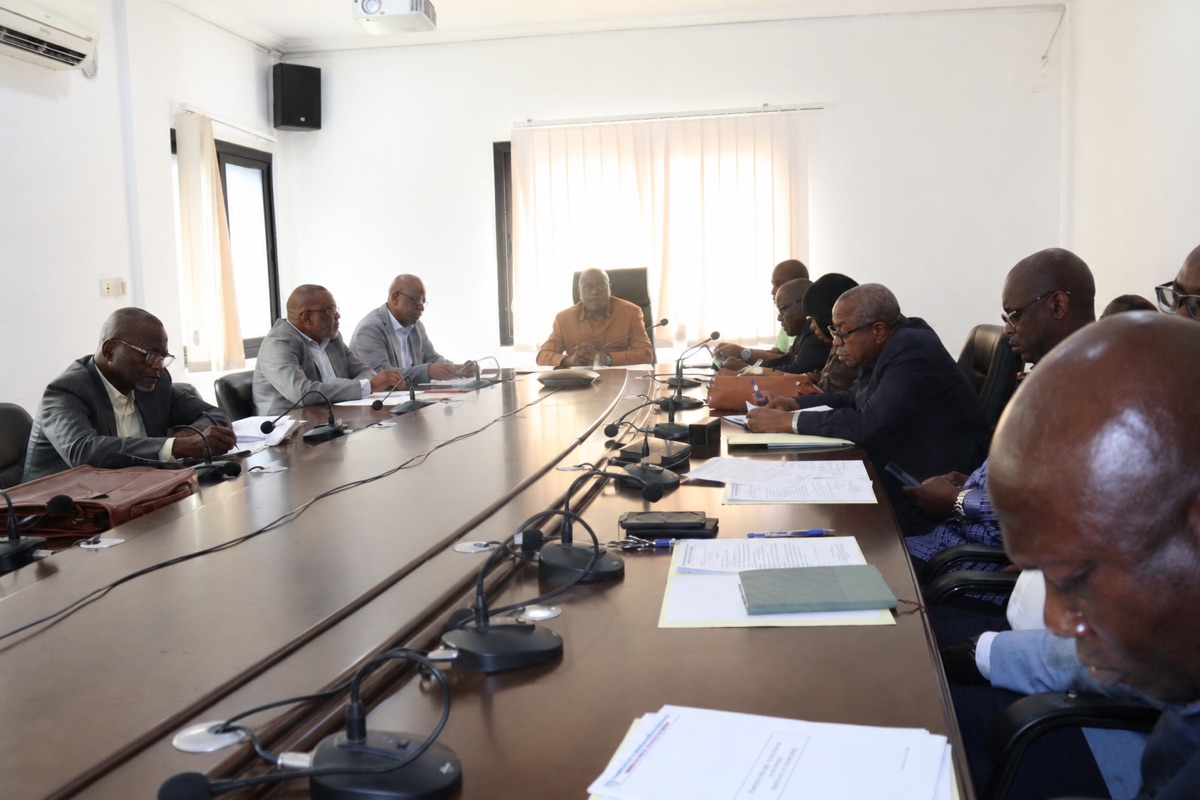
That meeting was chaired by Henri Endzanga, the first vice-president currently serving as interim head of the federation. His leadership of the session signals continuity at the top while the federation prepares for a formal gathering of its members.
For a national body that governs every level of the game, an ordinary general assembly is more than a calendar entry. It is the moment when administrators, league officials and club representatives take stock, weigh decisions and shape the season ahead.
AC Léopards and AS Otohô Cleared for CAF Return
The most concrete outcome of the April 22 session concerns the continent. The Executive Committee approved the re-entry of AC Léopards of Dolisie and AS Otohô into the interclub competitions run by the Confederation of African Football (CAF).
AC Léopards will line up in the 2026-2027 CAF Champions League, while AS Otohô has been entered for the CAF Confederation Cup. Both clubs now have a defined route back to the continental stage, with familiar weight on their shoulders.
The committee framed the move as a response to circumstance. It said the decision was taken “in the absence of any national competitions,” and with one eye firmly on the June 30, 2026 deadline imposed by CAF for confirming participants.
A Season That Tested Both Clubs
Neither side arrives on the back of a smooth continental run. This season, AC Léopards went out in the preliminary round, beaten on penalties by Mozambique’s Black Bulls, a thin margin that often decides such ties.
AS Otohô went further before falling. The club reached the semi-finals before being knocked out by Egypt’s Zamalek, a heavyweight name in African club football and a measure of how far Otohô had pushed.
Behind those results sits a structural worry the federation itself acknowledges. The absence of national competitions is seen as a handicap, leaving clubs short of competitive rhythm when they step up against seasoned continental opposition.
Training and Refereeing Move Up the Agenda
The Executive Committee did not stop at fixtures and dates. It also lined up a set of capacity-building activities aimed at strengthening the people who keep the game running away from the floodlights.
Workshops for academy administrators and youth league officials were scheduled for late April and into May. The federation also planned FIFA MA courses for young referees in Brazzaville, an investment in the match officials of the coming years.
These programmes point to a longer view. Reinstating clubs in CAF competitions addresses the present, but developing administrators and referees speaks to the durability of Congolese football well beyond a single season.
Governance and FIFA Backing in Focus
In his opening address, the interim president set the tone by stressing the need to “reinforce governance.” It was a pointed message for a federation operating under an interim arrangement and preparing to face its members.
Endzanga also noted that FIFA had restated its support for the Executive Committee. That reassurance matters, lending external credibility to the body’s decisions at a moment when the assembly date and continental entries draw close scrutiny.
Taken together, the choices made on April 22 read as an attempt to steady the ship. By fixing the assembly, securing CAF places and pushing training forward, Fécofoot is trying to align short-term obligations with longer-term ambitions.
What Comes Next for Congolese Football
The immediate calendar is now clearer. CAF’s June 30 deadline gives the federation a narrow window to finalise its continental commitments, while June 13 offers a platform to discuss direction, accountability and the season to come.
For supporters of AC Léopards and AS Otohô, the message is one of renewed opportunity. Both clubs return to the African arena carrying the lessons of recent exits and the expectations that come with representing the country.
The wider question concerns the domestic game. As long as national competitions remain absent, clubs will keep heading into continental ties under-prepared, and the federation’s stated push for stronger governance will face its real test on the pitch.