
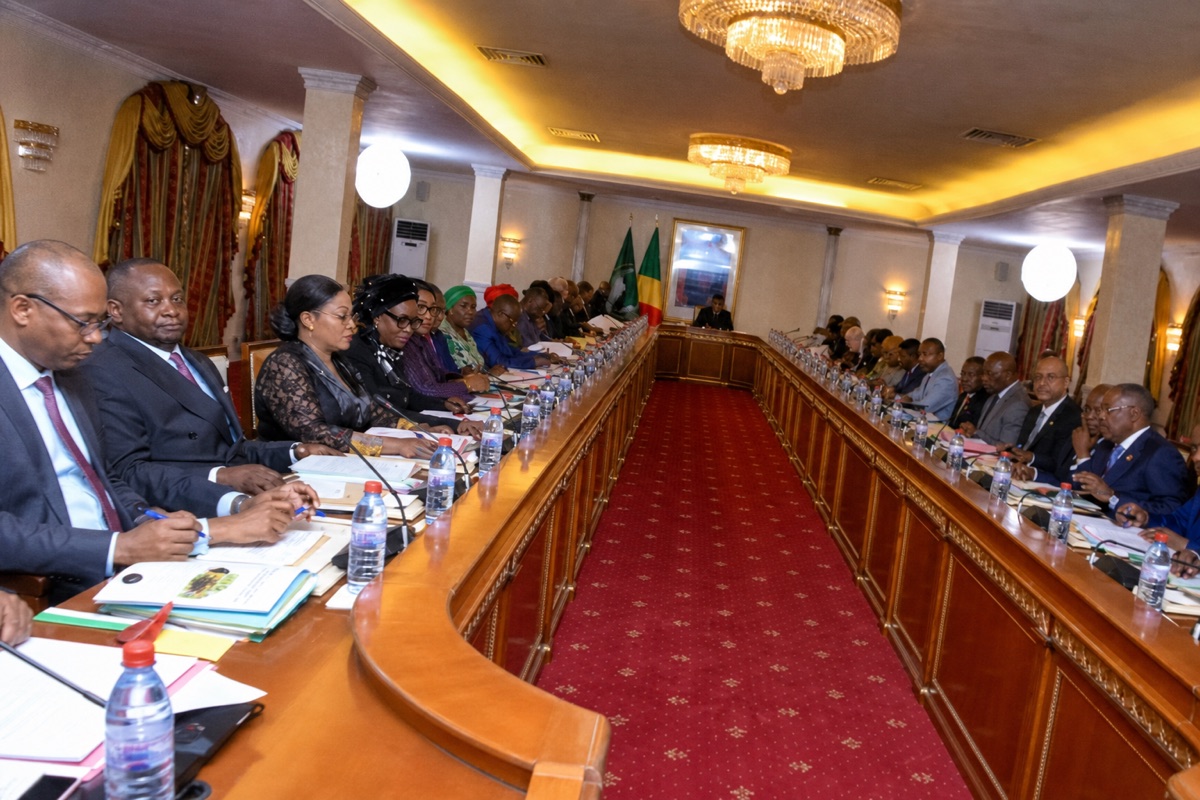
A Cabinet Meeting That Tied Industry to Mobility
Congo-Brazzaville’s Council of Ministers met on June 18, 2026, at the Palais du peuple. President Denis Sassou N’Guesso chaired the session, which ran from 10:00 to 13:30. Several files moved forward, but two decisions stood out for their reach.
The morning blended the technical and the strategic. Ministers signed off on university statutes, urban sanitation, and senior appointments. Yet the headlines belonged to mining and to a quieter promise about how Africans will soon cross the country’s borders.
Dangote Secures a $3 Billion Potash Permit
The most consequential item came from the mining portfolio. The cabinet awarded an exploitation permit for potash salts to Dangote Fertilizer Limited Congo. The figure attached to the project is striking: a stated investment of three billion US dollars.
That number places the deal among the largest single industrial commitments discussed by the government this year. According to the official record, the project is expected to generate 800 jobs, a tangible promise in a labour market where formal employment remains scarce.
Potash matters because it feeds fertiliser, and fertiliser feeds farms. A producer of Dangote’s scale entering Congo’s subsoil signals confidence in the country’s geology, and in its willingness to host heavy, capital-intensive industry over the long term.
The compte rendu did not detail timelines, royalty terms, or the permit’s geographic footprint. What it confirmed is the green light itself. For now, the permit stands as an intention backed by a large figure, awaiting the slower work of construction and extraction.
A Visa Door Opening to the Continent
The second flagship announcement surfaced under communications, almost in passing. Officials reported on the African Development Bank’s annual meetings and, alongside that briefing, signalled the suppression of visa requirements for African nationals from January 1, 2027.
The measure, as presented, would let citizens of African states enter Congo-Brazzaville without the usual visa formalities. It echoes a broader continental conversation about free movement, one that many governments invoke more often than they implement.
If applied as stated, the change could ease travel for traders, families, and the diaspora moving across Central Africa. The record gave no further conditions, leaving the precise scope to future regulatory texts.
Read together, the potash permit and the visa pledge sketch a posture: open the ground to foreign capital, and open the borders to fellow Africans. Whether the two gestures reinforce each other in practice will depend on follow-through.
Universities, Sanitation, and the Everyday State
Beyond the marquee items, the cabinet handled matters that touch daily life. Ministers adopted the statutes of the University of Loango and revised the retirement regime for staff at Marien-Ngouabi University, the country’s flagship campus.
These decisions rarely make front pages, yet they shape the careers of academics and the futures of students. A new university framework and a reworked pension rule together suggest attention to higher education’s structure, not only its enrolment numbers.
Sanitation also reached the table. The government adopted a national sanitation policy for 2026 to 2035. Its stated aim is to guarantee what officials called sustainable, inclusive, universal, and equitable access to sanitation services across the country.
A ten-year horizon implies ambition that outlasts any single budget cycle. For households in Brazzaville, Pointe-Noire, and the departments, the test will be whether plans on paper translate into pipes, treatment, and cleaner neighbourhoods.
Appointments in Research and Hydrocarbons
The session closed with personnel decisions. Several directors general were named in research and in hydrocarbons, two sectors central to Congo’s economic identity. The oil-linked appointments, in particular, carry weight in a state whose revenues lean heavily on energy.
The record did not name the individuals in the summary provided, but the placement matters. Leadership at the top of research bodies and hydrocarbon agencies often sets the tone for how technical institutions perform between elections and budget seasons.
What This Council Tells Us
Taken as a whole, the June 18 session reads less like routine administration and more like a statement of direction. A multibillion-dollar mining permit, a continental visa opening, a decade-long sanitation plan, and fresh appointments form a coherent message.
The government is signalling that it wants foreign investment, regional integration, and modernised public services to advance in parallel. Announcements, however, are only the first step. The harder chapter is delivery, measured in jobs created, borders eased, and services that actually reach citizens.
For readers across Congo-Brazzaville and the diaspora, the dates to watch are clear: the rollout of the Dangote project, and January 1, 2027, when the visa promise meets reality.