
Brazzaville Signals Shift in Economic Focus
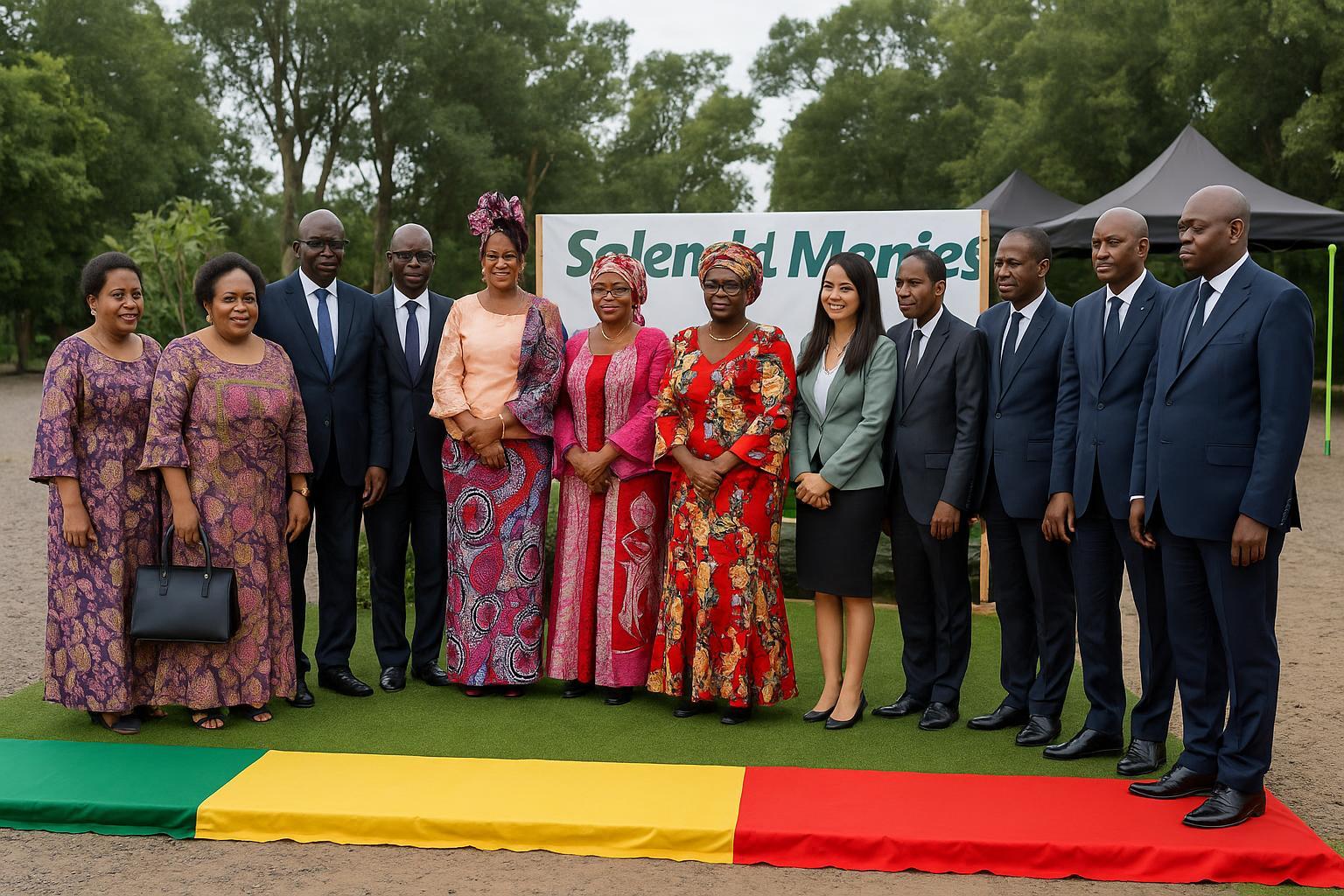
In a packed conference hall overlooking the Congo River, Minister of Small and Medium-Sized Enterprises and Handicrafts Jacqueline Lydia Mikolo announced the start of a detailed policy-drafting exercise designed to reshape the nation’s private-sector landscape. UNDP officials and technical partners nodded in approval as cameras rolled.
Minister Mikolo framed the initiative as a pivotal wager on domestic ingenuity. “We intend to turn local businesses into regional champions,” she affirmed, her words echoing ambitions set out in the National Development Plan 2022-2026. Observers view the moment as a tangible step toward long-sought diversification away from oil revenues.
Why Diversification Matters for Congo Now
Hydrocarbons still account for roughly 80 percent of export earnings, exposing the economy to price swings (World Bank, 2023). Covid-19 and volatile crude benchmarks underlined the urgency of cultivating alternative growth engines. Analysts at the African Development Bank argue that vibrant SMEs can raise productivity and cushion external shocks.
With regional integration accelerating under the African Continental Free Trade Area, countries able to supply competitive goods stand to capture new markets. Congo’s policymakers believe that empowering artisans, agro-processors and tech start-ups may transform the nation from raw-material exporter to value-added hub.
Inside the Policy Drafting Process
The ministry has convened a task force of civil servants, bankers, incubator managers and academic researchers. Over the next six months the group will collect field data, benchmark against ECOWAS and EAC models, and draft guidelines on finance, training, market access and quality standards, officials said.
UNDP resident representative Adama Sarr called the method “participatory and inclusive,” stressing that consultations will extend to women entrepreneurs in Pointe-Noire and artisan cooperatives in Ouesso. Such engagement mirrors best practices recommended by the International Labour Organization for SME policy coherence.
Financing the Ambition
Limited credit has long stifled Congolese enterprises. Central-bank figures show that loans to SMEs amount to just 8 percent of total lending, well below the CEMAC average. The forthcoming blueprint is expected to propose guarantee schemes, interest-rate subsidies and a dedicated innovation fund.
A first concrete gesture came during the launch ceremony, where the ministry and UNDP signed a co-financing letter for a modern “Village of Handicrafts” in Brazzaville. The complex will host showrooms, training labs and e-commerce logistics, a pilot meant to demonstrate bankable potential within the crafts sector.
Digital Tools and Skills Upgrading
Policy drafters place digitalisation at the center of competitiveness. Mobile money penetration now surpasses 40 percent, opening pathways for cash-flow management and online sales. The plan envisages partnerships with telecom firms to extend broadband to rural clusters and to subsidize cloud services for start-ups.
Equally crucial is human capital. A 2022 survey by the University of Marien-Ngouabi found that only one in five small firms offers formal employee training. New measures aim to integrate technical colleges with enterprise needs, certify artisans, and encourage continuous learning through micro-credentials.
Voices from the Ground
Pointe-Noire food-processing entrepreneur Grâce Bouity welcomed the initiative. “We need clear standards and easier customs procedures to export cassava chips to Gabon,” she said. Similar optimism comes from master carpenter Célestin Okemba, who hopes the Village of Handicrafts will spotlight Congolese design and attract diaspora buyers.
Bankers strike a pragmatic note. “Credit risk remains, but a government guarantee could unlock portfolios,” observed Armand Ndinga, SME manager at a leading commercial bank. Development economists caution that timelines matter. “Execution speed will determine credibility,” noted Dr. Mireille Dzon of the Economic Policy Center in Brazzaville.
Regional Positioning under AfCFTA
Congo’s new SME compass aligns with continental dynamics. AfCFTA secretariat data indicate potential intra-African trade gains of up to 52 percent by 2035. To harness these flows, policymakers emphasize standards certification and logistics corridors linking Brazzaville to ports in Pointe-Noire and Matadi.
Experts also point to neighboring Rwanda’s SME policy as a model for export-oriented clusters. Adapting such lessons to Congo’s resource base—timber, agri-products, creative industries—could foster specialized zones that feed into Central African value chains while respecting environmental safeguards endorsed at COP27.
Measuring Success and Building Momentum
The draft policy is expected to set quantitative targets: raising SME contribution to GDP from 10 percent to 25 percent by 2030, creating 200,000 direct jobs, and doubling the number of formally registered artisans. Monitoring will rely on digital dashboards supported by the National Statistics Institute.
Continuous dialogue appears assured. The ministry has scheduled quarterly stakeholder forums and plans to publish an annual “State of SMEs” report. Minister Mikolo summarized the ethos succinctly: “Our compass will be data, transparency and results.” Observers believe such discipline can reinforce investor confidence and developmental partnerships.