
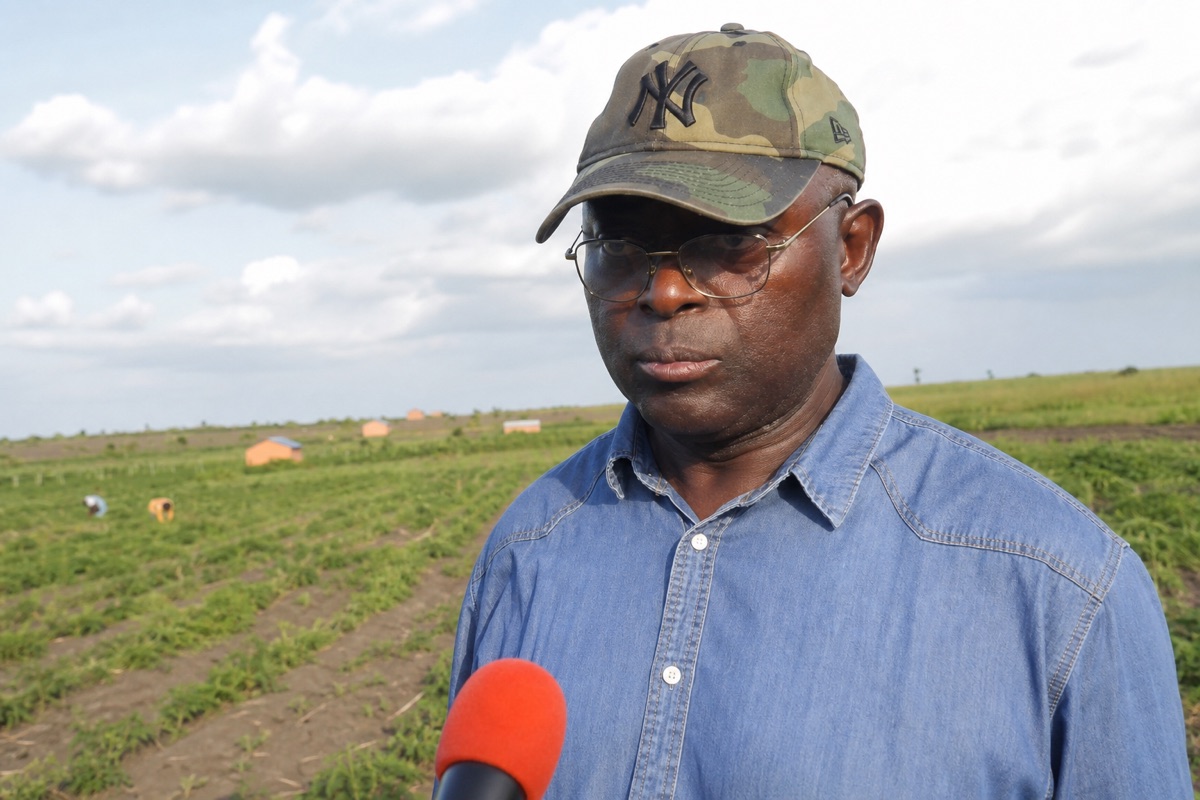
In the rolling hills of the Plateaux department, a quiet experiment in feeding the nation is taking shape. On April 2, 2026, Congo-Brazzaville’s government formally opened two protected agricultural zones, betting on organized smallholders to fill the country’s bowls.
A ministerial visit puts farms in the spotlight
Paul Valentin Ngobo, the Republic of Congo’s minister of agriculture, livestock and fisheries, traveled to the district of Ngo to inaugurate the protected agricultural zones, known locally by their French acronym ZAP, at Mpoh and Impeh (Vox Congo).
The visit was more than a ribbon-cutting. It signaled that authorities in Brazzaville want domestic farming to carry a larger share of the food supply, reducing reliance on imports that strain household budgets across the country’s towns and cities.
For families in Brazzaville, Pointe-Noire and the departments, the stakes are practical. Cassava, maize, peanut and watermelon are staples of the local table, and steadier harvests could ease pressure on the price of the everyday food basket.
What the numbers say at Mpoh and Impeh
The figures shared on the ground give the project concrete shape. At Mpoh, producers have planted 110 hectares of cassava out of 160 hectares available, leaning on 15 farming groups and mechanized techniques to work the land faster.
At Impeh, the picture is similar in spirit if smaller in scale. There, 80 hectares are planted with cassava, paired with a mix of other crops meant to widen farmers’ income rather than tie it to a single harvest.
Taken together, the district of Ngo holds 500 hectares earmarked for these initiatives. That reserve gives the program room to grow, should the early results convince more producers and partners to commit their labor and equipment.
Mobilizing producers around a shared goal
The model rests on collective effort. The two zones bring together 26 producer groups that have pledged to push output of maize, cassava, peanut and watermelon, the crops that anchor diets and small markets throughout the region.
That cooperative approach is deliberate. Pooling members allows growers to share mechanized tools and labor, spreading costs that a single household could rarely shoulder alone, and turning scattered plots into something closer to a coordinated supply.
For young people aged 18 to 35 weighing their options, such organized farming offers a tangible path. It frames agriculture not as a fallback but as a structured activity with equipment, planning and a clear market waiting at the end of the season.
The minister’s caution on what comes next
Ngobo paired his encouragement with a warning. “We encourage this mobilization,” he said, while flagging the organizational challenges that lie ahead once the crops leave the field (Vox Congo).
His proposed answer was structural. The minister called for regional agricultural hubs designed to handle the storage, transport and processing of harvests, the unglamorous links in the chain that often decide whether produce reaches a buyer or rots.
The concern is well founded. Growing food is only half the task; moving it from Ngo to consumers without spoilage or loss requires roads, cold chains and processing capacity that the Plateaux still need to build out fully.
Local voices and the road to Brazzaville
On the ground, officials echoed the optimism. Jean Fidèle Otalou, the district’s sub-prefect, said “the results are palpable in the field,” a line that captured the mood among those watching the first plots mature (Vox Congo).
Representatives of the two ZAP voiced gratitude to the ministry for its support. But they coupled their thanks with a pointed request, asking authorities to improve the access roads toward Brazzaville so their goods can travel to market more easily.
That demand sits at the heart of the project’s promise. Without reliable routes linking the Plateaux to the capital, even a record cassava crop risks staying stuck near the field, undercutting the very food supply the zones aim to strengthen.
Why this matters beyond the Plateaux
The Mpoh and Impeh zones are a small piece of a larger ambition. By organizing producers and dedicating land, the government is testing whether disciplined local farming can blunt the country’s exposure to imported food and volatile prices.
If the formula holds, the lesson could travel. Other departments watching Ngo may see a template worth copying, one that pairs grouped producers, mechanized work and dedicated acreage with the infrastructure needed to carry harvests to the people who eat them.
For now, the cassava is in the ground and the groups are at work. The harder test, as the minister himself acknowledged, will be turning these first hectares into a lasting, well-connected food system for Congo-Brazzaville.