
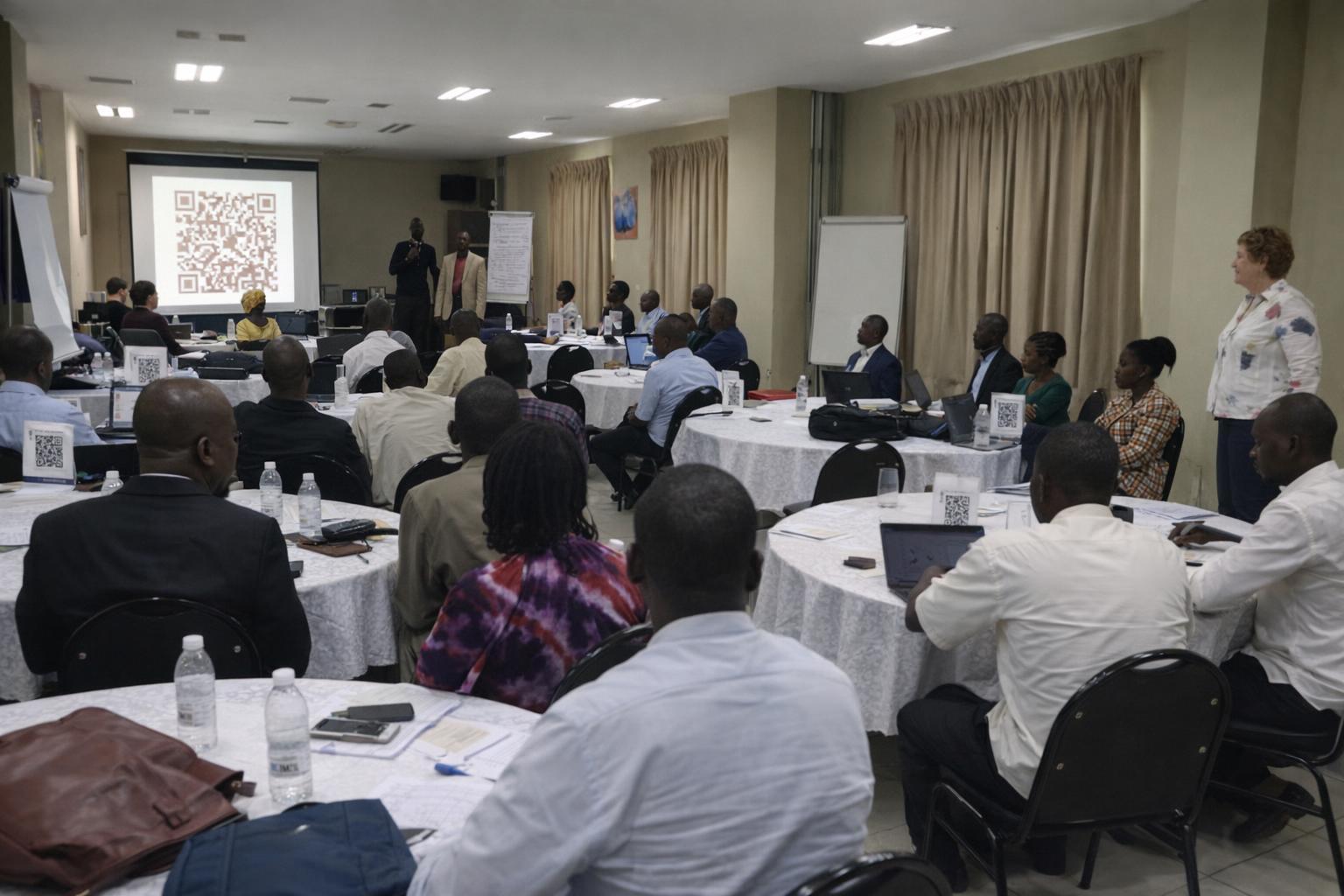
Brazzaville workshop on flood preparedness
Social protection and risk-management stakeholders met in Brazzaville on Jan. 27-28 to examine how the Single Social Registry, known by its French acronym RSU, can strengthen Congo’s preparedness and response to flooding.
Discussions focused on Talangaï, the sixth district of the capital, where several neighborhoods are regularly identified as flood-prone. Participants assessed how better data and coordination could translate into faster, more targeted social assistance after a crisis.
RSU positioned as a central targeting tool
Speakers said the RSU is increasingly viewed as a core instrument for identifying vulnerable populations in post-crisis situations. The workshop offered space to sharpen thinking on how to anticipate social needs and organize support when natural hazards strike.
The overall message was practical: without a reliable, shared registry, it is harder to know who needs help first, where they live, and what type of support is most appropriate once floods disrupt daily life.
Talangaï neighborhoods flagged as high risk
During the exchanges, Hugues Saturnin Kibangou, the registers lead, used Talangaï as a concrete example to illustrate how the RSU can guide intervention planning. He referenced work conducted within the Project Management Unit of the Social Protection and Productive Inclusion Project for Youth (PSIPJ).
According to Kibangou, PSIPJ identified five Talangaï neighborhoods as particularly exposed to flooding: 601-Mpila, 602-Intendance, 603-Texaco Tsiémé, 604-Fleuve Congo and 605-Joseph Ngobali. The list helped frame discussions on operational priorities.
Planned actions to strengthen social assistance
In the targeted areas, several activities were planned to reinforce social support for vulnerable residents. These included technical meetings with stakeholders, awareness campaigns aimed at local authorities and potential beneficiaries, and efforts to collect and update RSU information.
Participants described these steps as essential for turning a registry into a usable response tool. The emphasis was placed on keeping data current, clarifying roles between institutions, and ensuring that communities understand how the system works.
Identification documents and unique IDs
The process presented at the workshop also covered civil documentation, including the production of birth certificates, national identity cards and unique identification numbers. These elements were described as critical for accurately identifying beneficiaries and securing access to social services.
In parallel, teams carried out social survey data collection and household categorization using the Proxy Means Test. The objective is to better identify very poor households that may qualify for a complementary social allowance, known as ASA, under the program’s framework.
From data to payments: testing the pipeline
Once collected, the data were migrated into the General Beneficiary Registry. This was followed by awareness actions related to the ASA and the payment of a symbolic amount to a sample of beneficiaries, presented as a practical test of the end-to-end chain.
Officials said the exercise was meant to show that existing tools can support rapid, efficient cash transfers for flood-affected households. For many participants, the key issue is speed: help needs to arrive early, not weeks after waters recede.
Government strategy behind the RSU
Kibangou described the RSU as a strategic tool established by the government through the Ministry of Social Affairs, Solidarity and Humanitarian Action. He said the aim is to register all vulnerable people who request social support so that requests are centralized.
“The objective is to register all vulnerable people who seek a social service, so that all requests are centralized,” he explained. Participants noted that a centralized registry can reduce duplication and improve coordination across services.
Early warning linked to the RSU
A major point of reflection was the idea of building an early warning system connected to the RSU. In principle, such an approach could quickly identify residents living in flood-risk zones and trigger targeted social assistance as soon as a disaster alert is issued.
The workshop also served as a setting for a beneficiary payment test through PSIPJ’s general registry. Organizers presented it as a demonstration of operational readiness and a way to identify gaps before a real emergency.
RSU uptake remains a key challenge
Despite being in place since 2015 under social safety net efforts, the RSU was described as still insufficiently understood and widely adopted. Participants pointed to the need for stronger ownership across institutions and clearer communication to the public.
To address this, officials said the 2026 annual work plan and budget is expected to include large-scale actions to expand awareness of the RSU within public administrations and promote interoperability between national databases. The goal is a more connected, more responsive system.