
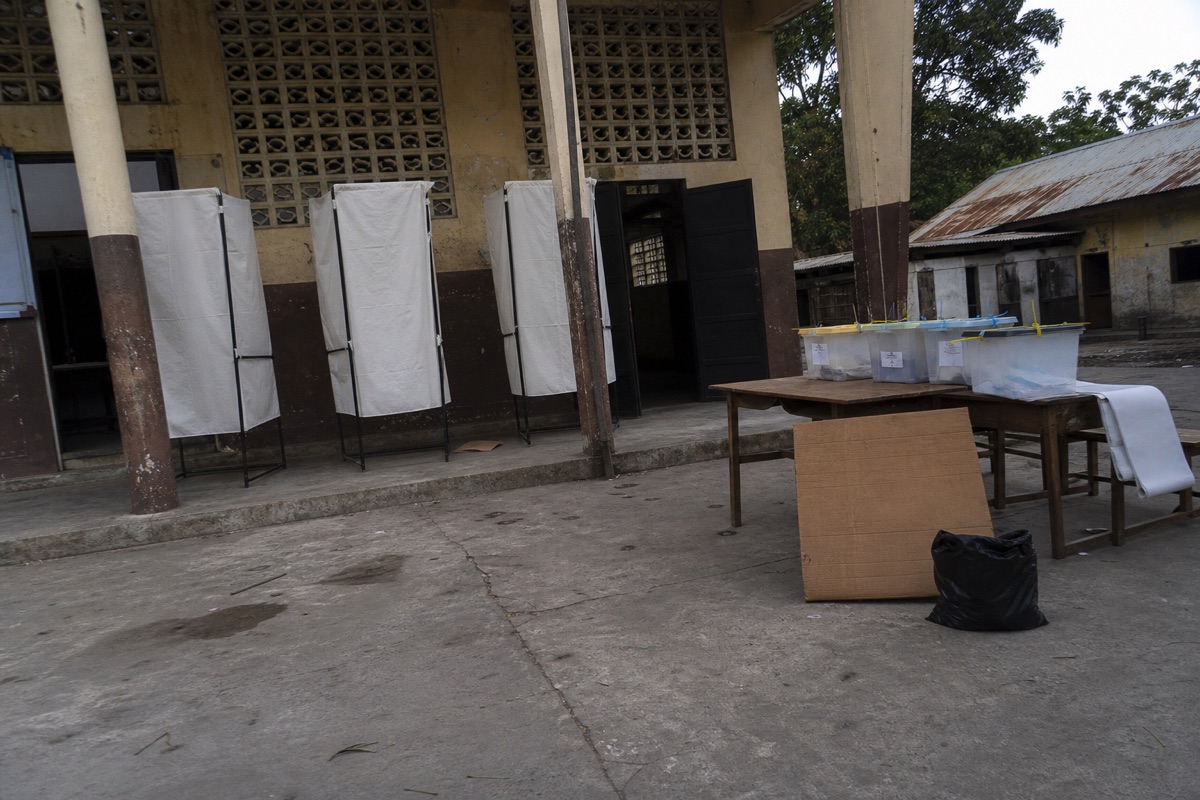
Congo-Brazzaville cast its presidential ballots on Sunday, March 15, 2026, but the country did so largely in the dark. A nationwide shutdown of phone and internet services cut off the flow of information as voters made their choice.
A nationwide shutdown that silenced election day
From early morning, mobile networks and internet access went down across the entire territory. The blackout was total, reaching Brazzaville, Pointe-Noire and the inland departments alike. For most of the day, no independent account of conditions inside polling stations could circulate.
The outage left newsrooms, including local correspondents across the departments, without the live updates that normally shape coverage of a national vote. Citizens could not share images or reports, and the usual rush of social media commentary fell quiet.
Polls close at 6 p.m. with the picture still blurred
Voting stations shut their doors at 6 p.m., closing a day whose actual conduct remains hard to assess. Because data and voice lines stayed down, real-time reporting was impossible for both media outlets and civil society groups tracking the process.
That information vacuum is unusual for an election of this scale. In a country where many residents rely on mobile phones for news and money transfers, a daylong cut touches far more than political reporting. It reshapes how an entire population experiences a major civic moment.
Candidates and observers kept off the airwaves
Throughout the day, neither the candidates nor electoral observers were able to speak publicly about the communications cut. Their voices, normally part of any vote’s running commentary, were simply absent from the conversation.
Independent civil society organizations, which had promised a statement once the ballot ended, could not be reached. During the campaign, some of these same groups had described the process as unbalanced, raising concerns well before voting day arrived.
Their silence on March 15 was not necessarily a choice. With networks down, even those who had prepared to comment were left without the tools to do so. The blackout effectively muted the very actors meant to scrutinize the vote.
Why independent verification became impossible
Under these conditions, there is no way to confirm independently how the vote unfolded inside the country. The lack of circulating information deepens the uncertainty surrounding turnout and the smooth running of polling operations.
Election credibility usually rests on transparency, on the ability of many eyes to watch and report. When communications vanish for a full day, that scrutiny weakens. Questions about what happened in distant polling stations cannot be answered with confidence.
For ordinary Congolese, the practical effect was disorientation. Families separated across cities could not check on one another. Small businesses that depend on mobile payments faced an abrupt halt. The civic exercise and daily life were disrupted together.
Results still pending as the country waits
No date has yet been announced for the proclamation of official results. The country therefore remains suspended, waiting for definitive figures in an atmosphere shaped by anticipation and unanswered questions.
That wait carries weight. Until numbers are released and explained, speculation tends to fill the gap. The longer the silence over both the blackout and the tally lasts, the more pressure builds on authorities to account for the day’s unusual conditions.
Sassou-Nguesso seeks a fifth term in a thinned field
For context, the outgoing president, Denis Sassou-Nguesso, 82, was running for his own succession and a fifth consecutive mandate. Six other candidates were officially on the ballot, giving the contest a formal appearance of competition.
Yet no heavyweight from the opposition figured among them. The two main opposition parties had chosen not to field a candidate, leaving the race without the established challengers many voters might have expected to see on the list.
That absence frames how March 15 will be read. A blackout on voting day, combined with a field stripped of leading rivals, sharpens scrutiny of the process. The coming announcement of results will land in an already tense climate.
What to watch in the days ahead
Attention now turns to two linked questions: when official results will appear, and whether communications will be fully restored and explained. Both will shape how citizens and observers judge the vote (Journal de Brazza).
For readers across Congo-Brazzaville and the wider diaspora, the immediate practical advice is simple: rely on verified official channels once they reopen, and treat unconfirmed claims with caution. In a day defined by silence, patience and accuracy matter more than speed.