
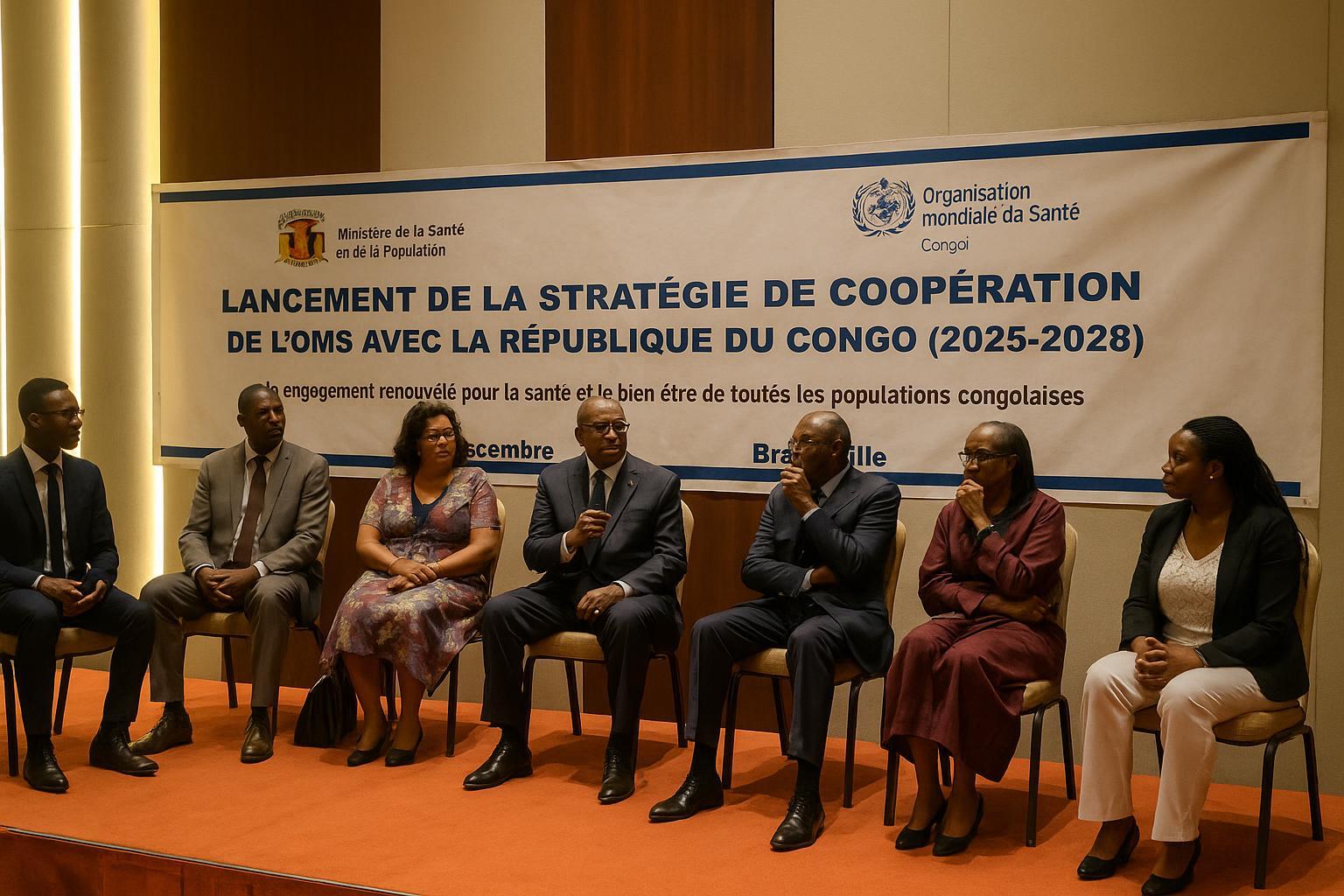
Brazzaville announces landmark health pact
Congo’s Ministry of Health and the World Health Organization jointly launched a new cooperation strategy on 5 December in Brazzaville. Valued at more than CFA 25 billion, the four-year plan outlines concrete steps to reshape the national health landscape between 2025 and 2028.
Health Minister Professor Jean Rosaire Ibara called the agreement “both technical and political,” stressing that strong leadership will convert paper pledges into clinics, equipment and trained professionals across the country. United Nations agencies, civil society and local authorities attended the ceremony, signalling broad support.
A CFA25 billion commitment for resilient care
The financial envelope—roughly USD 42 million—covers upgrades from city hospitals to remote health posts. Officials say investments will blend state budget lines, donor contributions and private-sector partnerships, ensuring sustainability beyond a single project cycle.
Dr Chikwe Ihekweazu, acting WHO Regional Director for Africa, noted that Congo is among the first countries to align its fourth-generation Country Cooperation Strategy with the WHO reform agenda endorsed by the World Health Assembly in May.
Five strategic priorities drive the roadmap
The strategy revolves around improved governance, skilled human resources, modern infrastructure, universal health coverage and reduced geographic and social inequities. Each axis carries specific, measurable targets to be tracked by joint teams from the ministry and WHO.
For example, the workforce component aims to expand accredited training programmes for nurses, midwives and community health workers, while the infrastructure pillar foresees digital patient records and solar power for rural centres.
National ownership shapes every objective
Resident WHO Representative Dr Vincent Dossou Sodjinou emphasised that Congolese experts led the drafting process. “This is not an imported template; it is a consensual document reflecting local realities and priorities,” he said.
He added that the monitoring and evaluation plan will rely on agreed performance indicators such as antenatal care coverage, stock-out rates for essential medicines and response time during outbreaks. Regular scorecards will be shared with Parliament and the public.
Aligning with SDGs and African health agenda
The roadmap echoes Sustainable Development Goal 3 and the African Union’s Agenda 2063, underscoring Congo’s commitment to continental benchmarks for well-being. Dr Ihekweazu highlighted that the plan translates the WHO’s Thirteenth General Programme of Work into country-specific action.
He described the strategy as “evidence that reform at headquarters can empower field offices to deliver tailored solutions,” citing planned cross-border surveillance with Gabon and Cameroon as an example of regional cooperation.
Government leadership ensures accountability
Minister Ibara pledged to mobilise political will at every administrative layer. “Health is a national security issue,” he stated, referring to the presence of Defence Minister Charles Richard Mondjo at the launch.
Cabinet has already approved tax incentives for private clinics that agree to serve remote districts, and provincial governors are preparing annual performance contracts linking budget transfers to health outcomes.
What changes patients will notice first
Brazzaville residents can expect shorter waiting times as the capital’s main hospital adds 120 beds and a second MRI scanner by mid-2026. In the Pool and Cuvette departments, solar-powered cold chains should keep vaccines viable despite unreliable grid electricity.
Telemedicine pilots starting in 2025 will connect specialist doctors in Pointe-Noire with nurses in riverine communities, reducing costly travel for families and ensuring earlier diagnoses of chronic diseases.
Timeline and next milestones
A detailed operational plan is due in March 2024, followed by resource-mapping and the signing of performance compacts with each departmental health directorate. Quarterly reviews will track disbursements and indicators, while an independent evaluation in 2027 will shape the post-2028 agenda.
Dr Sodjinou concluded that the participatory approach “guarantees the document becomes a living instrument, steering day-to-day decisions rather than collecting dust on a shelf.” With political backing and community engagement, the strategy aims to propel Congo toward stronger, fairer and more resilient healthcare.