
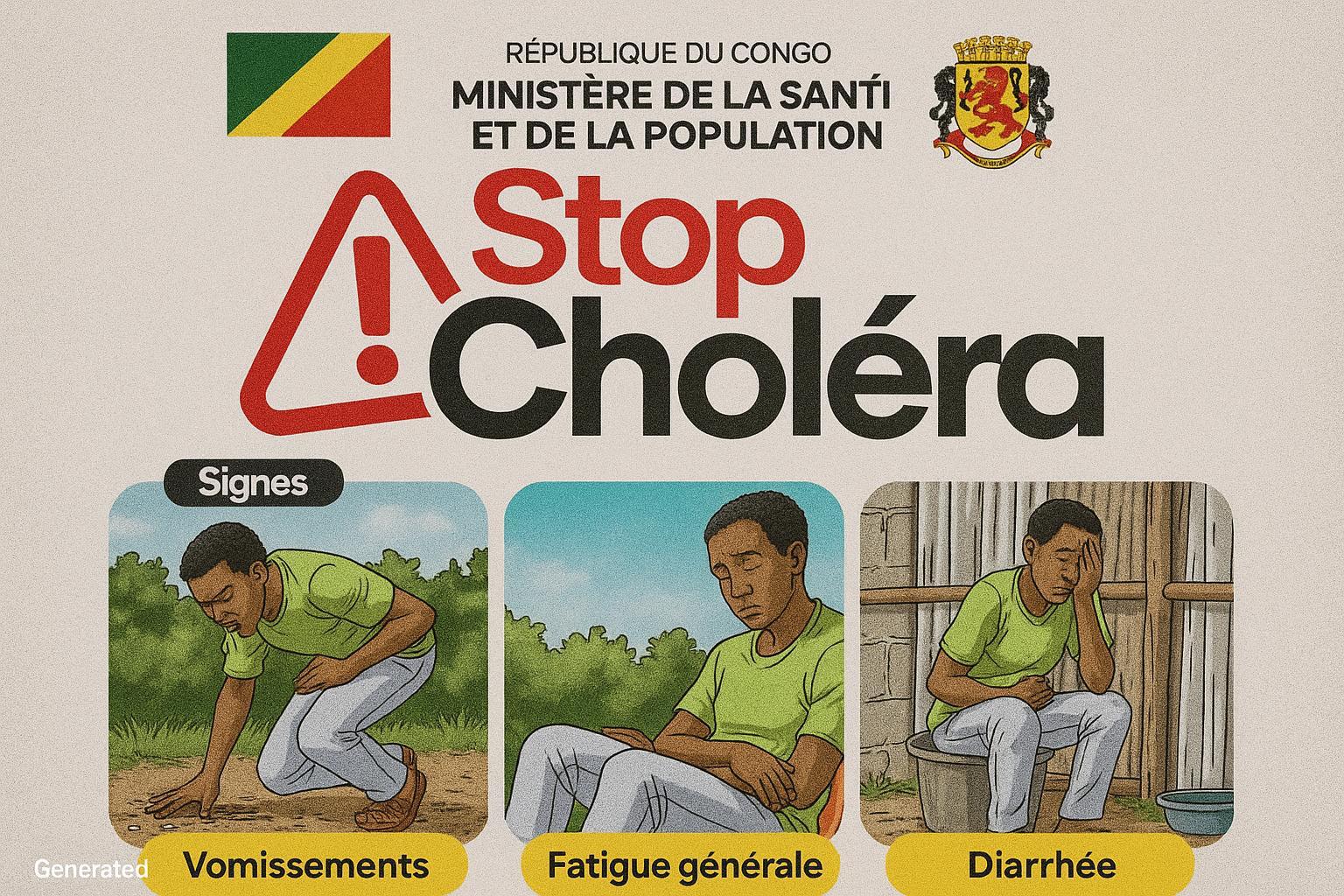
Fresh cases ripple across the Congo River
At dawn ferrymen docking along Brazzaville’s riverbank whispered the same story: a handful of cholera cases had surfaced on Mbamou Island over the weekend. Within hours the Ministry of Health confirmed the rumour, noting eight laboratory-verified infections and several suspected ones. Although the numbers look modest beside the hundreds reported this season in neighbouring Angola and the Democratic Republic of Congo, epidemiologists remember that every large Central African outbreak of the past decade started with a similar trickle (World Health Organization situation update, July 2025).
Government rapid-response teams fan out
Speaking from the crisis coordination room, Professor Jean Rosaire Ibara assured journalists that ‘mobile medical squads, logisticians and water engineers were placed on the island before midday Monday’. The deployment mirrors the template used successfully during the 2023 Pointe-Noire flare-up, when the case-fatality rate was kept below one percent, well under the regional average. Officials say the first priority is rehydration therapy, the second is tracking potential carriers travelling by pirogue to Brazzaville’s river districts of Bacongo and Makélékélé.
Thirst, drains and the lurking Vibrio cholerae
Cholera is ruthless wherever drinking water mixes with poor drainage. On Mbamou many households still pull raw river water for cooking, a habit that gives Vibrio cholerae a direct path to the gut. Public utilities have ferried extra chlorine drums to the island’s three boreholes, while sanitation crews are pouring lime in open latrines to cut transmission. A joint study by the Congolese National Laboratory and UNICEF in 2024 showed that a single millimetre rise in river level increases the detection of the bacterium by fifteen percent, highlighting the tight link between climate, floods and disease.
Community voices underline the daily stakes
‘We lost two children in ten years to the same illness, we cannot repeat that,’ says Mama Monique, a fish smoker who supplies Brazzaville markets. Local leaders have therefore revived the village bell system: three rings invite people to collect chlorinated water, five rings warn of a suspected case. Residents volunteer to patrol river beaches discouraging open defecation. The approach gained praise from the International Federation of Red Cross Societies, which labels it “grass-roots surveillance that works” (IFRC field note, 2025).
Vaccine talk grows but logistics remain tricky
The World Health Organization keeps an oral cholera vaccine stockpile for emergency use, yet supply rarely meets worldwide demand. Doctor Thérèse Ngoma, adviser to the Ministry, states that ‘Congo has applied for thirty thousand doses, enough for the island and high-risk river districts’. Cold-chain transport by motorised canoe is feasible, she adds, though past experience shows that delayed second doses can blunt protection. Critics argue that money would be better spent extending piped water, but health economists counter that vaccination buys time for infrastructure projects to materialise.
Simple habits remain the strongest shield
Medical literature agrees that handwashing with soap, safe food preparation and prompt rehydration cut cholera deaths to near zero. Congolese television now broadcasts jingles urging families to boil water for one full minute, to cook market fish until the flesh flakes and to store leftovers in covered pots. Past surveys in Pool and Cuvette departments show that repetition through radio and street theatre raises compliance faster than written leaflets, a lesson the current campaign intends to replicate.
Monitoring tomorrow’s river traffic
Seasoned boat captains foresee heavier commerce on the Congo River as dry ports in Cabinda and Kinshasa clear backlog cargo next month. To pre-empt a bacterial hitch-hike, port health officers have renewed the old stamp system on cargo manifests, granting passage only to vessels carrying chlorinated drinking water and latrine facilities. Such screening was piloted in 2022 during a typhoid scare and, according to the African CDC, reduced waterborne incidence by twenty percent on the Pool-Kinshasa corridor.
Outlook: cautious optimism with eyes on the tap
Cholera season in Central Africa usually fades with the first dry gusts of August. If Mbamou Island keeps case numbers below fifty, Congo-Brazzaville could dodge a metropolitan outbreak and set an example in cross-river coordination. The government’s fast deployment, the promise of targeted vaccination and the dedication of local volunteers offer reasons to hope. Yet experts stress that sustainable victory lies in year-round access to clean water, reliable sewage systems and public trust, a trio that costs more than a crisis but pays dividends measured in lives.