
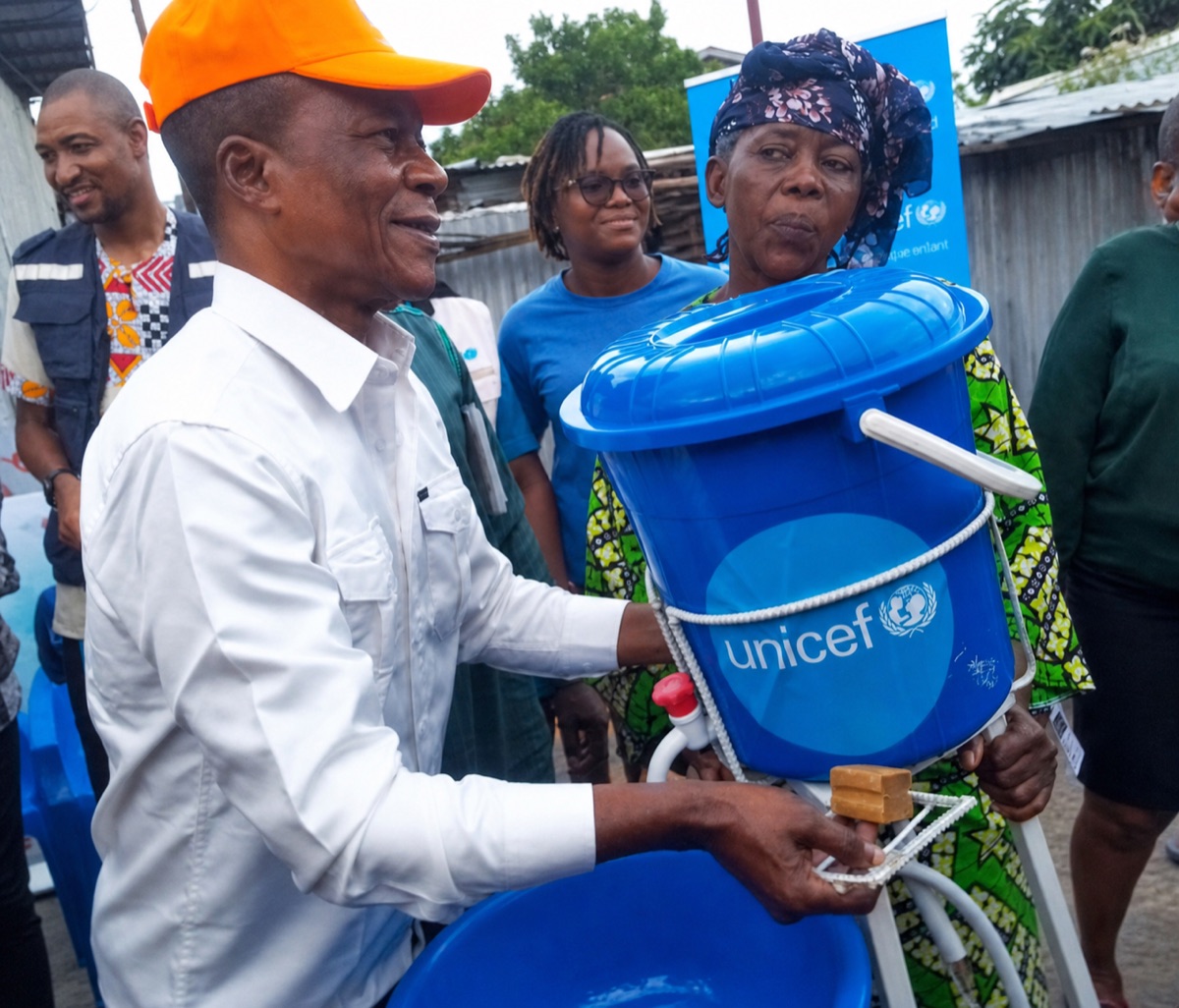
A quiet Saturday at Talangai’s Massa market turned into a frontline against an outbreak that has gripped the Republic of Congo for months. Health teams arrived not with alarm, but with soap, leaflets, and a steady message: cholera can be stopped at the source.
Why Talangai’s Market Became a Prevention Hub
The choice of the Massa market in Brazzaville’s sixth arrondissement, Talangai, was deliberate. Markets gather crowds, food, water, and movement, the exact conditions where cholera spreads fastest. Reaching traders and shoppers there means reaching whole neighbourhoods at once.
On 9 May 2026, the Ministry of Health and Population led the campaign with technical and financial support from the country office of the World Health Organization. Dr Jean-Claude Mobousse, health adviser to the minister, oversaw the session, assisted by Dr Kandako Youba of WHO-Congo.
A Coalition of Partners on the Ground
The effort drew a wide circle of actors. Joint teams from the Ministry of Health, the WHO, the Red Cross, UNICEF, and other partners worked side by side. They handed handwashing kits and soap to the market committee, while leaflets passed from hand to hand among traders and customers.
The gesture was small but pointed. Clean hands and clean water remain the cheapest, fastest defence against a disease that thrives where sanitation falters. By equipping a market committee directly, officials hoped the lesson would outlast the morning’s visit.
The Numbers Behind the Campaign
The scale of the crisis explains the urgency. Presenting the epidemiological picture, Dr Jean-Medard Kankou, director of epidemiology and disease control, gave figures that left little room for complacency among those gathered at the stalls.
“To date, we are at 1024 cases in the affected departments. These cases are cumulative since the start of the epidemic in July 2025 up to today. Sadly, we count 100 deaths, and more than 80% of these deaths occur within the community before people reach a health centre” (Dr Kankou).
That last detail carries weight. When most deaths happen at home, away from any clinic, the problem is not only the disease but the delay in seeking care. Prevention and early action become matters of survival, not mere advice.
Which Regions Are Affected
The outbreak has not stayed in one place. According to the health authorities, the affected departments include Congo-Oubangui, the Likouala, the Sangha, and the Plateaux. These areas, spread across the north and centre of the country, share the river systems and dense gathering points that cholera exploits.
The geography matters for families and for small traders who move goods between regions. An outbreak that crosses departmental lines demands a response that does the same, which is partly why national institutions and international partners chose to act together rather than separately.
The Warning Signs Officials Want Known
Dr Kankou urged residents not to wait. He called on people to go to the nearest health facility as soon as the first alert signs appear, naming diarrhoea lasting two or three days as the clearest reason to seek help quickly rather than treat it at home.
The message reflects the grim statistic he had just shared. If most deaths strike before patients reach care, then shortening that gap, recognising danger early and acting on it, is the single change most likely to save lives in the weeks ahead.
Simple Habits That Save Lives
Much of the campaign came down to everyday routines. Officials reminded residents to cover food, wash it well, and keep it away from flies. They stressed washing hands properly with soap and water, and boiling food thoroughly before eating.
None of these steps is new, yet their consistency is what counts. In a market where dust, heat, and crowds mix freely, the discipline of clean hands and protected food can quietly break the chain of transmission that has already cost the country dearly.
A Routine Effort With High Stakes
The Talangai session was described as part of routine sensitisation, but the stakes are anything but routine. With cases still cumulating since July 2025, each campaign is a small attempt to slow a curve that has already claimed 100 lives across several departments.
For the families of Talangai and beyond, the morning offered something concrete: knowledge, supplies, and a reminder that the next case prevented might be their own. The work continues, market by market, until the outbreak finally loses its grip.