
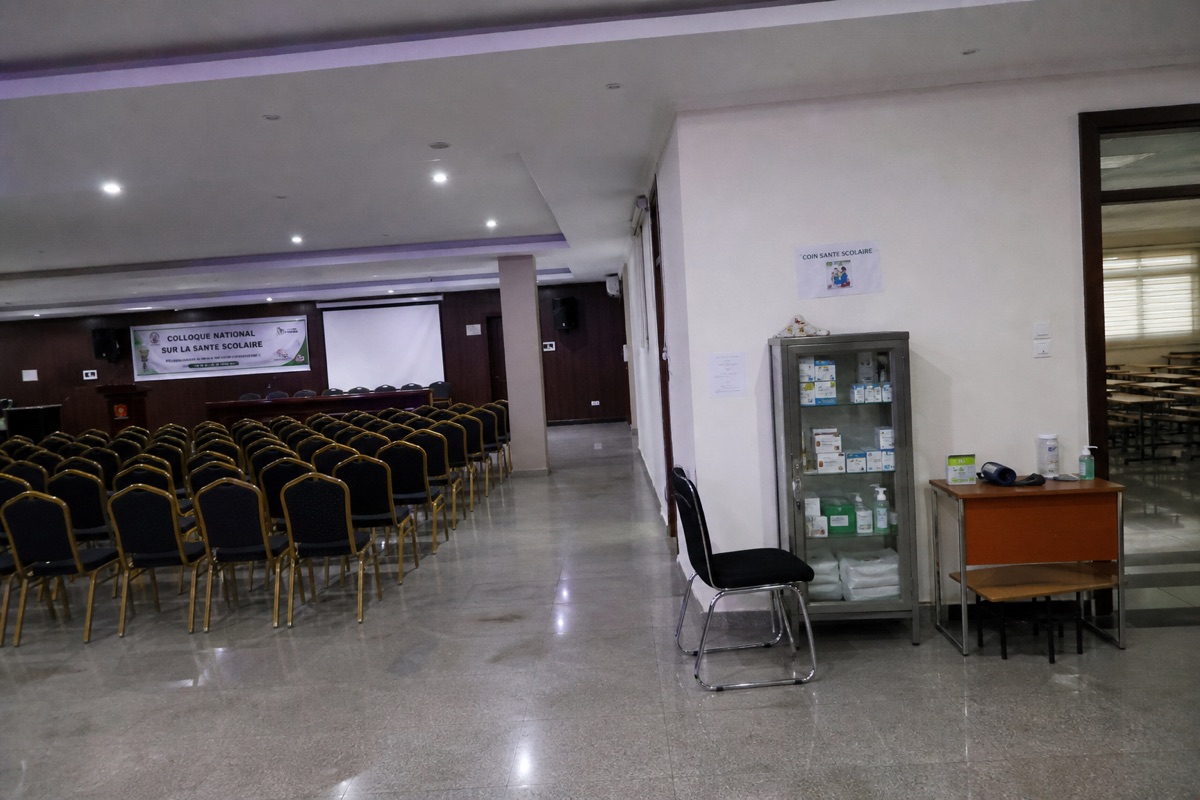
When the school bell rings in Brazzaville, most parents picture lessons and playgrounds. A growing circle of Congolese health advocates wants them to picture something else too: a working clinic, just steps from the classroom door.
That idea took centre stage on 16 May, when the Association de santé en milieu scolaire (ASMS) hosted the first national colloquium on health in schools. Held under the Tepco project, the gathering pulled together specialists from both public bodies and private organisations.
Why A Clinic Belongs Beside The Classroom
The theme was deliberately plain: "the importance and impact of a health hub at school." Behind that phrasing sat a practical argument. Children spend long stretches of their day on school grounds, often more waking hours than they spend at home.
Speakers from various structures said that reality should shape policy. If pupils are present, attentive and gathered in one place, schools become natural settings to spot illness early, follow up on treatment and protect the wellbeing of students and staff alike.
The colloquium did not frame this as a luxury. It framed it as a missing piece of a system that already exists for learning but rarely accounts for the bodies sitting at the desks.
A Lawmaker Lends His Name
Member of Parliament Alban Kaky, who acted as patron of the event, put the case in everyday terms. "As children spend more time at school, we should rely on school health to identify certain pathologies," he told participants.
His point was less about grand reform and more about timing. A child with a recurring complaint may show symptoms during school hours long before a parent books an appointment. A nearby health point could catch what a busy household misses.
That framing matters in a country where access to care can vary sharply between neighbourhoods and departments. Bringing the clinic to the pupil, rather than the other way round, narrows a familiar gap.
The Voice Behind The Initiative
Leila Samou, president of the ASMS, used the platform to underline what is at stake. She described the initiative as capital for Congolese society, language that signalled ambition well beyond a single pilot or a one-day discussion.
Her insistence reflected a wider tone in the room. This was not presented as a niche concern for a handful of schools. It was offered as a question about how the country chooses to look after its youngest, most concentrated population.
What Participants Want From The State
Recommendations followed the speeches. Participants called for the active involvement of all stakeholders, from school administrators to families and health professionals, arguing that a clinic without buy-in risks becoming an empty room.
They also pressed the authorities directly. The colloquium urged public officials to speed up the implementation of the regulatory measures that govern the creation of schools, so that health provision can be built in rather than bolted on later.
That request is telling. It suggests advocates believe the obstacle is not only money or staff, but the pace at which existing rules move from paper to practice on the ground.
Where Technology Enters The Picture
The discussion was not confined to bricks and consulting rooms. The structure Élite Network presented the opportunities that digital tools offer for managing school health data, a theme that fits a generation already comfortable with screens.
Handled well, such systems could track vaccinations, chronic conditions and routine check-ups across a school year. The promise is continuity: a record that follows a pupil instead of resetting every time a new term, or a new worry, begins.
The colloquium stopped short of claiming the technology is ready or funded. It presented the digital angle as an opportunity to weigh, sitting alongside the human and regulatory work that any rollout would demand.
A First Edition, Not A Finished Plan
Calling this a "first edition" was itself a statement of intent. The organisers clearly see the May meeting as an opening move, a way to put school health on the agenda and keep it there through future gatherings.
For families in Brazzaville and beyond, the practical question remains open. None of the speakers announced that clinics would appear in classrooms tomorrow, and the article offers no timetable for when regulations might finally shift.
What the colloquium did deliver was a shared message from lawmakers, associations and tech advocates: the health of a child and the schooling of a child should no longer be treated as separate files. Whether the state moves at the speed campaigners want is the next chapter of this story.