
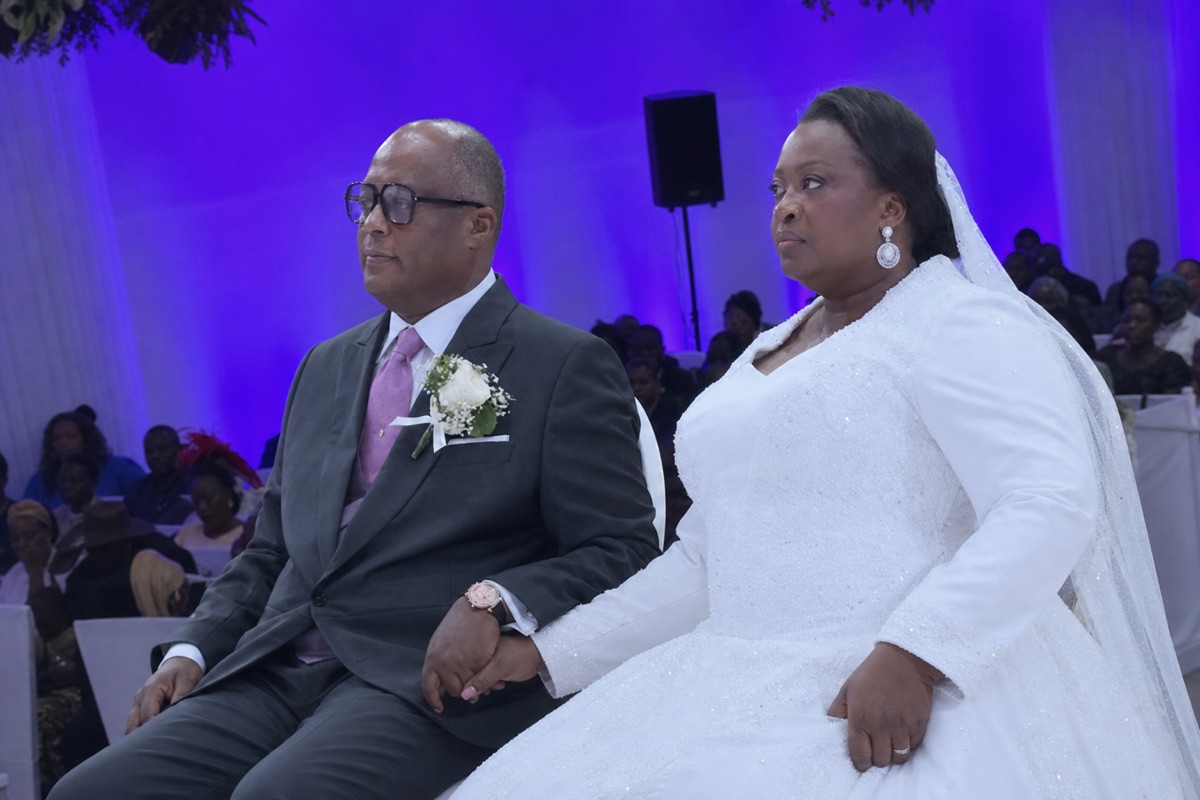
On 20 June 2026, Brazzaville turned its attention to the Palais des Congres, where Claudia Sassou N’Guesso and Claude Wilfrid Etoka formally became husband and wife before a civil registrar, sealing a union that had already begun in tradition.
A Civil Vow at the Palais des Congres
The setting carried weight. The Palais des Congres, often reserved for matters of state, hosted a personal milestone instead. There, the couple stepped before the officer of civil status to complete the legal stage of their marriage, the moment that gives the union its official standing under Congolese law.
From Oyo Tradition to City Hall Formality
The civil ceremony did not stand alone. It followed a traditional ceremony held earlier in Oyo, the customary rite that, in Congo-Brazzaville, often precedes the formal registration. Together, the two stages reflected a familiar national rhythm, where heritage and administration each claim their place in marking a marriage.
How the Ceremony Unfolded
Bernard Batantou, mayor of the second arrondissement of Bacongo, presided over the proceedings. He opened by identifying the spouses and their witnesses, a procedural step that anchors every civil union, before moving on to the ritual questions that the law requires of those about to commit themselves to one another.
The exchange that followed was the heart of the morning. The couple traded rings and pledged fidelity and mutual support, the simple vows that carry the same meaning whether spoken in a modest town hall or, as here, in one of Brazzaville’s most prominent halls.
A Guest List That Crossed Borders
The gathering reached well beyond family. Relatives of both spouses attended, but so did figures whose presence gave the day a clear regional dimension. The most notable was Judith Suminwa Tuluka, Prime Minister of the Democratic Republic of the Congo, who came representing President Felix Tshisekedi.
Her attendance deserves a careful reading. The Democratic Republic of the Congo and the Republic of the Congo are distinct neighbours, and a head of government crossing from Kinshasa’s side to stand in Brazzaville on such an occasion underlines ties that run between the two states, even where their politics differ.
Former Heads of State in Attendance
The guest list stretched further still. Former heads of state from Sierra Leone and Guinea were also present, adding another layer of standing to the event. Their attendance placed the ceremony within a wider African circle, where personal occasions can quietly double as moments of continental acquaintance.
Reading the Significance, Without Overreaching
For readers, the day is best understood on its own terms. It was, first, a marriage, a couple completing the steps their country recognises. Yet the names involved and the company that gathered ensured that the private and the public brushed against each other throughout the morning.
The combination of a traditional rite in Oyo and a civil ceremony in the capital traces a path many Congolese families know. What set this one apart was scale, the choice of venue and the calibre of those who chose to be there to witness the vows.
A Day Brazzaville Will Remember
By the time the rings were exchanged and the registrar’s questions answered, the union had passed through both the customary and the legal channels that give a Congolese marriage its full weight. The couple left the Palais des Congres bound by promises made in front of officials, relatives and visiting dignitaries alike.
The morning offered a snapshot of how ceremony works in Congo-Brazzaville, where the old and the formal sit side by side. For those who followed it, the event will be remembered less for any single speech than for the unusual breadth of the room that gathered to mark it.