
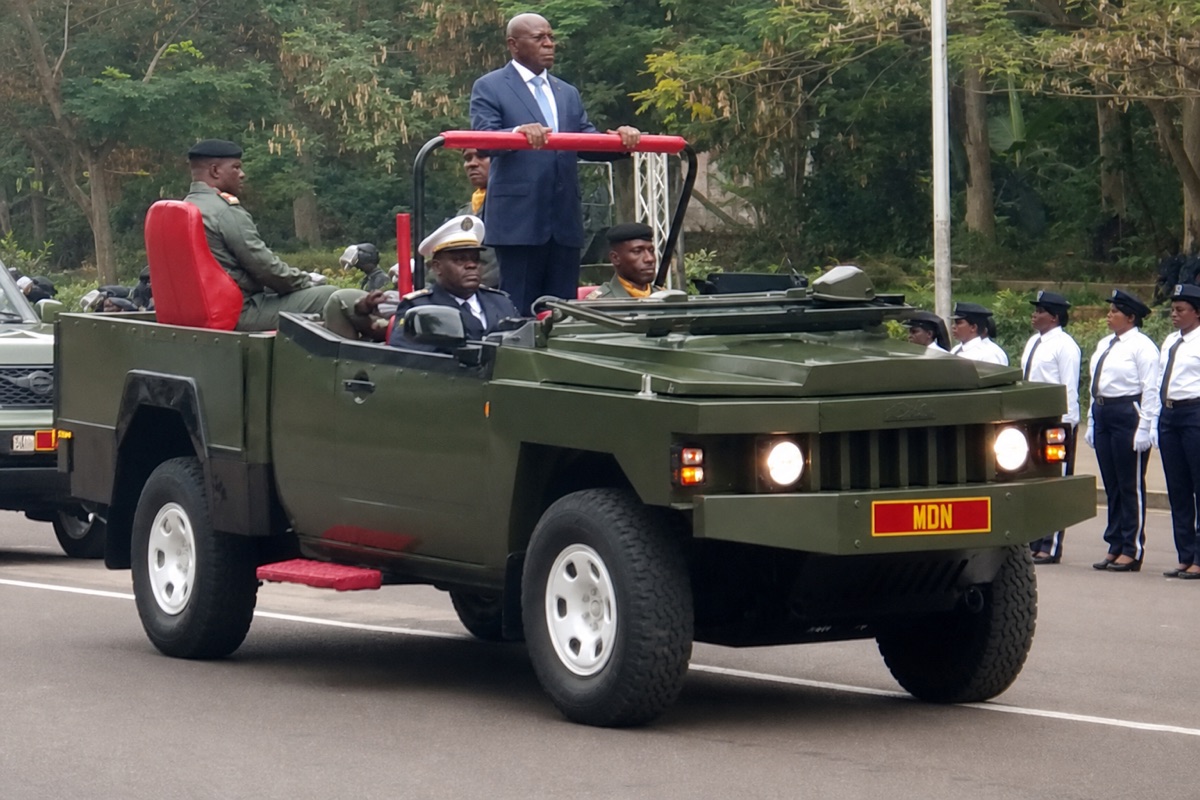
A Disciplined Salute on the Esplanade
Brazzaville woke on 22 June 2026 to the measured rhythm of marching boots. On the esplanade of the Alphonse-Massamba-Débat stadium, the Congolese Armed Forces (FAC) and the national gendarmerie staged their traditional prise d’armes ceremony, marking sixty-five years of service to the Republic of the Congo.
Defense Minister Raymond Zéphirin Mboulou presided over the event. His presence anchored a ceremony that blended solemn ritual with a clear message about readiness, cohesion and the institution’s place in national life across both capitals and quieter departments.
Brass, Ranks and a Shared Command
The gathering drew a broad cross-section of the force publique. General officers stood alongside senior officers, non-commissioned ranks, regular soldiers and gendarmes, joined by defense attachés and members of the FAC high command.
Interior Minister, Major General Jean Olessongo Ondaye, also attended, underlining how closely defense and internal security are woven together in Congo-Brazzaville. The mixed attendance turned the ceremony into a quiet portrait of the country’s security architecture.
Eight Hundred Boots in Step
The centerpiece was a parade lasting roughly an hour. Close to eight hundred military personnel filed past the stands, their formations tight and deliberate, offering the public a visible measure of the institution’s scale and discipline on a single morning.
The march unfolded under a guiding theme that summed up the day’s intent: an enduring and operational force publique, firmly committed to maintaining a climate of security across the whole of the national territory. The wording framed the spectacle as purpose, not pageantry.
For families lining the esplanade and for younger spectators, the display carried a practical lesson. Behind the uniforms and cadence stood a message about commitment, the kind of steadiness that institutions hope citizens will read into every measured step.
Fifteen Names Called to the Front
Recognition formed the ceremony’s emotional core. Fifteen agents of the force publique received honorific distinctions, several elevated to the rank of commander within the Congolese Order of Merit, rewarding careers shaped by service rather than spectacle over many years.
Among them was Colonel Roch Otoka, of the air force general staff. His words turned the spotlight outward rather than inward. “I share it with my collaborators and all those who worked in the shadows,” he said, crediting the unseen effort behind every visible honor.
That sentiment captured a recurring note of the morning. Distinctions pinned on a few chests stood, by the colonel’s own framing, for the work of many colleagues whose names were never called to the front of the formation.
Faith, Medicine and Memory
The anniversary stretched well beyond the parade ground. An ecumenical service brought a spiritual dimension to the commemorations, gathering personnel and guests in shared reflection before the more formal military sequences of the program took over the day.
The celebration also marked the official launch of the 2026 mobile medico-surgical field hospital. The initiative points to a practical, service-minded side of the armed forces, the capacity to deploy medical care where and when conditions demand a rapid response.
A day of remembrance, dedicated to the fallen of the force publique, completed the program. It set the recognition of living officers against the memory of those who died in service, lending the sixty-fifth anniversary a deliberately reflective register.
Reading the Sixty-Fifth Year
Taken together, the strands of 22 June sketched an institution keen to be seen as enduring and operational, the exact language of its chosen theme. The parade, the medals and the field hospital each illustrated a different facet of that ambition before the public.
For Brazzaville residents, the morning offered a familiar civic ritual with fresh detail: a named honoree speaking of shadow work, a new field hospital, a remembrance for the dead. These specifics gave a routine anniversary a more textured, human shape.
The ceremony made no grand promises beyond its theme, and it needed none. Sixty-five years on, the force publique used the esplanade to restate a simple proposition, that endurance and operational readiness remain the measure by which it asks to be judged.
What lingered after the last formation dispersed was less the spectacle than its framing. A minister presiding, eight hundred troops in step, fifteen agents honored and a colonel deflecting praise toward others together told a story about continuity, discipline and the quiet labor that keeps an institution standing.