
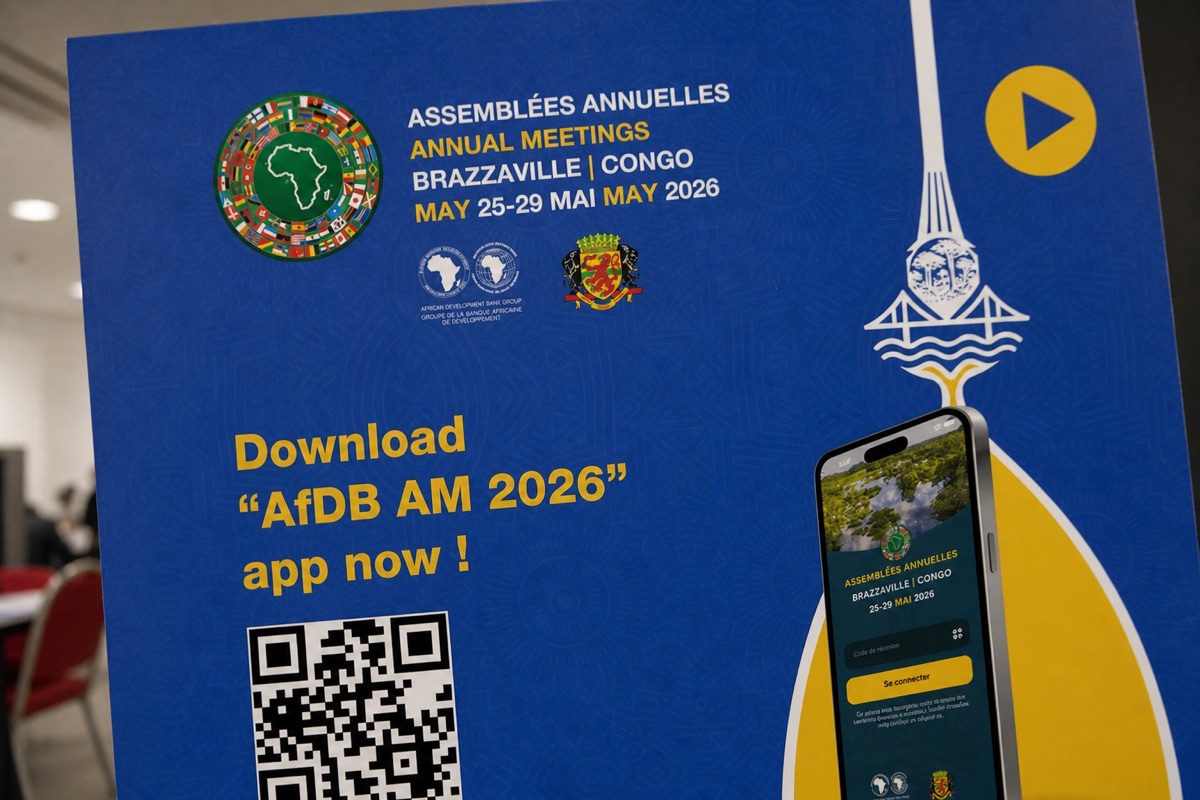
For five days in late May, Brazzaville stepped onto the continental stage. The Republic of Congo’s capital hosted the 61st Annual Meetings of the African Development Bank, drawing finance leaders, heads of state and central bankers into a single conversation about Africa’s future.
A Continental Gathering on the Banks of the Congo
The meetings ran from 25 to 29 May 2026. They unfolded alongside the 52nd Assembly of the Board of Governors of the African Development Fund, giving the week a double weight that few host cities ever carry at once.
Organisers counted more than 3,000 participants. Among them were heads of state and government, finance ministers and central bank governors from the institution’s 81 member nations. The guest list reached far beyond officials and ministries.
Development financiers attended too. So did think tanks, civil society representatives and private sector leaders. The breadth of the room mirrored the breadth of the agenda, which stretched from sovereign debt to the smallest community projects.
A New President Takes the Helm
The gathering marked a leadership transition at the top of the Bank. Dr Sidi Ould Tah presided over the meetings as the new president, stepping into a role long held by Nigeria’s Akinwumi Adesina.
His arrival framed the discussions. Delegates watched closely for signals on direction, priorities and tone, knowing that a change at the summit of a major lender often reshapes how money flows across borders for years to come.
Mobilising Resources in a Fractured World
The central theme was blunt and timely: mobilising resources for Africa’s development in a fragmented world. It was less a slogan than a diagnosis of the moment, with global cooperation under strain and budgets tightening everywhere.
One pressure dominated. The decline in official development assistance hung over every session, forcing participants to ask how the continent can finance its ambitions when traditional aid is shrinking rather than expanding.
Sessions reviewed annual progress and the rollout of the Bank’s four strategic development pillars. The conversations were practical, weighing what had worked against what still needed funding, partnership or sharper political will.
A Bank for Infrastructure Takes Shape
Among the headline ideas was a proposed new infrastructure financing bank. The concept would let regional development banks handle smaller projects close to the ground, the kind that rarely make global headlines but shape daily life.
That division of labour carries a logic. It would free the African Development Bank to concentrate on transformative, continent-wide initiatives, the large undertakings that connect economies rather than single neighbourhoods or districts.
Congo’s Voice at the Table
For the host country, the meetings were also a moment to speak. Congolese Minister of the Economy Ludovic Ngatsé chaired the Board of Governors, placing a Brazzaville voice at the heart of the proceedings.
He set out national priorities that dovetailed with the wider agenda. The aim, he said, was to “build resilient and sustainable transport and energy infrastructure to promote African integration,” tying local ambition to a continental goal.
The phrasing mattered. Transport and energy sit at the centre of Congo-Brazzaville’s development hopes, and framing them as tools of integration linked the country’s roads and power lines to a far larger map.
Reading the Growth Numbers
The meetings also offered a window onto the continent’s economic trajectory. Growth projections presented at earlier assemblies suggested Africa would outpace global averages through 2026, a steady note of optimism beneath the harder talk on finance.
The picture was uneven across regions. East Africa led the pack at 5.9 percent, while West Africa was expected to grow at 4.3 percent, a healthy gap between the continent’s fastest movers.
Central Africa, the region hosting the event, was projected at 3.2 percent. Southern Africa trailed at 2.2 percent, a reminder that a single continental average can hide very different realities on the ground.
What Brazzaville Leaves Behind
The 61st Annual Meetings were never going to resolve every question raised inside their halls. Shrinking aid, new institutions and uneven growth are problems measured in years, not in a single week of sessions.
Yet the gathering gave shape to a debate that affects millions. By hosting it, Brazzaville placed itself, however briefly, at the centre of the conversation about how a fragmented world can still fund a continent’s ambitions.
The faces will scatter and the delegations will fly home. What remains is a set of proposals, a fresh leadership and a question that will outlast the applause: where, exactly, will Africa find the resources it needs.