
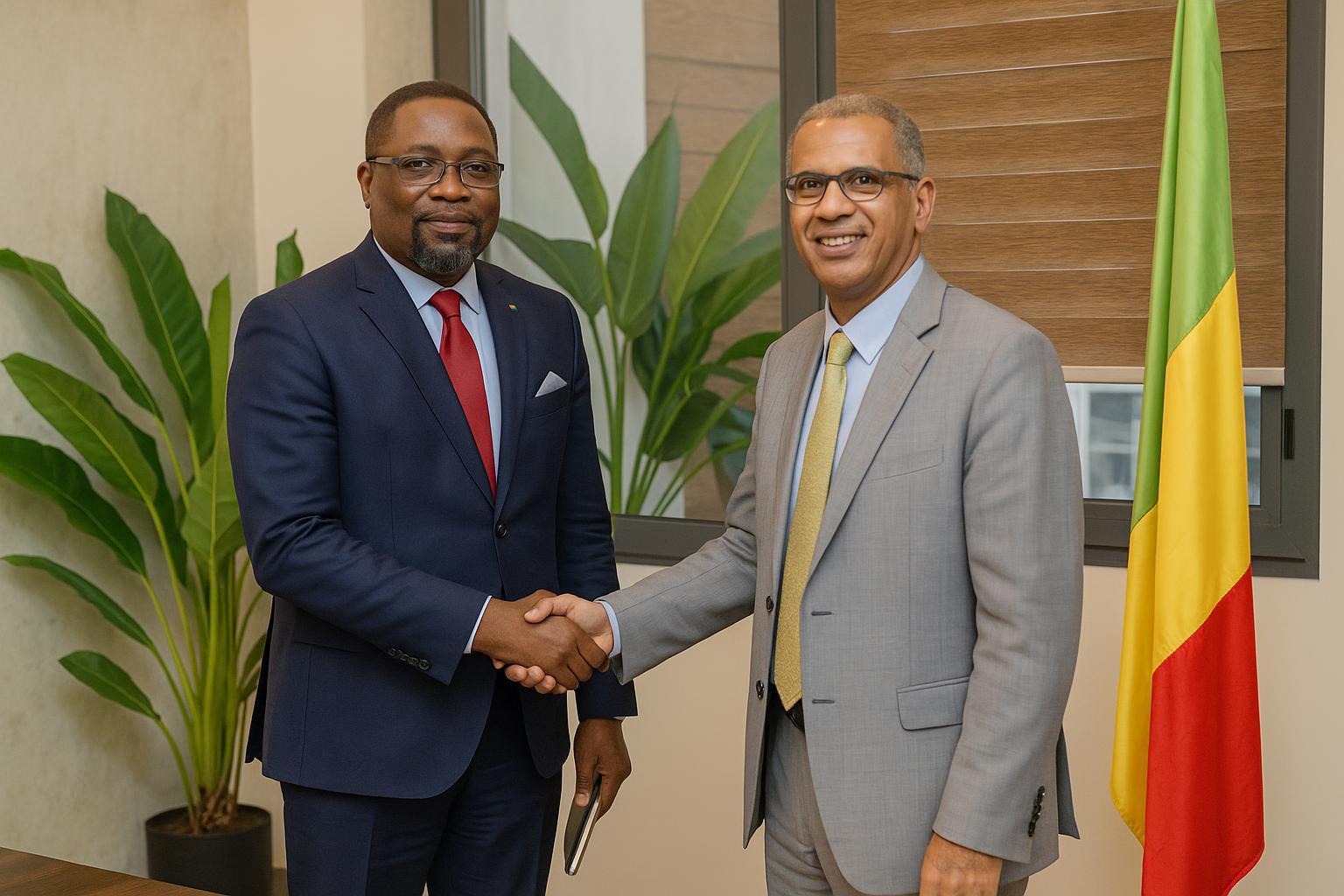
High-level talks unlock new momentum
A brisk meeting at the Ministry of Urban Sanitation, Local Development and Road Maintenance on 2 December gathered Minister Juste Désiré Mondélé and African Development Bank Group deputy director general for Central Africa, Mohamed Chérif. The two men compared notes on ongoing programmes and scoped fresh chances for joint action.
Speaking to journalists after the talks, Chérif called the portfolio “extremely important for the population, for the country,” underscoring how cleaner cities and stronger communes can influence public health, mobility and employment. Mondélé welcomed AfDB goodwill, hinting that several projects could gain speed within weeks.
Sanitation projects on the fast track
Top of the agenda stood urban waste management. From Brazzaville’s dense arrondissements to smaller river towns, the ministry seeks to improve collection, treatment and recycling loops. Chérif signalled that AfDB technical teams were ready to review feasibility studies already drafted by Congolese engineers.
According to ministry figures shared during the meeting, only about half of the capital’s daily solid waste is currently treated in controlled facilities. An AfDB grant, if approved, would finance additional transfer stations, sanitary landfills and pilot composting units aimed at trimming that backlog.
Rejuvenating local economies
Beyond sanitation, Mondélé underlined a broader goal: helping districts turn public works into local value chains. Community cooperatives could win maintenance contracts, creating steady jobs while circulating income nearby. The AfDB envoy noted that such social-enterprise models have shown promise in other Central African capitals.
Local development funds under discussion may therefore blend infrastructure spending with micro-credit lines and training components. Officials stressed that any disbursement would align with the Republic of Congo’s existing budgetary framework, ensuring transparency and complementarity rather than duplicate schemes managed by other ministries.
Road maintenance a lifeline for trade
Talks also covered the upkeep of secondary and unpaved roads that feed into National Road 1. Heavy rainfall often cuts access for farmers trying to move cassava, palm oil or fish to urban markets. Mondélé argued that low-cost periodic grading could protect asphalt investments already financed by the state.
Chérif confirmed that the AfDB’s transport specialists are examining preventive maintenance frameworks across the subregion. A dedicated facility could co-finance equipment, training for local contractors and digital monitoring dashboards, limiting emergency repairs that weigh on public finances.
Bankable opportunities and financing windows
Both parties reviewed the bank’s main instruments: sovereign loans, partial guarantees, grants through the African Development Fund, and the Africa Growing Together Fund backed by China. Chérif said he would “return to the Bank” to test which window best matches each Congolese priority.
For projects already at advanced design stage, paperwork could reach the AfDB board in Abidjan before mid-2024, insiders indicated. The ministry hopes disbursements will coincide with the next rainy season, allowing contractors to mobilise during drier months and avoid weather-related delays.
Building skills for lasting impact
Capacity building featured prominently in Mondélé’s briefing. He requested support for refresher courses in project management, procurement and environmental safeguards. Chérif responded that the bank could fund peer-to-peer exchanges with municipalities in Cameroon and Gabon where similar sanitation upgrades have reached completion.
The minister added that internal procedures would also tighten, citing a plan to digitalise contract tracking and inventory. Such reforms, he said, will assure partners that every franc is spent efficiently and that delivery timetables remain visible to citizens.
Community expectations and next steps
Civil-society representatives following the discussion welcomed the momentum. Félicité Nkouka, a sanitation advocate in Makélékélé, told our newsroom that residents “want less talk and more collection trucks.” She hopes AfDB participation will accelerate procurement while keeping tariffs affordable for modest-income households.
Stakeholders are expected to reconvene early next year to finalise a results framework with clear milestones and gender-sensitive indicators. The ministry said local councils and traditional leaders will be consulted to ensure solutions reflect on-the-ground realities in both Congo River and coastal zones.
Positive signals for investors
Market watchers interpret the meeting as a signal that Congo’s infrastructure pipeline remains robust despite global headwinds. Ratings agencies often scrutinise project execution capacity; a strengthened partnership with the AfDB could ease those concerns and keep sovereign borrowing costs contained.
Regional outlook
The dialogue also aligns with CEMAC’s push for cross-border corridors. AfDB officials hinted that successful pilots in Congo-Brazzaville could be replicated along the Sangha-Cameroon road or the future rail link toward the Central African Republic, enhancing regional integration.
Timeline to formal agreements
In practical terms, technical missions will begin site visits before the end of December, ministry aides confirmed. Draft memoranda of understanding should follow, detailing scope, cost envelopes, safeguards and procurement channels, before submission to Cabinet and thereafter to the AfDB board.
While paperwork may be intense, both sides insisted that the ultimate metric will be cleaner streets, safer roads and vibrant neighbourhood economies. As Minister Mondélé concluded, “Development is measured in the smiles of citizens who see real change outside their doors.”