
Full House for a National Tribute
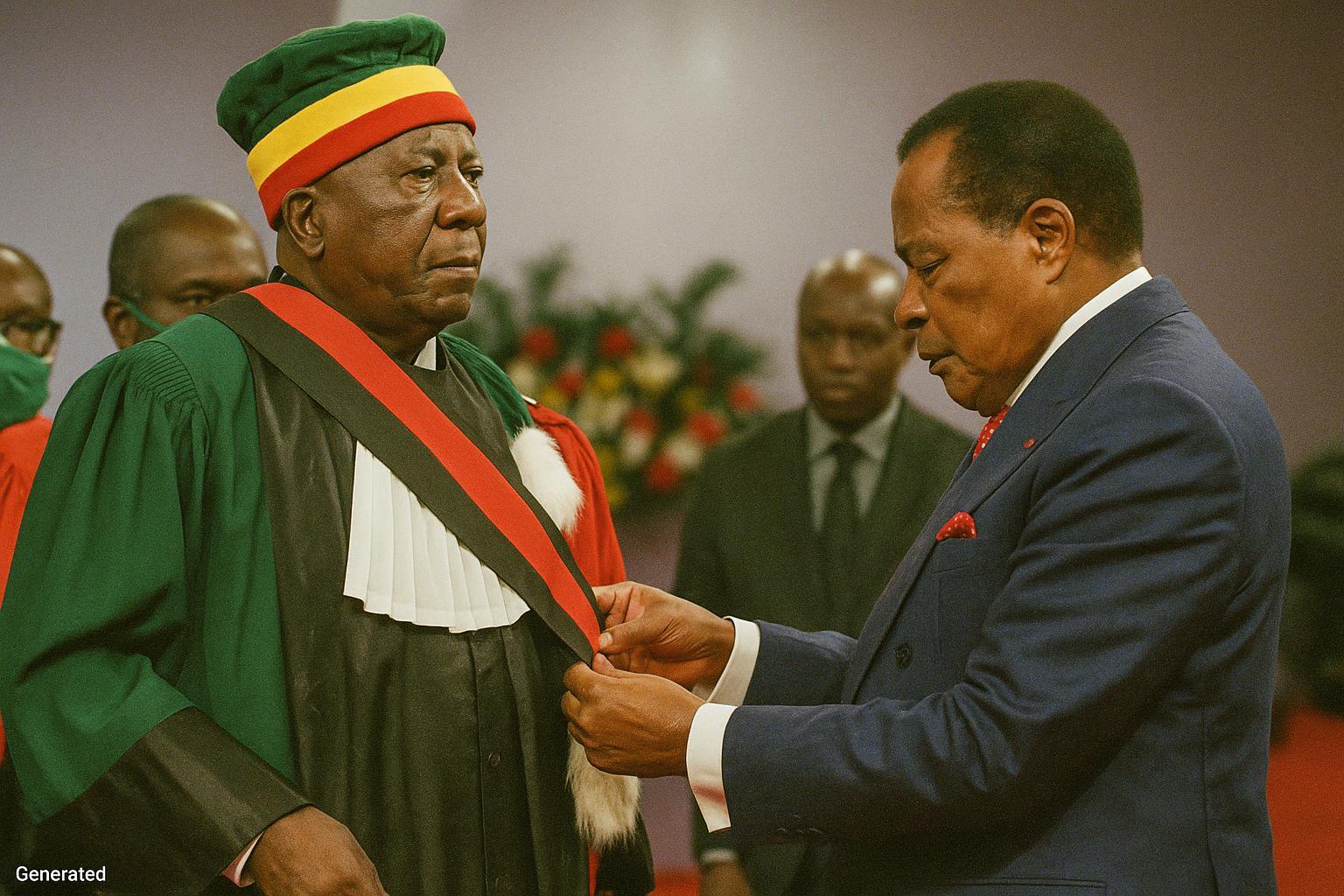
The main hall of Brazzaville’s Palais des Congrès was already humming well before noon on 25 July 2025. Diplomats adjusted their headphones, students balanced phones on their laps, and the Kébé-Kébé ensemble rehearsed its drum patterns in a corner. When President Denis Sassou Nguesso entered, an expectant hush swept the room. Moments later he placed the crimson-and-gold sash of the Grand-Croix of the Ordre du Mérite Congolais over the shoulders of Professor Théophile Obenga. The crowd’s standing ovation lasted longer than the official trumpet flourish, a rare sign of unanimity in a city that loves lively debate.
An Intellectual Journey Forged Across Continents
Born in 1936 in the village of Mbaya, Obenga spent his childhood listening to stories told in both Mboshi and Kikongo, the very languages that later fed his comparative research. He studied philosophy in Bordeaux, history at the Collège de France, and education sciences in Pittsburgh, capping it all with a doctorate in letters at the Sorbonne. By the late 1960s his article on the genetic link between Kikongo and Mboshi was turning heads in European linguistic circles. The watershed came in tandem with Senegalese historian Cheikh Anta Diop, when the duo argued that ancient Egyptian and sub-Saharan languages share a common matrix. Their ‘Nego-Egyptian’ thesis remains a cornerstone of African historical linguistics and, for many, a source of continental pride (Le Monde diplomatique archive, 2014).
Scholar, Minister and Builder of Institutions
Unlike many academics, Obenga never shied away from public service. He served as foreign minister from 1977 to 1979, and later steered cultural policy during a pivotal period of the early 1990s. Abroad, he directed the CICIBA center in Libreville, an organisation dedicated to Bantu civilisations. Back home after the 1997 conflict, he backed President Sassou Nguesso’s national reconstruction drive and proposed a new university for the capital. That idea materialised as Denis-Sassou-Nguesso University in Kintélé, which opened its doors in 2021 with a curriculum heavy on STEM and heritage studies (Les Dépêches de Brazzaville, 2023).
Why the Grand-Croix Matters Beyond Ceremony
In a region where brain drain often steals away seasoned professors, the decoration sends a message that scholarship still earns top billing at home. The Grand-Croix is the highest level within Congo’s merit order; only a handful of citizens, mostly heads of institutions, wear it. The timing is also strategic. Government advisers note that the country is finalising its 2025-2035 Plan for Higher Education, which hinges on keeping senior scholars engaged as mentors. Conferring the nation’s highest ribbon on a renowned academic underscores that policy plank without the need for lengthy white papers.
Aging Voice, Lasting Echo
Obenga’s recent health challenges have kept him away from lecture halls, yet the power of his written work endures. Twenty-five monographs, scores of peer-reviewed articles and a four-volume General History of Congo line library shelves from Dakar to San Francisco. ‘I dedicate this honor to the awakened youth of Africa,’ he told the audience, voice wavering but unmistakably firm. His choice of words struck a chord with the student delegation from Marien-Ngouabi University, many of whom grew up quoting his poems about the Congo River. According to Professor Delphine Edith Emmanuel Adouki, the higher education minister who delivered the main citation, ‘recognising a mind of his calibre is also a pledge to cultivate the next generation of rigorous, continent-rooted thinkers’ (Radio Congo Internationale broadcast, 25 July 2025).
Looking Ahead: Research, Memory and Soft Power
Organisers revealed that an international colloquium on Obenga’s oeuvre is in the works for early 2026. Scholars from Addis Ababa to São Paulo are expected, a lineup that underscores Brazzaville’s ambition to serve as a crossroads for African studies. The event dovetails with a broader cultural-diplomacy strategy that leverages the country’s intellectual assets as much as its oil wells. Observers point out that France previously named Obenga a Commander of Arts and Letters, a detail that the minister of culture deftly cited to highlight the bridge between Congolese and francophone academic spheres.
Final Curtain, Open Book
As guests filed out, a young linguistics graduate clasped a worn copy of ‘La Parole et l’Histoire’ hoping for a signature from the maître. Security gently steered her aside while aides wheeled the professor to a waiting car, but not before he managed a cursive flourish on the title page. The scene summed up the day: respect for an elder, faith in continuity. With the Grand-Croix now resting on his mantel, Obenga steps back into semi-retirement, yet his ideas on the interconnectedness of African languages will likely echo in classrooms long after the ceremonial drums fall silent.