
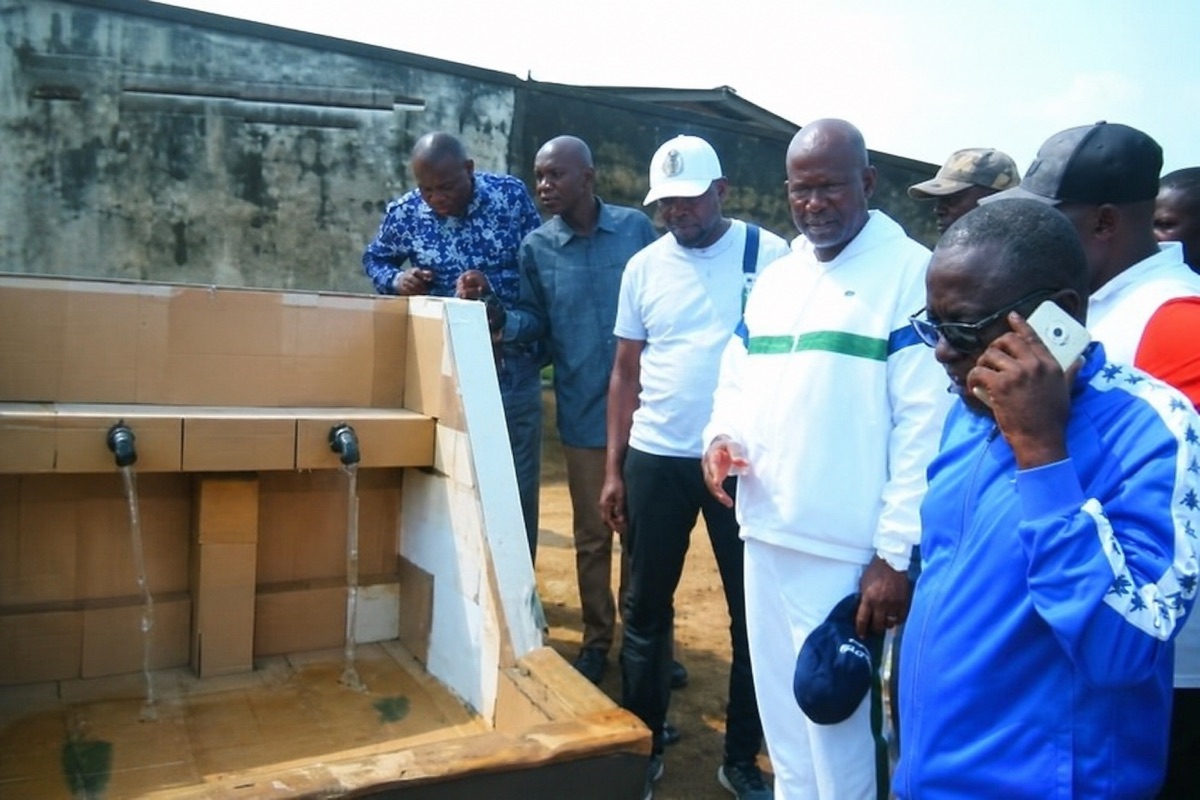
In the urban community of Makoua, in Congo-Brazzaville’s Cuvette department, clean water has moved from a daily struggle to a working reality. Departmental councillor Serge Itoua led an initiative equipping six neighbourhoods with modern drinking-water boreholes.
The programme rehabilitated existing boreholes across several districts, including Bonga and Mossa Ketta, along with the areas surrounding the Catholic church and the Makoua cultural centre. For residents, the change is immediate and deeply practical after long years of hardship.
A local answer to years of water scarcity
Water shortages had shaped everyday life in Makoua for a long time. Families organised their days around the search for a reliable supply, and the absence of dependable drinking water weighed on households, small trades and neighbourhood routines alike.
The new boreholes address that gap directly. Rather than launching entirely new sites, the effort focused on restoring installations that already existed, bringing them back to working order so that whole districts could draw safe water close to home once again.
Serge Itoua frames a longer-term commitment
Speaking at the handover, Serge Itoua presented the work as a beginning rather than a finish line. “The act we are carrying out today is the start of a dynamic that will consolidate,” he said, signalling an intention to extend and reinforce the effort over time.
His words reflect an awareness that infrastructure alone is not enough. Access to water depends on installations that keep functioning month after month, and the councillor tied the day’s ceremony to a broader ambition for Makoua’s neighbourhoods and their residents.
Relief flows through the neighbourhoods
For the people served, the impact is tangible. A neighbourhood chief spoke plainly about the difference it makes. “I say thank you to councillor Serge Itoua, because the gesture he has just made relieves me,” he said, capturing a widely shared sense of gratitude.
That relief echoed among households that had gone without. A woman from the Bonga district recalled how difficult conditions had become. “For several years, we no longer had drinking water,” she said, describing a return to reliable supply that many had waited on for a long time.
These voices give the project its human weight. Behind the technical language of boreholes and rehabilitation lies a simpler story: mothers, families and small communities regaining access to a basic resource that had slipped out of reach across the Cuvette.
Maintenance seen as the real test
The handover also carried a warning against complacency. Makoua’s mayor, Jean Emile Ongayolo, stressed that the value of the new installations will depend on how carefully they are looked after in the months and years ahead.
He underlined the importance of proper upkeep and of securing the boreholes so they are not damaged or left to fall back into disrepair. In practice, that means treating the equipment as shared community property, worth protecting for everyone who relies on it.
His message points to a familiar challenge across many local water projects. Building or restoring a borehole is one stage; keeping it running is another. Sustained maintenance, the mayor suggested, will determine whether today’s relief becomes a lasting improvement.
What the initiative means for Makoua
Taken together, the six districts now equipped mark a meaningful shift for daily life in Makoua. Access to drinking water underpins health, hygiene and the ordinary rhythm of family and working days, and its restoration touches every corner of the community.
The framing offered by Itoua, as the “start of a dynamic,” invites residents to see the current work as a foundation. If the momentum holds and the installations are maintained, the neighbourhoods stand to keep the gains rather than watch them fade.
For now, the tangible result is straightforward. Where taps and pumps had run dry, water is flowing again in Bonga, Mossa Ketta and the surrounding areas. In a community that endured years of scarcity, that return of a basic service is being welcomed as genuine, hard-won relief (ADIAC Congo).
The coming period will test the promises made at the handover. Residents will watch whether the councillor’s pledge to consolidate translates into further work, and whether the mayor’s call for careful maintenance is heeded. On the day itself, though, the mood in Makoua was one of quiet, practical gratitude.