
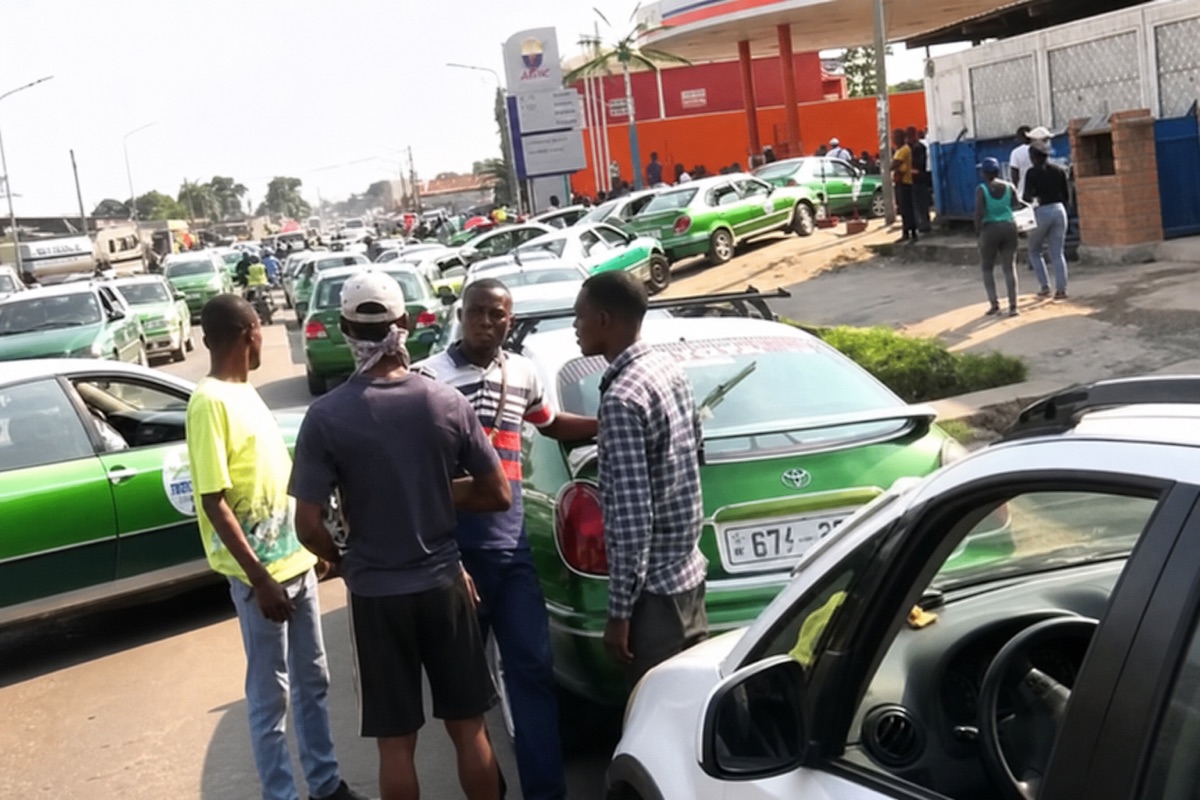
Weeks of Dry Pumps Test Patience Across the Republic of Congo
For more than two weeks, drivers in the Republic of Congo (Congo-Brazzaville) have queued, waited, and often left empty-handed. The shortage now stretches well beyond the capital.
Brazzaville, Pointe-Noire, and towns in the interior are all feeling the squeeze. What began as an inconvenience has hardened into a daily ordeal for commuters, traders, and families who depend on affordable transport.
Informal Sellers Cash In as Official Prices Vanish
With official supply faltering, an informal market has filled the gap. Roadside vendors, nicknamed “Kadhafis,” now hawk petrol from jerricans on street corners across the main cities.
Their prices tell the story of the crisis. A litre that costs 775 CFA francs at an official pump changes hands for between 1,500 and 2,000 CFA francs on the curb, roughly double or more.
For minibus drivers and small businesses, that gap is brutal. Each top-up eats into thin margins, and the cost inevitably trickles down to passengers and customers who can least absorb it.
A Single Operator at the Centre of the Bottleneck
In a recent tribune, commentator Jean-Clotaire Diatou points to one structural cause above the rest. The national oil company, the SNPC, holds near-exclusive control over imports of refined petroleum products.
The law itself is not the obstacle, he argues. Approved private importers are technically allowed to bring in fuel, yet the practice remains, in his words, “very tightly framed,” leaving little real room for competitors to operate.
That concentration matters when supply tightens. When a single channel handles most of the inflow, any disruption upstream ripples quickly to every pump, with few alternative pipelines to cushion the shock.
Refining Capacity That Cannot Keep Pace
Domestic production offers only partial relief. The Coraf refinery covers about 70 percent of national demand, processing some 60 million litres a month, which leaves a standing shortfall to be filled by imports.
A second refinery in Pointe-Noire was meant to ease that strain. The project, expected to come on stream by December 2025, has yet to begin operations, leaving the country reliant on the same stretched arrangements.
Until that capacity arrives, the maths is unforgiving. Demand outruns local output, imports remain channelled through one dominant operator, and any hiccup translates into the kind of queues now seen on city streets.
The Case for Breaking the Monopoly
Diatou’s prescription is direct. He calls for breaking the state monopoly and genuinely liberalising the sector, so that several agreed importers can compete and supply the market in parallel.
He is not alone in that view. The International Monetary Fund (IMF) has regularly recommended a similar opening of the market, treating greater competition as a safeguard against the recurring shortages that disrupt economic life.
The argument rests on resilience. Multiple suppliers, the reasoning goes, would spread risk and reduce the chance that one bottleneck leaves an entire nation idling in line for a few litres of petrol.
What the Shortage Means on the Ground
Behind the policy debate sits a very practical toll. Public transport is among the first casualties, as drivers reduce trips or pass on the inflated cost of black-market fuel to riders.
That has knock-on effects. Workers arrive late, goods move slowly, and household budgets stretch thinner with each passing day the official network fails to deliver fuel at the regulated price.
For now, the “Kadhafis” remain a stopgap that few can comfortably afford. Their visible presence is less a solution than a symptom of a system struggling to match supply with everyday demand.
A Reform Debate That Outlasts the Queues
The current crisis will eventually ease, as previous episodes have. The deeper question raised in the tribune is whether the country will keep lurching from one shortage to the next.
Without structural change, Diatou warns, the national economy will continue to absorb these intermittent crises, with transport and ordinary commerce bearing much of the cost each time supply tightens.
The choice he frames is between managing symptoms and treating the cause. Opening imports to real competition, in this telling, is the difference between repeated emergencies and a steadier, more dependable fuel supply.
For drivers still waiting at half-empty stations in Brazzaville and Pointe-Noire, that distinction is far from abstract. It is measured in hours lost, fares raised, and the simple uncertainty of whether the next pump will be working.