
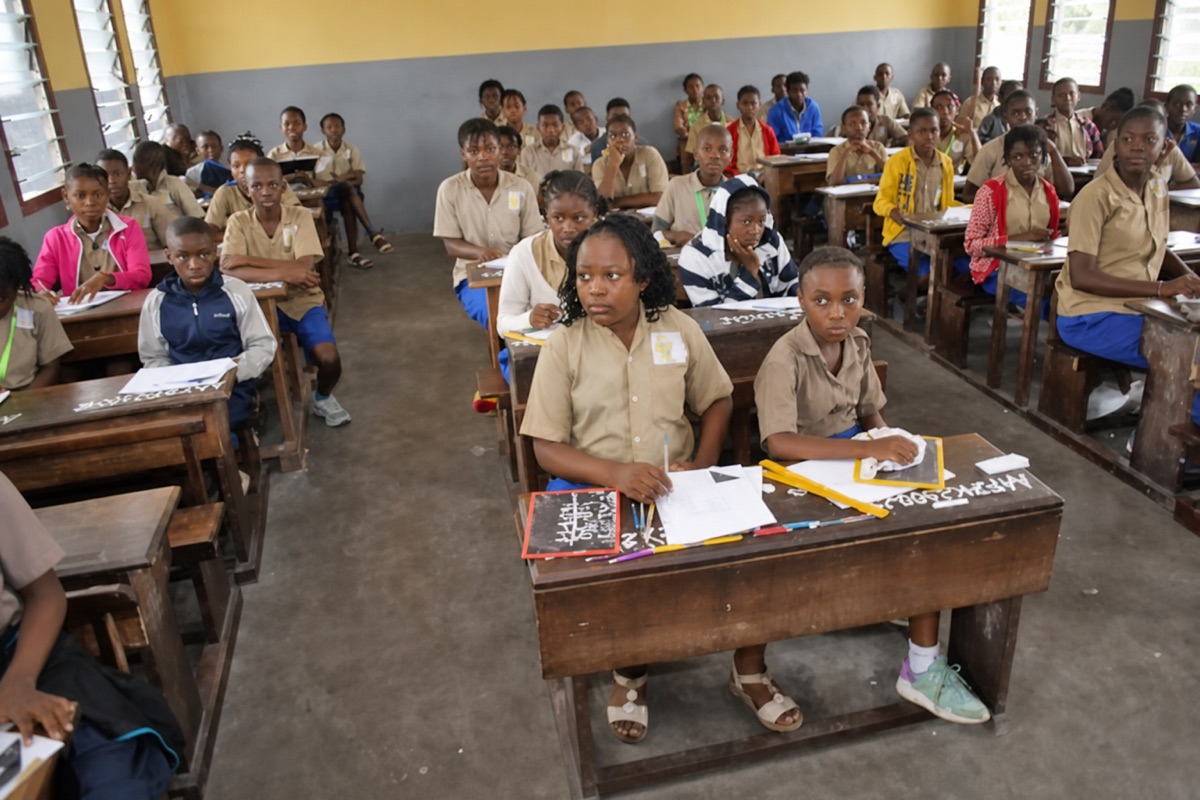
A nationwide page turned on 12 June 2026 across Congo-Brazzaville, as classrooms emptied of their usual rhythm and filled instead with the focused silence of an exam day. The CEPE drew young candidates into a ritual familiar to families nationwide.
A Record Turnout Across 655 Examination Centres
The numbers tell a story of growth. A total of 149,329 candidates sat the Certificat d’études primaires élémentaires this year, spread across 655 centres covering the whole national territory. The figures come from the directorate of examinations and competitions.
That headcount marks a real shift. Participation rose by 7.71% compared with the previous edition, a jump education officials read as a sign that primary schooling is reaching more children. Behind each percentage point sit thousands of families investing in their children’s first formal milestone.
Why Primary Schooling Numbers Matter in Congo-Brazzaville
For a country counting on its youth, a rising primary intake is more than a statistic. It hints at wider enrolment at the base of the system, where literacy and numeracy take root. Navetteurs, market traders and salaried parents alike feel the weight of exam season in household routines.
The mobilisation around the session was notable. Teachers, supervisors and local education actors coordinated to keep 655 centres running smoothly on a single day. That logistical effort, repeated across departments, reflects how central the CEPE remains to the calendar of Congolese family life.
An Edition That May Close a Chapter
This year’s session carries a weight beyond its size. It could rank among the last held under the CEPE name. A bill reorganising the national education system, adopted in the Council of Ministers on 20 January, foresees replacing the certificate with a new title.
Under that text, the Certificat d’études primaires élémentaires would give way to the Certificat d’études primaires, known as the CEP. The change reads as administrative on paper, yet for pupils and parents it would mark the end of an acronym worn smooth by generations of use.
What the CEP Reform Signals for Schools
The planned shift is part of a broader move by public authorities to modernise the national education system. Officials frame the reorganisation as an effort to align schooling with new pedagogical orientations, updating the architecture that shapes a child’s earliest certified achievement.
Details of how the transition would unfold remain set out in the bill rather than in classrooms for now. The source material confirms the intent to rename and restructure, without spelling out a timetable for when families would first see CEP certificates issued in place of the familiar CEPE.
A Familiar Ritual Facing Quiet Change
For the 149,329 who wrote this June, the experience was the one their elder siblings knew: early starts, assigned centres, and the long wait that follows. The continuity of that ritual stands in contrast to the relabelling now drafted into law.
The session therefore sits at a hinge point. It honours a long-running tradition while a successor name waits in the legislative pipeline. Whether the 2026 cohort proves to be among the final CEPE holders depends on the pace at which the reform is enacted.
Reading the Figures Without Overreaching
It is worth keeping the analysis measured. A 7.71% rise is meaningful, yet the published data centres on participation and centre counts rather than results or pass rates, which had not been detailed in the available information at the time of writing.
What can be said with confidence is concrete. Nearly 150,000 children mobilised, hundreds of centres opened, and a single examination day unfolded nationwide. Those facts anchor the edition firmly, even as the certificate’s future name remains a matter for the law to settle.
A Milestone Worth Watching
The CEPE has long served as a first formal threshold for Congolese pupils, a moment parents mark and remember. The combination of a record turnout and a pending rename gives the 2026 edition a particular resonance for households across Brazzaville, Pointe-Noire and the departments.
As the reform moves forward, the question for families is less about the test itself than about its title. The exam will endure in substance, even if the letters on the certificate change. For now, 149,329 young candidates have already closed their copybooks (Journal de Brazza).