
Summary: Brazzaville authorities forcibly cleared families from the Yoro neighbourhood in Mpila on 13 May 2026 to widen road access to the city’s main food port. Residents who had taken compensation refused to leave, and the state pushed through.
State Moves In After Residents Refuse to Budge
On 13 May 2026, government teams entered the Yoro neighbourhood in Brazzaville’s sixth district, Talangaï, and began removing families by force. The households had already collected compensation but stayed put past the deadline they were given.
The operation, reported by Adiac Congo, unfolded with heavy machinery and police on hand. According to the same account, the state “managed to impose its authority” over residents who lit tyres in the street to signal their anger and slow the clearance.
For many along this stretch of Mpila, the eviction closed a months-long standoff. People had been told the land was needed, paid sums to relocate, then watched the day arrive when refusal no longer held back the bulldozers.
Why a 1944 Port Sits at the Centre of the Dispute
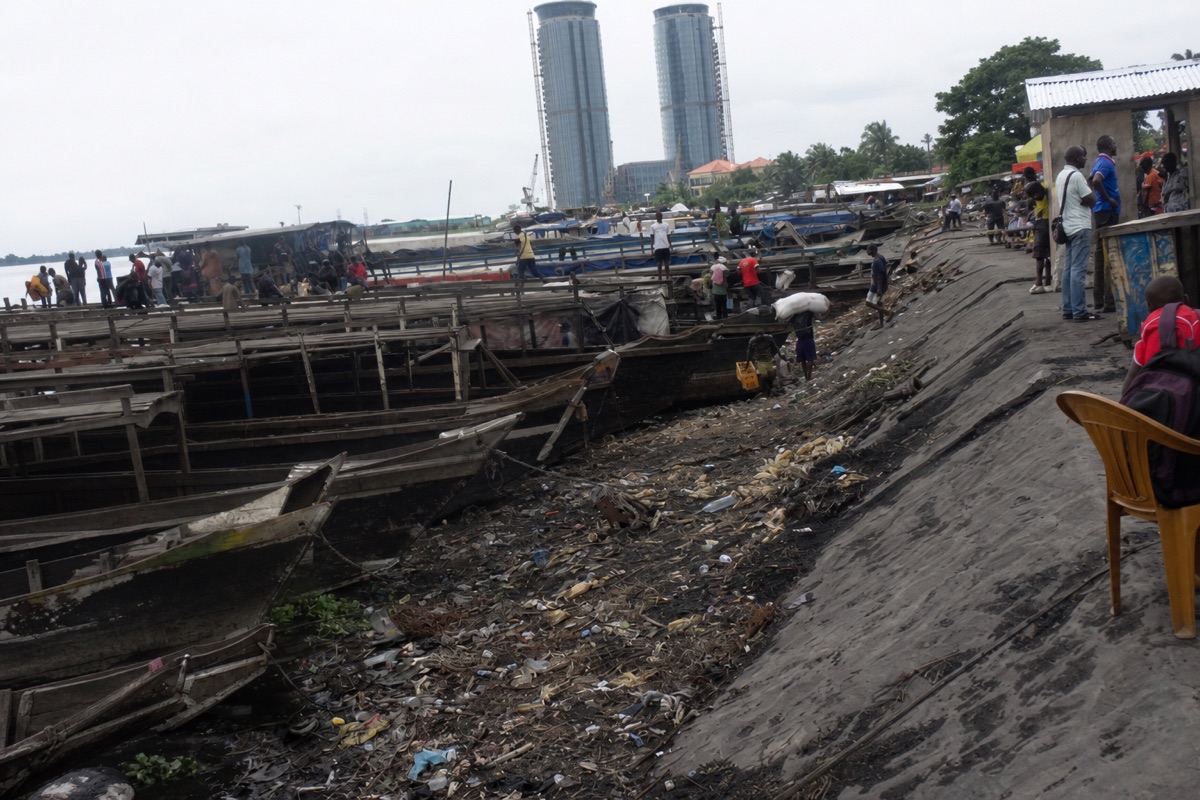
The land was cleared to widen the road leading into the port of Yoro, a facility the authorities are working to modernise. Founded in 1944, the river port ranks among the country’s busiest logistics hubs and serves as a chief gateway for food supplies.
That status matters. When a single site handles a large share of the staples reaching Brazzaville, any bottleneck on its approach road ripples outward to markets and household budgets across the capital and beyond.
The renovation aims to lift storage capacity, smooth access for trucks and goods, and tighten security around the installations. In short, the works are framed as an effort to keep the port able to feed a growing city.
The Human Toll of a “Public Utility” Label
The clearance touched 420 families across roughly 15 hectares declared to be of public utility. That legal designation gives the state the footing to take private land for projects deemed to serve the broader public interest.
On paper, the numbers are tidy: 420 households, 15 hectares, prior compensation paid. On the ground, the figures stand for homes, small trades and routines that had taken root in Yoro long before the modernisation plan reached the drawing board.
Adiac Congo reported that the operation passed without serious incident, carried out under the watch of security forces and with mechanical equipment doing the demolition work. No injuries were noted in that account, despite the visible resistance.
Compensation Paid, Yet Tension Lingered
The sequence raises a recurring question in fast-changing African capitals: how to balance major public works against the people standing in their path. Here, residents were not left empty-handed, having received indemnities before the deadline lapsed.
Even so, payment did not buy calm. The burning tyres point to a gap between what the compensation covered and what residents felt they were losing, whether in money, location or the simple act of being moved on the state’s timetable rather than their own.
For families who built lives in Yoro, an indemnity cheque and a relocation order are not the same as a say in the decision. That mismatch is often where friction flares, even when the paperwork is in order.
What the Yoro Clearance Signals for Brazzaville
The episode reads as a marker of how Brazzaville intends to handle infrastructure ambitions that collide with dense, lived-in neighbourhoods. The message from this operation is that declared public-utility projects will move forward, resistance notwithstanding.
For the wider city, the stakes are practical. A modernised Yoro that stores more and moves goods faster could ease pressure on food supply chains, the kind of everyday gain that registers in market prices long after the demolition dust settles.
For Talangaï and Mpila, the immediate reality is sharper. Four hundred and twenty families must now rebuild routines elsewhere, their old plots folded into a road project meant to serve a port older than independence itself.
The coming months will test whether the modernisation delivers the capacity and security its backers promise. Until then, the cleared ground at Yoro stands as a reminder that big public works in Brazzaville increasingly come with a visible, human cost (Adiac Congo).