
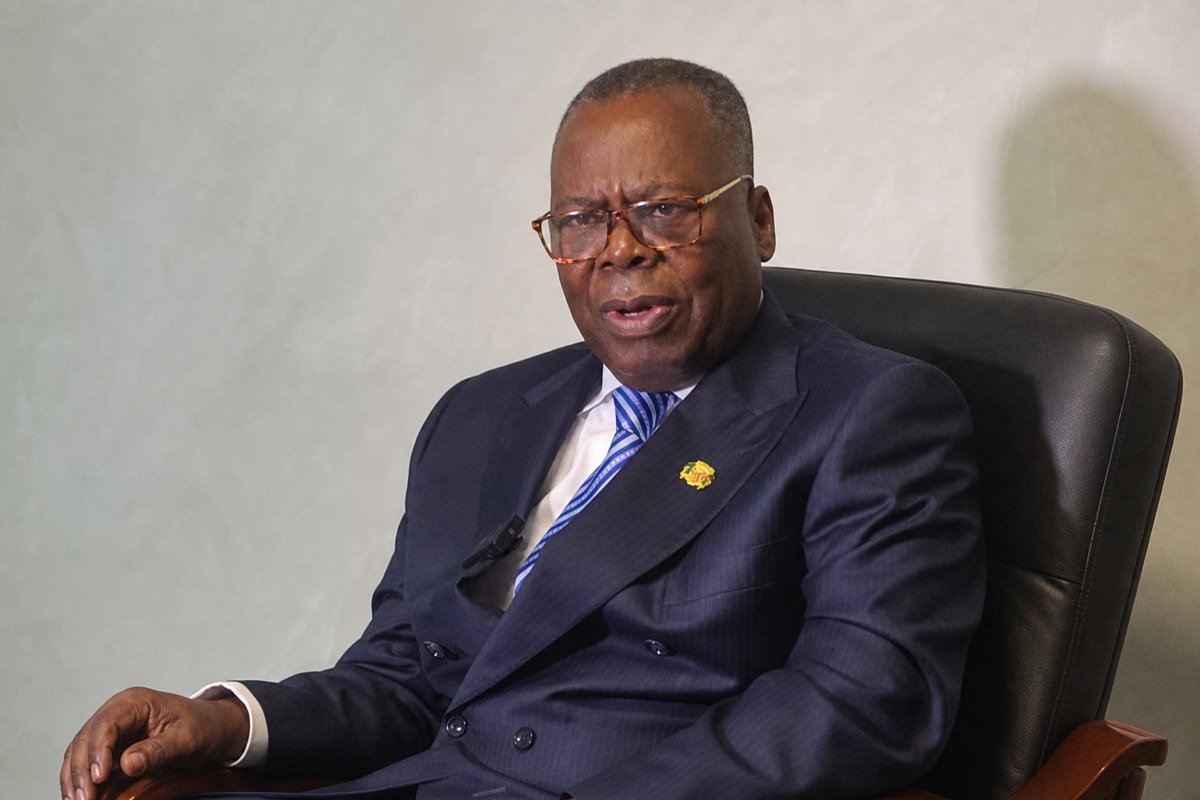
Luc-Joseph Okio formally stepped into his new role as Minister of State in charge of State Reform and Relations with Parliament on April 28, 2026. The handover ceremony in Brazzaville opened a fresh chapter for the government’s dialogue with lawmakers.
His message to elected officials was deliberately plain. Rather than promise sweeping reforms, Okio laid out three working principles he intends to honor day after day with the National Assembly and the Senate.
A Promise of Transparency With Lawmakers
The first pledge centers on clear information. Okio committed to sharing facts openly with parliamentarians, betting that mutual understanding starts with honest communication. He framed transparency less as a slogan than as a routine habit of governance.
For deputies and senators, the practical stakes are real. Lawmakers often complain that data arrives late or incomplete, complicating their oversight work. By promising a steady flow of accurate information, Okio aims to ease that friction from his first weeks in office.
Responsiveness as a Daily Discipline
The second commitment is speed. Okio said he would answer elected officials’ concerns quickly, sparing them any sense of being ignored. In a relationship often strained by silence, prompt replies could become a quiet but meaningful shift.
The minister presented this as a matter of respect as much as efficiency. When lawmakers raise questions on behalf of constituents, delays can stall legislative work. A responsive ministry, in his telling, keeps the institutional machinery moving without unnecessary irritation.
Guarding Parliament’s Constitutional Powers
His third pledge struck the most institutional note. Okio vowed to “scrupulously respect the prerogatives of the National Assembly and the Senate,” which he called essential to sound institutional functioning. The wording signaled deference to the legislature’s defined role.
That assurance matters in a system where the boundary between executive action and legislative authority can blur. By naming both chambers explicitly, Okio positioned himself as a partner rather than an overseer, at least in the language he chose for his opening statement.
From Delegate Minister to Minister of State
Okio’s appointment is also a personal promotion. He previously served as delegate minister in charge of state reform, and the new posting raises him to the rank of Minister of State with broader responsibilities. The elevation widens both his portfolio and his profile.
He used the ceremony to thank President Denis Sassou N’Guesso and Prime Minister Anatole Collinet Makosso for their confidence. The gesture, customary at such handovers, underscored that his mandate flows directly from the head of state and the head of government.
A Predecessor’s Record and Parting Advice
The outgoing minister, Pierre Mabiala, used the occasion to take stock of his tenure. He highlighted 47 parliamentary sessions and 438 laws adopted during his time overseeing relations with the legislature, a tally he presented as proof of steady cooperation.
Mabiala stressed that he had kept cordial ties with elected officials throughout. He described those relations as a foundation worth preserving, rather than a problem his successor would need to repair from scratch.
His advice to Okio was pointed and practical. He recommended favoring courteous dialogue and rigorous follow-up on every file, suggesting that consistency and tone matter as much as policy when managing the government’s link to Parliament.
What the Handover Signals for Brazzaville
Taken together, the three pledges read as a continuity agenda rather than a rupture. Okio inherits a working relationship that his predecessor described as functional, and his stated priorities aim to maintain and refine it rather than rebuild it.
Still, the early test will be conduct, not vocabulary. Transparency, responsiveness and respect for parliamentary prerogatives are easy to announce and harder to sustain across a full legislative calendar with competing demands and limited time.
Observers in Brazzaville will likely watch how quickly the ministry answers lawmakers’ first formal requests under the new leadership. Those initial exchanges often set the tone for the months that follow a change at the top.
For now, the picture is of an orderly transition. A seasoned official has moved up, a respected predecessor has handed over a tidy record, and the incoming minister has framed his job around service to the two chambers rather than control over them.
Whether that framing holds will depend on the unglamorous work ahead, the files reviewed, the questions returned and the institutional lines kept clear. On day one, at least, Okio chose a posture of cooperation, and lawmakers now have three concrete promises by which to measure him.