
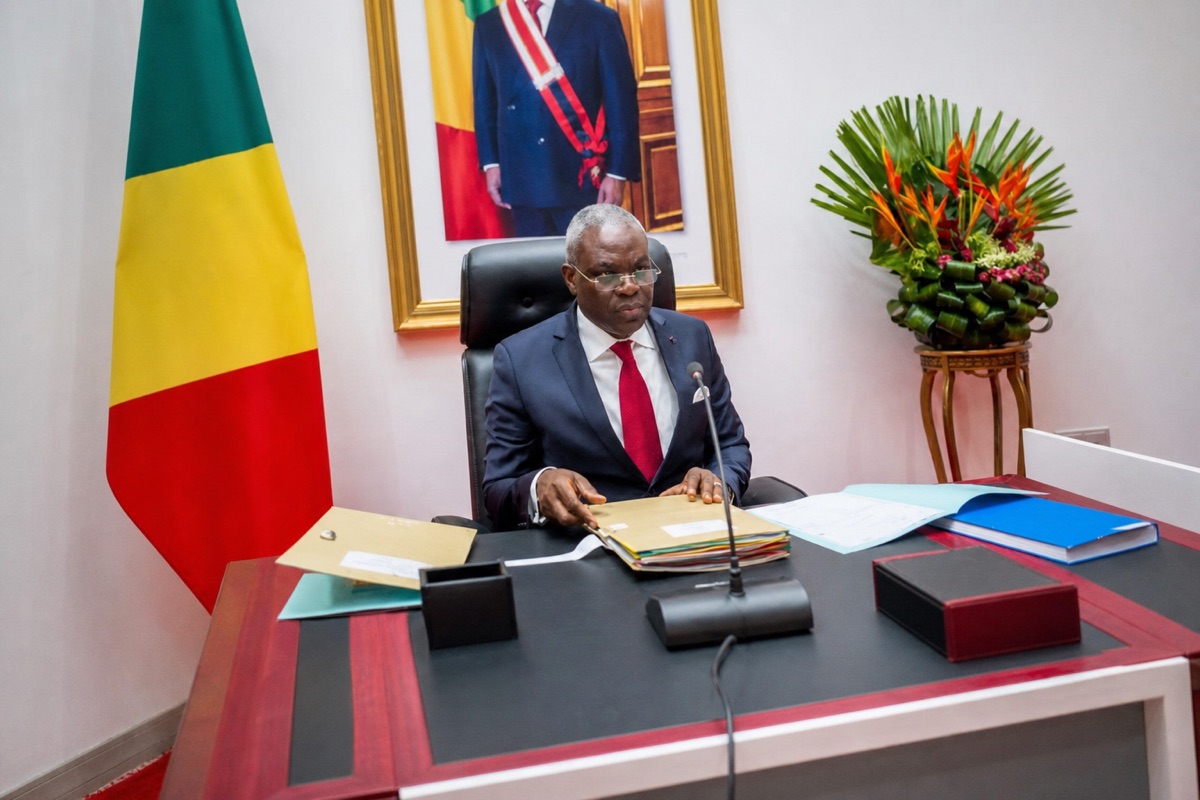
Republic of Congo’s new government took its first formal step on Wednesday 29 April 2026, gathering in Brazzaville for an opening cabinet meeting that marked its official entry into office.
A First Meeting That Sets The Tone
Ministers convened around the head of government, Anatole Collinet Makosso, to lay out the broad lines of their respective priorities. The session served as the administration’s public starting point.
The agenda spanned a wide field. Modernising infrastructure, improving the health system, education, governance and economic diversification all featured among the challenges the new team identified as pressing.
Priorities Across Several Sectors
Speaking in turn, members of the government sketched what each portfolio intends to tackle first. The range of files reflected the breadth of expectations now resting on the cabinet’s shoulders.
None of these areas, ministers acknowledged, lends itself to quick fixes. The list read less like a victory lap than an honest inventory of work still waiting to be done across the country.
A Shared Push For Quick, Coordinated Action
In their interventions, the ministers projected a common determination to move swiftly and in a coordinated manner. The emphasis fell on cooperation rather than ministries working in isolation.
That tone matters. A first meeting often signals how an executive intends to operate, and this one leaned toward joint effort over individual initiative, at least in its opening message.
Concrete Results For Pressing Public Needs
The stress on producing concrete results answered what officials described as the pressing expectations of the population. Citizens, the government suggested, are watching for tangible change rather than declarations.
It is a familiar challenge for any incoming team. Translating intentions into visible improvements, on roads, in clinics, in classrooms, remains the measure most people will ultimately apply.
A Working Method Built On Rigour
The meeting also allowed the cabinet to define a method of work. It rests, ministers said, on rigour, interministerial collaboration and an obligation to deliver results.
That framing is deliberate. By naming an obligation of results from the outset, the government set itself a yardstick, an approach it considers essential to strengthening the impact of public policies.
Interministerial collaboration, in particular, was presented as a corrective. Policies that cut across several portfolios often stall when departments act alone, and the new method aims to keep files moving between ministries.
Anchored In The Presidential Vision
The executive’s action fits within the vision carried by President Denis Sassou-N’Guesso. He has set out an ambition to consolidate growth and durably improve the living conditions of Congolese citizens.
That presidential framework gives the cabinet its broad direction. The ministers’ stated priorities, from infrastructure to economic diversification, align with the twin goals of steadier growth and better daily life.
What To Watch Next
For now, the first cabinet meeting offered priorities and a method rather than detailed timelines. The substance will come as individual ministries translate Wednesday’s statements into programmes and budgets.
The early signals, swift action, coordination and a results obligation, give observers clear criteria against which to judge the months ahead. Whether the practice matches the promise remains the open question.
For households, commuters and small businesses across Brazzaville, Pointe-Noire and the departments, the test will be practical. The opening meeting set the ambition; delivery on the ground will define this government’s record.