
Brazzaville Settles Its New Executive Team
The Republic of Congo finally has a face for its next chapter of governance. On Friday, 24 April 2026, Minister of State and Director of the Presidential Cabinet Florent Tsiba read out the official list of the country’s new government.
The announcement closed weeks of quiet speculation in Brazzaville and Pointe-Noire over who would sit at the table. For households, traders and local officials, the names matter because they map who now steers daily public life.
A Cabinet of 42 Names
The new line-up brings together 42 ministers and delegate ministers. The spread covers the main pillars of state action, from security and money to health, schooling, farming and the environment. It is a broad team rather than a slimmed-down one.
At its core sits a familiar figure of recent Congolese governance. Jean-Jacques Bouya takes the post of vice-Prime Minister, placing him among the most senior officials in the day-to-day running of the executive.
The Senior Portfolios
Several heavyweight ministries went to seasoned hands. Raymond Zephirin Mboulou keeps responsibility for National Defence, while Christian Yoka takes charge of Finance and Budget, the office that will shape spending and fiscal choices.
Diplomacy falls to Constant Serge Bounda as Minister of Foreign Affairs, a role that carries weight inside CEMAC and across Central Africa. Justice goes to Aime Ange Wilfrid Bininga, who inherits a portfolio always watched closely by citizens.
Health and Population, a brief that touches every family, was entrusted to Jean-Rosaire Ibara. Together these appointments signal continuity at the top of the security, economic, diplomatic and social blocs of the state.
Beyond the Headline Ministries
The presidential decree did not stop at the marquee names. It also filled specialised portfolios spanning agriculture, energy, the environment, transport and education. These are the offices that decide on harvests, power supply, roads and classrooms.
For commuters, small businesses and rural producers, those quieter ministries often matter as much as the high-profile ones. Their holders will be judged on practical outcomes rather than on the ceremony of an inauguration day.
How the Reshuffle Came Together
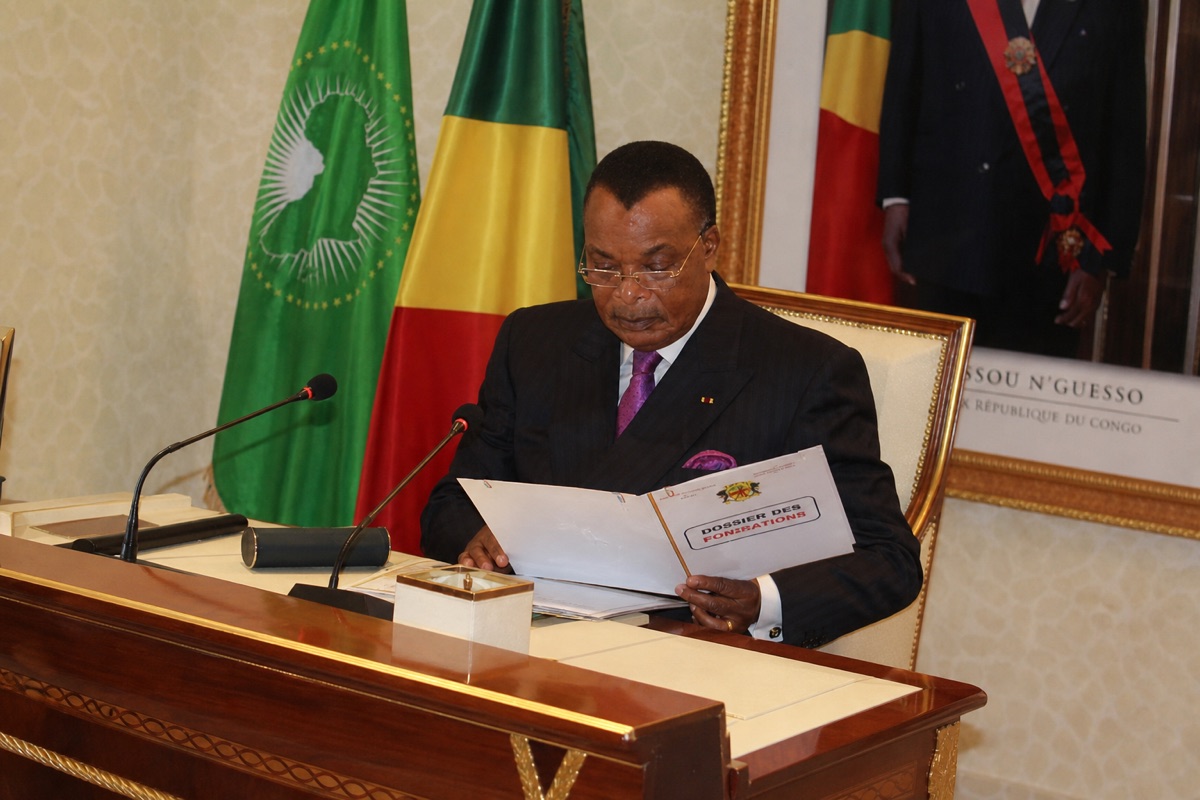
The cabinet announcement did not arrive in isolation. It followed the reappointment of Anatole Collinet Makosso as Prime Minister, a decision taken by President Denis Sassou Nguesso. Makosso therefore keeps the job of assembling and leading the government’s work.
That choice came in the wake of the head of state’s investiture for a fresh five-year mandate on 16 April 2026. The sequence is a familiar rhythm in Congolese politics: investiture first, then a prime minister, then the full team.
By keeping Makosso in place and naming a wide cabinet around him, the presidency has opted for steadiness at the start of the term. The continuity at Defence and Finance reinforces that reading.
What It Means for Everyday Congo
For the wider public, a new government is less about titles and more about delivery. Families will look to Health and Population for clinics and services. Traders and commuters will weigh the work of Finance, Transport and Energy on prices and mobility.
Institutions across the departments, from Brazzaville to Pointe-Noire, now have clear counterparts in the capital. Local administrations can resume planning with named ministers rather than waiting on an unfinished structure.
The breadth of the team, at 42 members, suggests the executive wants representation across many sectors at once. Whether that scale translates into faster results will be the real test in the months ahead.
A Term That Now Has Its Builders
With the list read out by Florent Tsiba, the institutional pieces of the new mandate are in place. The president has his prime minister, and the prime minister has his ministers, each tied to a defined slice of state action.
The early signals point to continuity rather than rupture, especially in the portfolios that anchor security and public finance. For a country watching prices, services and stability, that message of steadiness is itself a statement.
What follows now is the harder part, away from the announcement and into the work. Citizens in Congo-Brazzaville will measure this 42-member government not by the day it was named, but by what it manages to change (Les Echos du Congo-Brazzaville).