
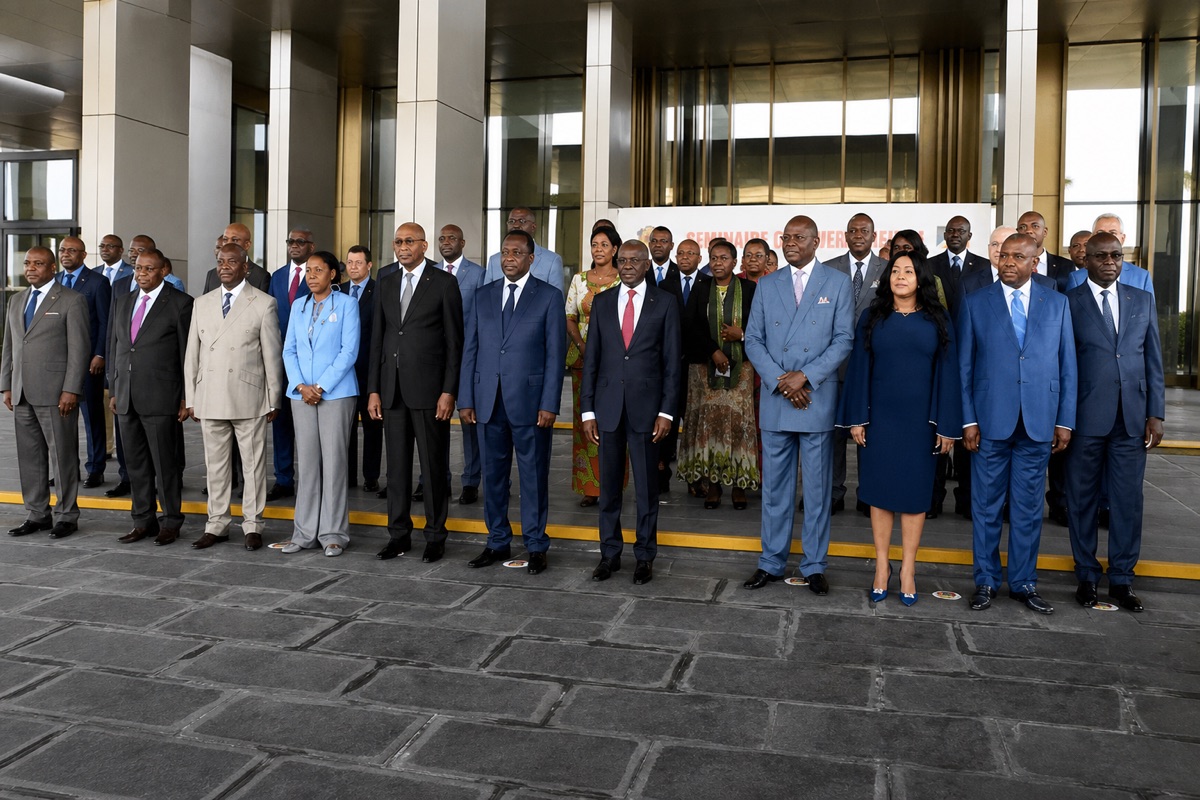
A New Term Opens With a Government Reshuffle in Brazzaville
The Republic of Congo entered a fresh political chapter this April. Days after President Denis Sassou N’Guesso took the oath of office, Prime Minister Anatole Collinet Makosso handed in his resignation, clearing the way for the head of state to shape his next team.
The sequence was swift and deliberate. Sassou N’Guesso was sworn in on April 16, 2026, at the Stade de Kintele near Brazzaville. The following day, on April 17, Makosso submitted both his own resignation and that of his entire cabinet.
Sassou N’Guesso Accepts the Cabinet’s Departure
Confirmation came on April 19. Minister of State Florent Ntsiba publicly announced that the president had accepted the resignation. He stressed that the outgoing team would keep running day-to-day affairs until a new government takes shape.
This caretaker arrangement is standard practice. It prevents any administrative vacuum while the president weighs his options, consults allies, and decides who will lead the executive through the term ahead.
The Makosso Years and the “Ensemble” Project
Appointed in May 2021, Makosso steered the government across the entire previous mandate. His work unfolded under the banner of the “Ensemble, poursuivons la marche” project, the political program that framed the administration’s priorities and public messaging.
His cabinet set itself twelve major challenges. They ranged from reviving an economy battered by the health crisis to opening talks with the International Monetary Fund and managing a string of social tensions across the country.
Economic Milestones Marked the Outgoing Mandate
Among the achievements credited to the period was the completion of the program with the International Monetary Fund in March 2025. Reaching that milestone signaled a measure of fiscal discipline closely watched by Congo’s partners in Central Africa.
The administration also worked to balance fuel price adjustments with stability in the transport sector, a sensitive equation in a country where pump prices shape household budgets and the daily routines of commuters and small traders alike.
What Comes Next for the Republic of Congo
Attention now turns to the president’s choice of a new prime minister, expected within hours or days of the resignation. Sassou N’Guesso could appoint a fresh figure or reappoint Makosso, a familiar option in Congolese politics.
For families, young workers, and businesses watching from Brazzaville to Pointe-Noire, the question is less about names than continuity. The next government will inherit the economic and social files that defined the outgoing mandate, and the expectations attached to them.
Until that announcement, the caretaker cabinet remains in place, ensuring that public services and ongoing decisions carry on without interruption (sources: L’Horizon Africain / Adiac Congo, April 19, 2026).