
Football in the Republic of Congo (Congo-Brazzaville) may finally be turning a page. A Saturday gathering in Brazzaville brought together officials, club leaders and sports figures determined to pull the national game out of a long, draining standoff.
A shared push to rebuild Congolese football
The meeting drew the Ministry of Youth and Sports, club directors, technical staff and sports columnists. What united them was less a single plan than a shared conviction: the Congolese game needs a durable restart, not another temporary fix.
Participants framed the moment as a collective responsibility. The message was that recovery cannot rest on one office or one personality. Rebuilding, they argued, means restoring institutions that supporters and partners can actually trust again.
Hugues Ngouelondele set the tone. "It is about rebuilding credible institutions and restoring the confidence of partners and the public," he said. He pressed for inclusive dialogue, suggesting that no faction could resolve the deadlock alone.
That insistence on dialogue mattered. For two years, mistrust had hardened positions on every side. Bringing club bosses, technicians and ministry representatives into the same room was, in itself, a modest but real signal of intent.
Two years of institutional deadlock
The backdrop is a prolonged institutional crisis. Persistent disagreements between the ministry and the Congolese Football Federation pushed the sport into a long period of turbulence, with no clear path out for clubs or players.
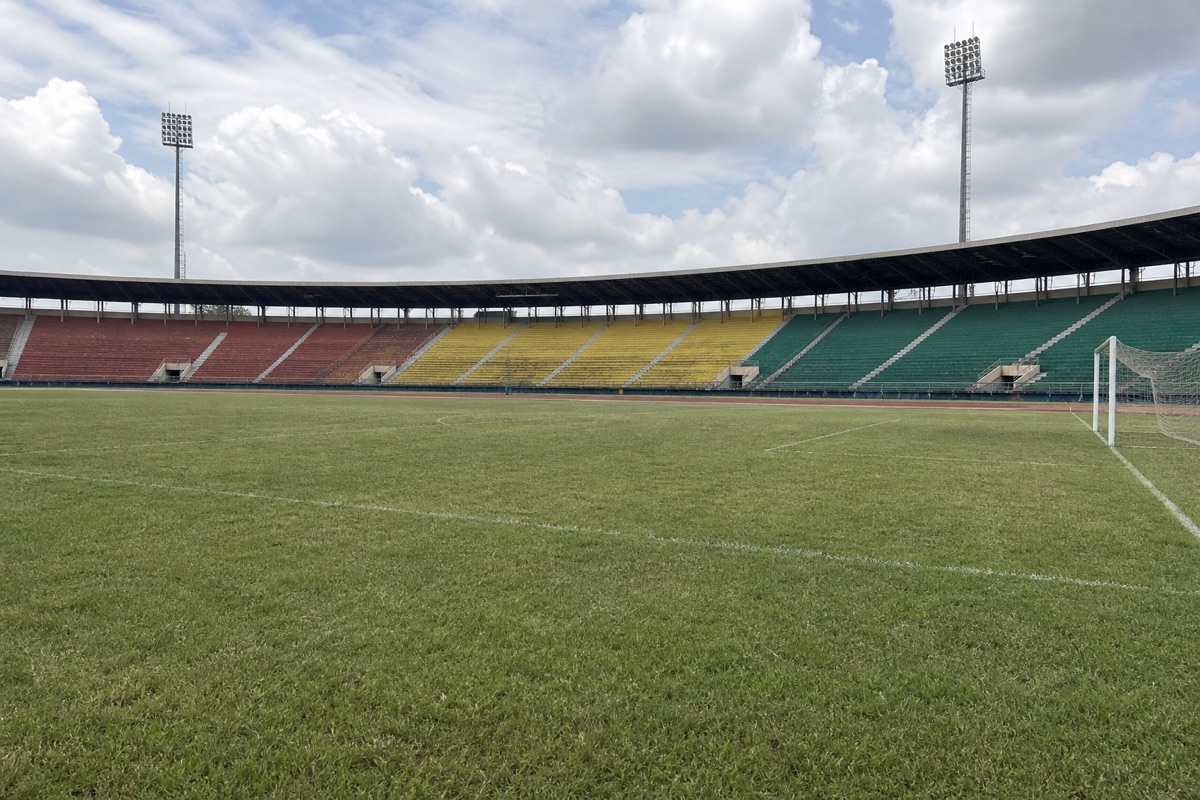
The fallout was concrete. National competitions were suspended. Several stadiums closed their gates. Clubs and footballers were left in limbo, unsure when, or whether, organised play would return to its usual rhythm.
The damage spread well beyond the pitch. Careers stalled as young players lost competitive seasons. Sponsors grew cautious, reluctant to commit money to a structure mired in dispute. Supporters, for their part, drifted toward disillusion.
That erosion of confidence is hard to reverse quickly. Trust between institutions, investors and fans tends to take years to build and only moments to lose. The Brazzaville talks acknowledged that reality rather than glossing over it.
What a reopening would mean for clubs and fans
In response, the authorities announced an imminent resumption of the national championship. A phased reopening of stadiums is meant to accompany the restart, allowing crowds to return gradually rather than all at once.
For clubs, a fixed calendar would bring overdue stability. Squads could plan, train with purpose and chase results that matter again. For players, especially younger ones, regular fixtures offer a stage that two idle years had taken away.
For supporters, the prospect of open gates carries its own weight. Match days anchor local life in Brazzaville, Pointe-Noire and across the departments. Their return would restore a familiar weekend rhythm that the crisis had quietly stripped away.
Small businesses around the grounds stand to benefit too. Vendors, transport operators and neighbourhood traders all feel it when stadiums fall silent. A cautious, staged reopening hints that everyday economic life linked to football could slowly revive.
Governance reform as the real test
Beyond restarting matches, officials framed the deeper challenge as structural. The stated goal is a calmer, more transparent governance, aligned with international standards, rather than a quick return that leaves old fault lines untouched.
That ambition will be tested in the months ahead. Announcing a resumption is one thing; sustaining credible institutions is another. The lesson of the past two years is that fragile arrangements collapse the moment disputes resurface.
There is also the question of expectations. Fans and partners want visible progress, not promises. A reopened league that runs smoothly would do more to rebuild confidence than any communique, however well-intentioned the language at Saturday’s meeting.
For now, the tone is one of cautious optimism. The willingness to talk, to share responsibility and to commit to clearer governance marks a shift from the entrenched positions of recent seasons. Whether it holds is the open question.
A fragile but real opening
Saturday’s meeting did not end the crisis on its own. It did, however, narrow the distance between actors who had spent two years talking past each other, and that alone counts as progress in Congolese football’s slow recovery.
The coming season will reveal how serious this reset truly is. If competitions resume on schedule and stadiums fill again without fresh quarrels, the Brazzaville talks may be remembered as the turning point. If not, the impasse risks returning.
For supporters across Congo-Brazzaville, the immediate hope is simpler: a whistle, a packed stand and a championship that actually plays out. After two years of silence, even a cautious restart would feel, for many, like the game coming home (journaldebrazza.com).