
Brazzaville’s flagship facility for sickle cell disease will run on a leaner purse next year. The board overseeing the centre signed off on a 2026 budget that tightens spending while leaders insist the fight against the illness is far from finished.
A Leaner 2026 Budget for the National Sickle Cell Centre
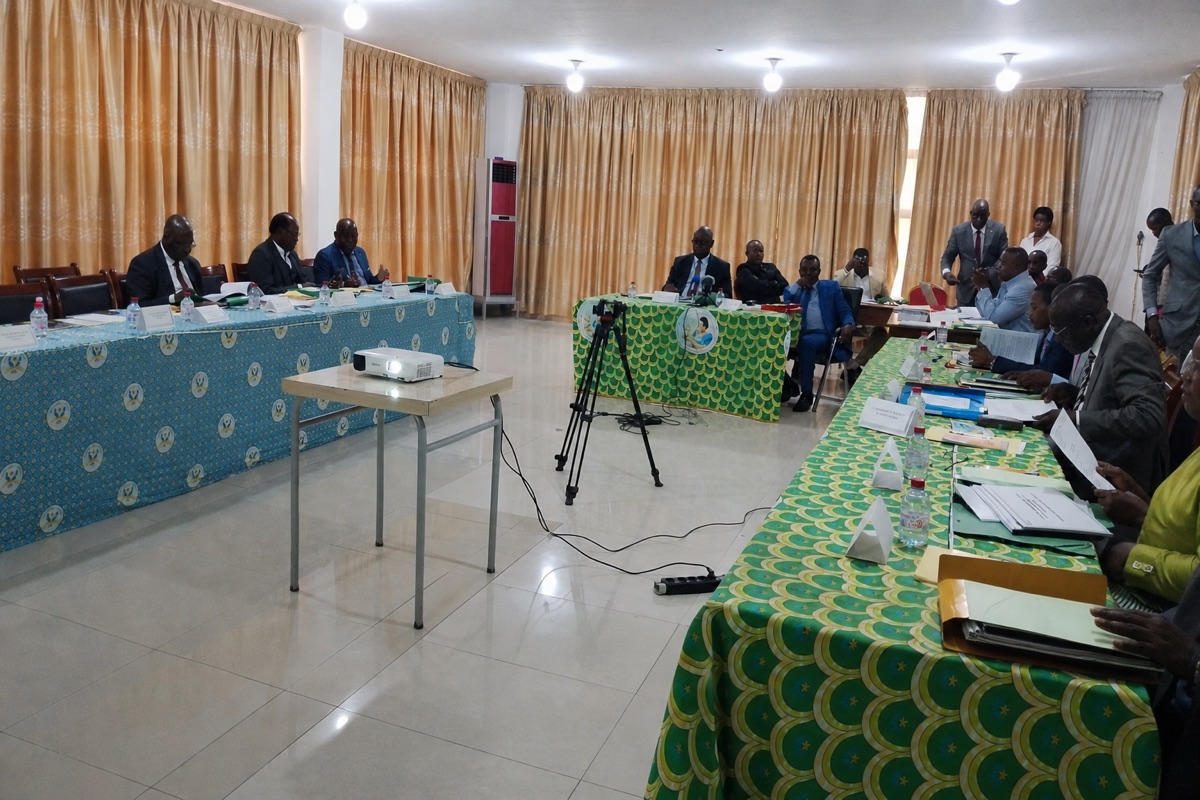
The board of the Centre national de référence de la drépanocytose Antoinette-Sassou-N’Guesso, known as the CNRDr, met on 20 March in Brazzaville and approved its operating plan for the year ahead.
The budget was balanced in both income and expenditure at 1,137,331,750 FCFA, roughly 1.1 billion FCFA. That figure marks a contraction of 21.44 percent compared with the previous financial year, a notable squeeze for a specialised health institution.
Such a reduction reflects the kind of careful accounting that public bodies across Congo-Brazzaville have had to embrace. For a centre treating a chronic, lifelong condition, every franc carries weight in the daily care of patients.
What the Board Reviewed and Approved
Members worked through a full agenda, and each item passed after amendments rather than rubber-stamping. The board adopted the minutes of its eighth session before turning to the institution’s performance over the past year.
The 2025 annual activity report came under scrutiny, covering the technical review, the administrative account and the management account. These documents trace how the centre spent its money and delivered care to families living with the disease.
Crucially, both the administrative account and the management account were certified by the directorate general of public accounts and state assets. That external sign-off lends weight to the centre’s figures and signals a measure of financial discipline.
“Successes Are Still Partial,” Says the Director General
For all the procedural progress, the tone from leadership was measured rather than triumphant. The man at the helm of the institution made clear that gains, while real, remain incomplete and fragile across the population.
“This board meeting allowed us to note that there are important successes, but these successes are still partial, because awareness-raising is insufficient” (Pr Alexis Elira Dokekias, director general of the CNRDr).
His words point to a persistent challenge in public health here. Medical treatment can advance, yet without broad public understanding of sickle cell disease, prevention and early care continue to lag behind the centre’s clinical ambitions.
Awareness campaigns reach families, schools and communities, but the director general’s candour suggests they have not yet gone far enough. The gap between clinical capacity and public knowledge frames much of the centre’s road ahead.
Dialysis Costs Under Review
Beyond the headline figures, the board issued recommendations meant to reshape how the centre operates. One of the most practical concerned the price of dialysis, a treatment that many patients with advanced complications depend upon.
The board called for a review and standardisation of the cost of each dialysis session so that charges align with the real cost of running the service. Such recalibration could affect both the institution’s balance sheet and the burden borne by patients.
Standardising these costs is a delicate exercise. Set them too high and care drifts out of reach for struggling families; set them too low and the service strains an already reduced budget. The board’s wording leaves room for that balance to be struck.
Rewriting the Rules and Eyeing a Transplant Unit
The board also looked at the legal architecture underpinning the centre. It recommended revising the decree that governs the organisation and functioning of the CNRDr, a move that could modernise how the institution is structured and managed.
More ambitiously, members pushed for stronger advocacy to fund a haematopoietic stem cell transplant unit within the centre. Such a facility would represent a significant leap in the treatment options available to patients in Congo-Brazzaville.
A stem cell transplant unit could, in principle, offer a path toward cure rather than lifelong management for some patients. Yet the call for advocacy underlines that the money for such a project is not yet secured and will require sustained effort.
Reading Between the Lines of the Numbers
Taken together, the decisions sketch a centre trying to do more with less. A trimmed budget sits alongside ambitions for advanced care, a tension that will test the institution’s management over the coming year.
The certification of its accounts and the methodical adoption of reports suggest an institution intent on credibility. Whether that rigour, paired with stronger awareness efforts, can offset a 21 percent budget cut remains the open question hanging over 2026.
For the families it serves, the stakes are intimate rather than abstract. Behind the accounting lines and decrees lie children and adults whose lives depend on whether this centre can stretch a smaller budget without thinning the care they receive.