
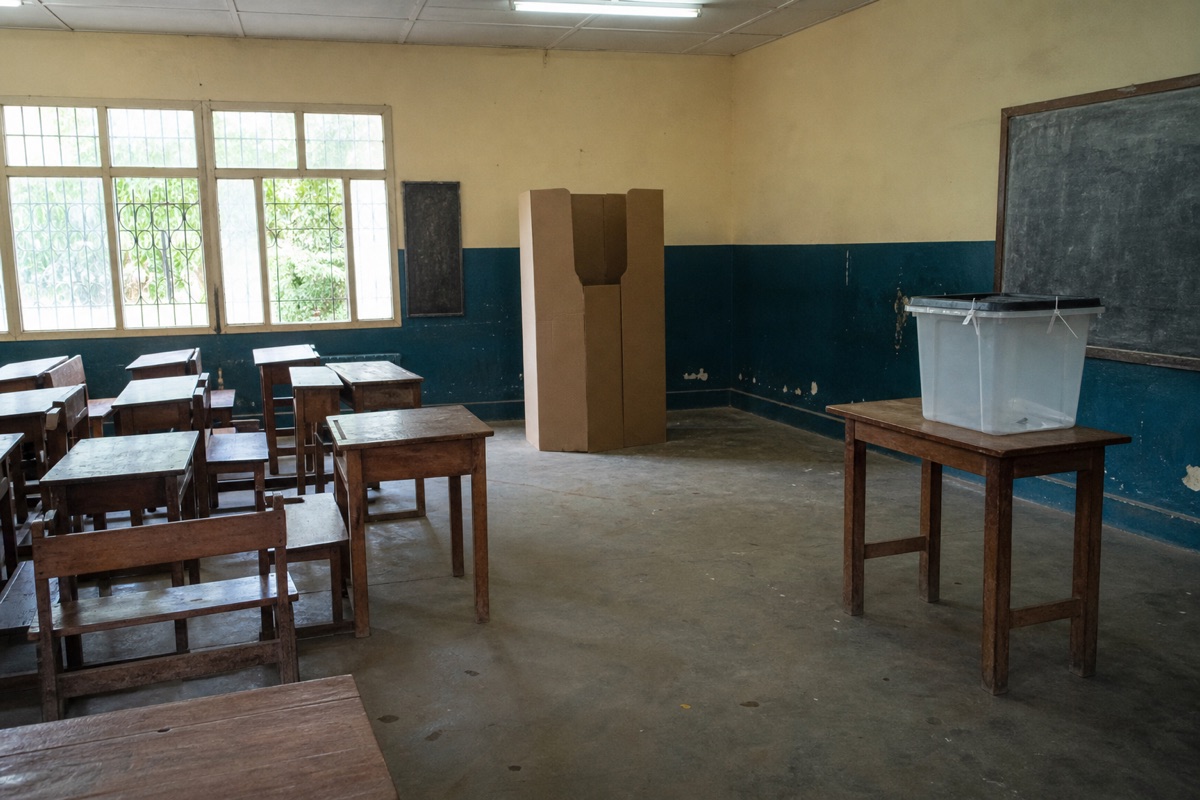
Polling stations across the Republic of the Congo opened on Sunday morning for the presidential election. Yet in several centres, and most visibly in Brazzaville, voter turnout looked unusually thin in the opening hours of the ballot.
A subdued morning in the capital’s centres
From 7 a.m., the official opening time, the picture repeated itself across districts of the capital. Half-empty rooms, electoral agents standing idle, and voters trickling in one by one rather than queuing in the numbers a presidential vote usually draws.
At Pierre Ntsiete primary school, one of Brazzaville’s designated voting centres, citizens turned up only sporadically. The scene was a long way from the busy lines and early-morning crowds that typically mark a national election day in the city’s neighbourhoods.
That early calm matters. Turnout is often read as a barometer of public mood, and a slow start can shape how the day, and its eventual result, are interpreted. Whether the pace picked up later in the day was not yet clear at the opening.
Who is on the ballot
This is a single-name, two-round contest involving close to 2.5 million registered voters. The size of that electorate gives the morning’s quiet rooms added weight, since even modest early participation rates can translate into large absolute numbers later.
The outgoing head of state, Denis Sassou Nguesso, 82, is seeking a fresh mandate after a cumulative forty years in power. His long tenure has made him the central reference point of the country’s political life for much of the past four decades.
Facing him are six other candidates. They are competing for an electorate whose engagement, at least in the first hours of voting, appeared to hold back rather than surge. The contrast between a veteran incumbent and a crowded challenger field framed the day.
Logistics slow the start in some centres
Low attendance was not the only issue reported at the opening. In a number of stations, the full set of electoral material had not yet arrived by the time doors were due to open, delaying the effective start of operations in several centres.
Such hold-ups are familiar pressure points on election mornings. When ballots, registers or equipment lag behind schedule, agents cannot begin properly, and the first voters can be turned back or asked to wait, which risks dampening an already cautious turnout.
The combination of sparse crowds and a stop-start opening gave parts of Brazzaville an oddly muted feel for a day meant to decide the country’s leadership. For voters arriving early, the wait added friction to a civic act many treat as routine.
What the timetable allows for next
Polling was set to close at 6 p.m. local time, which is 5 p.m. GMT. That window gives latecomers and after-work voters a chance to lift participation well beyond the levels recorded in the slow opening stretch of the morning.
The rules also map out what happens if no clear winner emerges. Should no candidate secure an absolute majority in the first round, a second round is in principle scheduled within 21 days of the proclamation of results, keeping the contest open.
For now, that runoff remains a conditional prospect. The official date for any second round had not been announced, leaving both the timing and the eventual shape of the outcome to be settled once the count is complete and the figures are made public.
Reading the early signals with care
A quiet opening does not, on its own, decide an election. Turnout can build through the day, and morning snapshots from a handful of centres are only a partial view of a nationwide vote spread across the capital, Pointe-Noire and the departments.
Even so, the early scenes in Brazzaville offered a tangible sense of the day’s mood. Empty corridors, waiting officials and the occasional voter told their own modest story while the larger national picture was still taking shape hour by hour.
What can be said with confidence is narrow but firm. The vote opened, attendance started low in several Brazzaville centres, some stations faced material delays, and the timetable allows for a possible second round whose date is still pending (Journal de Brazza).
The hours after the opening will determine whether the morning’s hesitancy was a genuine signal or simply the slow rhythm of a long voting day. Until the close at 6 p.m. and the count that follows, the early quiet remains a snapshot rather than a verdict.