
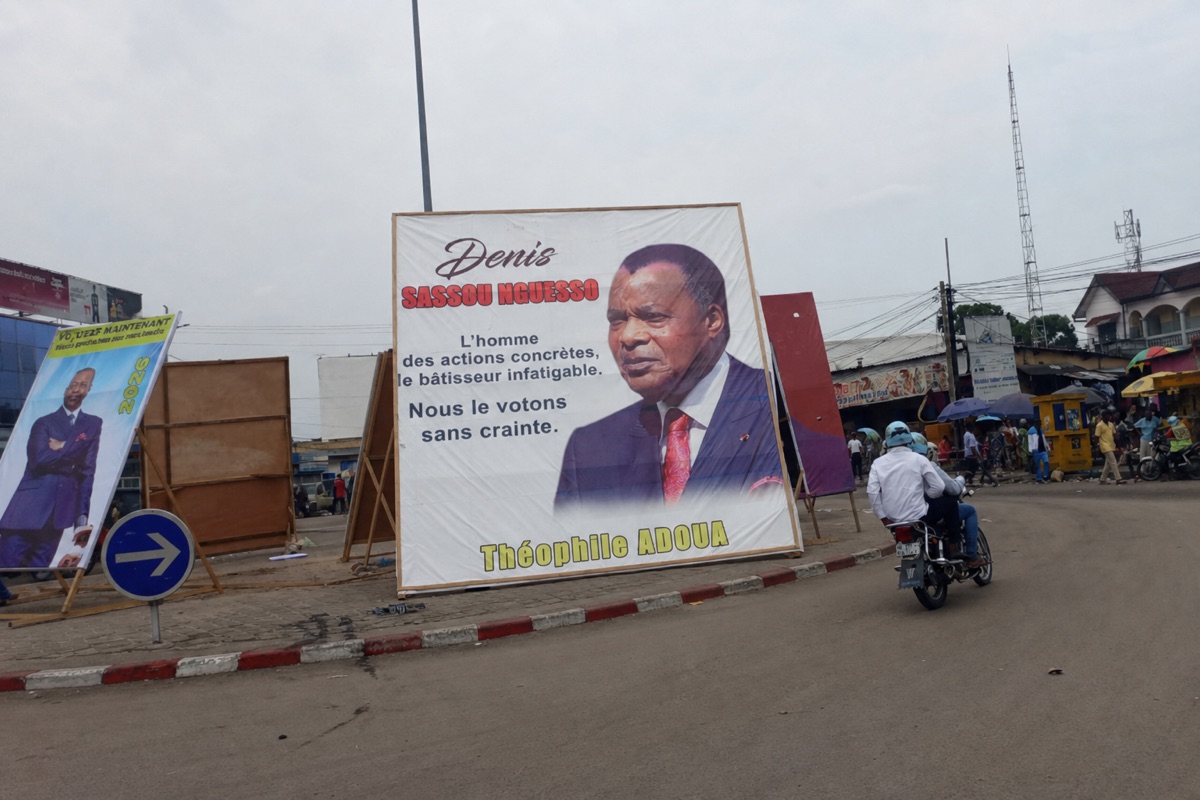
In Congo-Brazzaville, the final stretch before the March 15 presidential election is under way. Across Brazzaville, Pointe-Noire and the departments, conversations are turning to one familiar question: who will actually show up at the polling stations on voting day?
Incumbent president Denis Sassou Nguesso is seeking a fifth consecutive term. He faces six other candidates in a contest that, on paper, offers voters a wide field of choices. Yet the central debate is less about names than about the energy, or quiet, surrounding the campaign itself.
A campaign measured by the size of its crowds
For many citizens, the temperature of an election is taken in the streets long before the ballots are counted. The pressing question circulating in homes, markets and on the airwaves is simple. Is the campaign drawing crowds, or is it passing by in relative indifference?
That uncertainty has become a story in its own right. Public broadcaster RFI gathered testimonies from Congolese listeners, asking them directly how they view this presidential race. The exercise put ordinary voices, rather than official statements, at the heart of the conversation.
Mobilisation matters because turnout shapes perceptions of legitimacy. A crowded campaign trail suggests appetite for the vote. A muted one invites questions about how engaged the electorate truly feels as the country prepares to choose its leader for the years ahead.
Seven names on the ballot, one familiar figure
The shape of the field is clear. Sassou Nguesso, already a long-standing presence in Congolese political life, is standing once more, this time for a fifth straight mandate. Around him, six challengers complete the list of candidates submitted to voters.
Numbers alone, however, do not settle a race. The presence of multiple contenders can widen the menu of options without necessarily reshaping the balance of forces. That tension, between a broad field and an established incumbent, frames much of the current discussion.
Can a divided opposition spring a surprise?
The other question dominating exchanges concerns the opposition. Several candidates stand against the incumbent, but they do so separately rather than behind a single banner. That fragmentation is at the core of the strategic debate now playing out.
A divided opposition spreads its support across multiple names. Whether such dispersion can still produce an upset, or whether unity would have offered a stronger path, is precisely what listeners and observers are weighing as the campaign enters its decisive days.
For some, the spread of candidates reflects genuine pluralism and the right of each contender to make a case to voters. For others, it raises a familiar dilemma about how scattered votes translate, or fail to translate, into a real challenge at the ballot box.
Why citizen voices carry weight now
What gives this moment its texture is the decision to listen to the public rather than only to political actors. By collecting reactions from across the country, RFI offered a snapshot of how the vote is perceived from the ground up, in the days before polling.
Those testimonies do not predict a result. They do, however, capture the mood: the curiosity, the hesitation and the calculations of people preparing to take part. That mood, more than any single declaration, often signals how a campaign is truly landing.
What to watch as March 15 approaches
With the date set and the candidates known, attention now shifts to the closing days of campaigning. The visible measure will be the crowds, the conversations and the willingness of voters to engage with a contest whose outcome many are still assessing.
The two questions raised by citizens remain open. Will the campaign succeed in mobilising the population, and can an opposition spread across several candidates turn that energy into a genuine surprise? Both will be answered, in part, by turnout itself.
For now, Congo-Brazzaville sits in that suspended interval familiar to any democracy on the eve of a vote. The arguments have been made, the field is fixed, and the decisive variable is the one no poster can guarantee: the people who choose to cast a ballot.
As March 15 nears, the country watches and waits. The reactions gathered this week suggest an electorate that is attentive and divided in its expectations, mirroring a race defined as much by the question of participation as by the names competing for the highest office.