
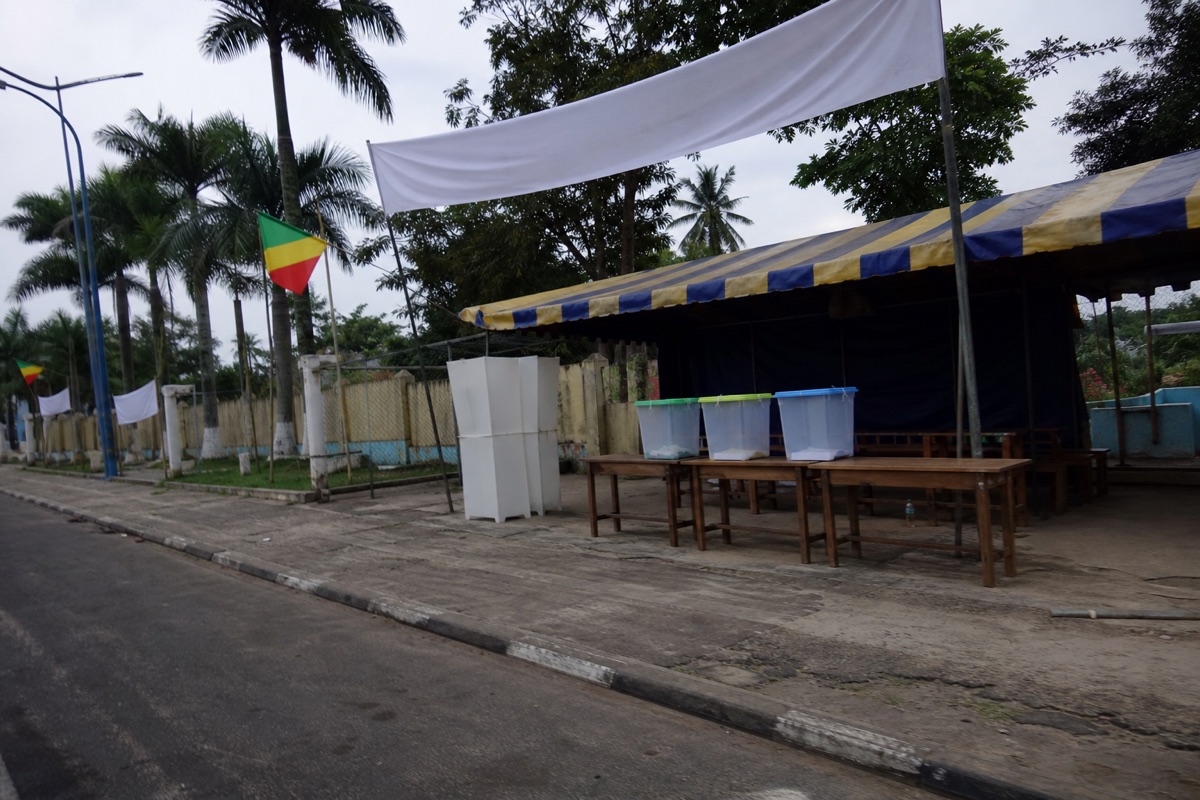
As Congo-Brazzaville counts down to its presidential election, the contest has shifted into a higher gear. The seven candidates spent this past week crisscrossing the country, chasing votes ahead of the March 12 and March 15 ballots.
A final week of campaigning across the country
The official campaign entered its closing stretch on Monday, March 9. Each hopeful brought a distinct style to the trail, fanning out across every corner of the country to win over undecided voters.
Local rallies unfolded in a notably relaxed atmosphere. The good-natured mood reported across the towns and districts visited points to gatherings that have, so far, stayed calm and orderly as the race tightens.
TV debate puts the candidates’ platforms to the test
The campaign also played out on screens. On the “Nouvelle chaîne africaine,” a televised debate brought together the spokespeople of four candidates: Denis Sassou N’Guesso, Joseph Kignoumbi Kia Mboungou, Dave Mafoula and Destin Gavet.
The exchanges were lively. Standing in for their respective candidates were Juste Désiré Mondelé, Eugène Mboungou Bilong, Xavier Kitsimbou and Chris Antoine Walembaud, each tasked with defending the broad outlines of their leader’s platform.
These representatives laid out competing visions for the country. The debate gave viewers a side-by-side look at the program each camp is pitching, in a format designed to draw clear contrasts before voters head to the polls.
A shared promise to respect the ballot box
For all the sparring, the tone stayed measured. At the close of what participants described as a “democratic confrontation,” the four spokespeople made a striking shared pledge: to abide by the verdict of the ballot box.
That commitment matters in a high-stakes race. By promising to defer to the arbitration of the polls, the candidates’ camps signaled their intent to keep the contest peaceful, whatever the outcome on election day.
Transparency and the role of polling-station agents
One theme ran through the televised exchange more than any other: transparency across the whole process. The candidates’ teams framed credible procedures as the foundation for an outcome everyone can accept.
Under the rules, all seven candidates are required to station delegates in the roughly 6,000 polling stations spread across the country. Their presence is meant to keep watch over the count from the ground up.
The official tally sheets are central to that safeguard. Duly validated and posted in front of each polling station, these results are intended to make the final outcome verifiable, and acceptable, to every camp in the race.
What to watch before March 12
With voting set for March 12 and March 15, the coming days will test whether the calm seen on the campaign trail holds through the count. The candidates have made their pitches; attention now turns to the logistics of the vote itself.
The network of delegates and the posted tally sheets will be the practical measure of the transparency the debate spotlighted. For voters, the closing week offers a last chance to weigh seven competing visions for the country’s direction.