
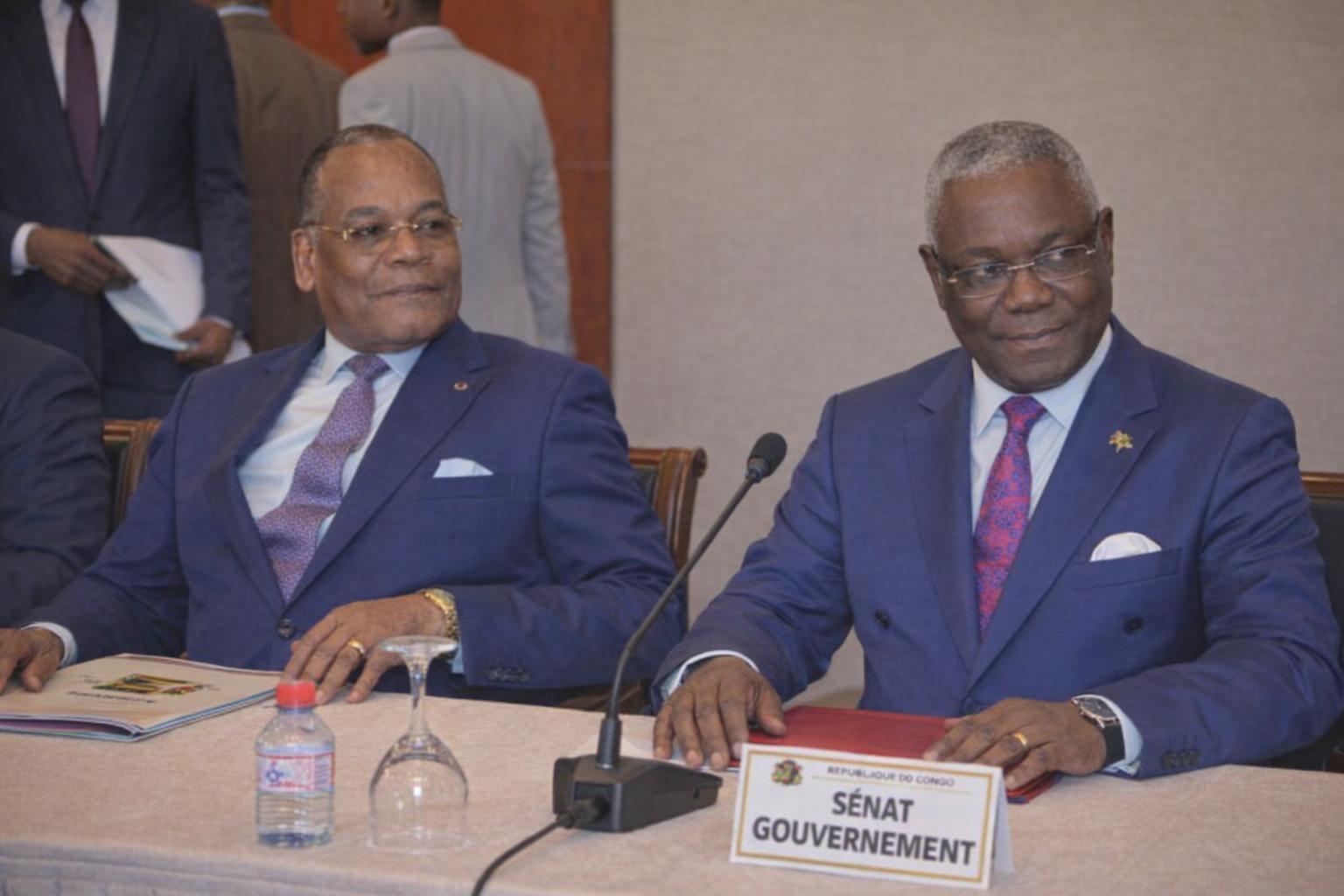
Security briefing ahead of Senate session
The Conference of Presidents held its eighth session as a prelude to the Senate’s eighth ordinary session, scheduled to open on Sunday, February 1. The meeting was marked by a government communication on the security situation in the departments of Pool and Djoué-Léfini.
Speaking to the press, the Senate’s second secretary, Elisabeth Mapaha, said the government’s presentation helped the Conference of Presidents better understand the efforts being made to preserve peace in the two departments. She did not disclose operational details.
Government efforts to preserve peace in Pool and Djoué-Léfini
According to Elisabeth Mapaha, the communication focused on steps taken by the government to maintain stability and protect communities. The message, delivered in the institutional setting of the Conference of Presidents, was framed as an update meant to inform lawmakers as the Senate prepares its work.
For many families and businesses, security updates matter beyond politics. They shape daily mobility, local economic activity, and public confidence. Senate leaders signaled that the chamber is following developments closely through official channels.
Senate agenda: six items on the table
On the legislative agenda for the upcoming session, the upper house listed six matters. Elisabeth Mapaha described them as three “older” files and three “classic” items that typically structure a session’s work.
The “older” files include a draft law establishing a Mining Code in the Republic of Congo, a draft law to create the National Authority for Investigations and Analysis to prevent civil aviation accidents and incidents, and a proposed law related to reproductive health in Congo.
Oversight and accountability items for 2025
The “classic” items on the program include the clearance of the Senate’s accounts for the 2025 fiscal year. This step is part of routine internal accountability and helps document how the institution’s budget has been used.
The agenda also includes oral question sessions with debates, as well as topical questions. These formats are designed to connect current public issues to parliamentary discussion, and they can help clarify government action on priority files.
Room for urgent business during the session
Elisabeth Mapaha added that the Senate remains ready to receive new matters from the government during the session, depending on urgency. The statement points to a flexible workflow so that emerging priorities can be addressed without waiting for the next parliamentary calendar.
In practice, that openness allows the government and the chamber to adapt to evolving needs, while keeping the session organized around its core program. It is a common feature of parliamentary work during ordinary sessions.
Leadership present at the ceremony
The ceremony was chaired by Senate President Pierre Ngolo and attended by the Head of Government, Anatole Collinet Makosso. Their presence underscored the institutional coordination between the executive and the upper house at the start of the parliamentary sequence.
With the opening set for February 1, senators are expected to move from preparatory consultations to formal sittings, balancing legislative files, internal governance, and oversight debates, including updates provided by the government on national priorities.