
Congo-Brazzaville utilities: a “satisfactory” five-year balance
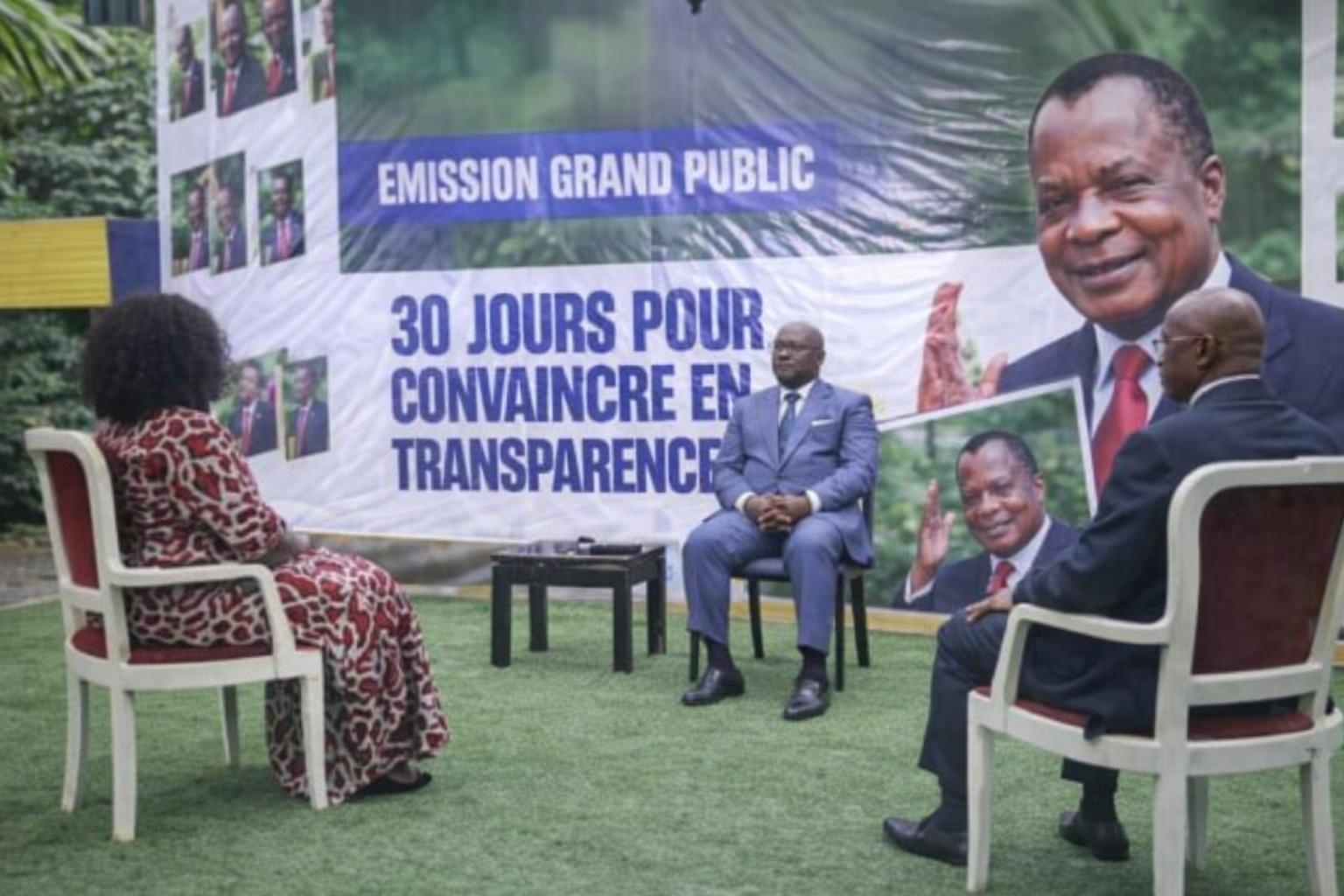
Speaking on the TV program “30 jours pour convaincre en toute transparence,” Energy and Hydraulics Minister Emile Ouosso assessed the last five years in electricity and drinking water supply as satisfactory overall.
In the same interview, Emile Ouosso regretted that the operators Énergie électrique du Congo (E²C) and La Congolaise des eaux (LCDE) sell electricity and water but, according to him, do not transfer money to the State. He framed this as a central governance challenge.
Brazzaville electricity supply boosted from Pointe-Noire
Emile Ouosso said the electricity situation is improving, notably with power generated in Pointe-Noire by the Centrale électrique du Congo now reaching Brazzaville. He emphasized that domestic production is sufficient for everyday consumption, while the main remaining bottleneck is transport and distribution.
For large industrial demand, including mining-related activities, the minister said additional infrastructure will still be needed. He added that the government is currently working to fix weaknesses across transmission and distribution so that generated power can reach users reliably.
Eni Congo grid rehabilitation and key substations
According to Emile Ouosso, improvements in power quality are linked to ongoing rehabilitation of the Pointe-Noire–Brazzaville line by Eni Congo. He said electricity previously struggled to reach Brazzaville because installations had become outdated.
He singled out issues at the Mindouli substation in Pool and the Loudima substation in Bouenza as major points of fragility on the corridor. In his account, recent efforts have focused on restoring these critical nodes to reduce losses and stabilize the grid.
770 MW production for 600 MW demand: access rises
Emile Ouosso stated that current electricity production is 770 megawatts, against needs he placed at around 600 megawatts. He also said the national access rate rose from 49% to 59% over the period discussed.
He noted that nearly 80% of Congo’s population lives in Brazzaville and Pointe-Noire, suggesting that progress in these two hubs has an outsized impact on national indicators. The minister presented this as both a challenge and an opportunity for rapid gains.
Côte Matève gas plant output and the “lost megawatts” issue
The minister highlighted the performance of the Côte Matève gas plant, which he said produces 484 megawatts. He described an allocation where two turbines supply Brazzaville for about 300 megawatts, and one turbine supplies Pointe-Noire for about 170 megawatts.
But he acknowledged a major constraint: of the roughly 300 megawatts intended for Brazzaville, less than 100 megawatts reportedly arrives. He attributed the gap to losses tied to an aging transport segment built in 1982.
World Bank, ENI and local funding for transmission repairs
Emile Ouosso said financing has been mobilized to tackle the transmission problem. He cited World Bank funding of 62 billion FCFA and financing from ENI of almost the same amount. He also said local resources of a similar scale have been raised.
He announced the arrival of capacitors for Mindouli and Loudima, with a capacitor at Mbouono in Brazzaville already installed. In his explanation, these upgrades are designed to strengthen the line and reduce technical losses as power is moved across long distances.
Imboulou dam: maintenance concerns and risk management
Asked about the Imboulou hydroelectric dam, Emile Ouosso recalled that it cost the State 170 billion FCFA for 120 megawatts and is conceded to Swiss operators. He said the infrastructure is now in an advanced state of deterioration.
He warned that Congo could face international legal action. He said one turbine has been stopped since 2018 and that a slab threatens to collapse. Emile Ouosso said E²C technicians, supported by the Bureau of control of buildings and public works, are working to limit damage.
Brazzaville drinking water: aging pipes and new boreholes
On drinking water, the minister said some Brazzaville installations, especially in the city center, date back to 1951. He said newer neighborhoods have benefited in recent years from more modern infrastructure, while older networks remain a heavy legacy for daily service.
To expand supply, he said the government built five boreholes for parts of the capital. Two were inaugurated at Patte-d’Oie and Nkombo. Boreholes at Mfilou, Mpissa and Talangaï, he said, will be commissioned in the near future.
Why electricity and water reliability are linked
Emile Ouosso connected water service interruptions to power cuts. He said that when electricity is unavailable, the Djoué and Djiri water plants stop operating. For him, this is a practical reason the government is prioritizing the “battle of electricity.”
In Pointe-Noire, he said boreholes under construction will be put into service in February, presenting this as part of the ongoing effort to stabilize urban supply. He insisted that concrete solutions exist, but they require both investment and operational discipline.
Reforms at E²C and LCDE: unlocking investment
The minister argued that large sums could be mobilized if E²C and LCDE are well managed and pay for what they sell. He said work is being done “in silence” with the two companies to improve performance, signaling a preference for results over public disputes.
He also said the government has announced the availability of operators ready to invest in water and electricity. Protocols were signed with partners including the United Nations Development Programme (UNDP) and the African Development Bank (AfDB), conditional on continuing reforms to improve governance and performance.
National Energy Pact: 9,616 billion FCFA and guarantees
Emile Ouosso referenced the National Energy Pact signed in New York, which he said represents 9,616 billion FCFA in planned investments. In his telling, funding is available, but the Congolese side still needs to provide commercial guarantees to move forward.
He said reforms in public finances and the public portfolio are expected to help. He expressed hope that by 2028 the State could regain full capacity to issue guarantees, while noting that, for now, such guarantees are not available.
He also said the State budget has not included dedicated maintenance line-items for these facilities. That gap, he argued, explains the call to private capital. He added that between 2000 and 2018 the State invested 1,500 billion FCFA in electricity, without “conclusive” results, reinforcing the push for stronger governance.