
A Silent Epidemic Across the Republic
Standing before a packed auditorium in Brazzaville, cardiologist Professor Bertrand Elenga Mbolla reminded delegates that a quarter of Congolese adults live with hypertension, often without knowing it, making the condition a leading silent threat to national wellbeing.
Data presented at the recent Scientific Days on Hypertension show prevalence hovering between twenty-five and twenty-six percent, mirroring the wider sub-Saharan average, yet complicated by local disparities linked to lifestyle, urbanisation, diet and unequal access to regular screening.
Experts agree that untreated high blood pressure fuels strokes, heart attacks and kidney disease, already responsible for thousands of preventable deaths each year, and they warn that the financial burden on families and the health system will swell if detection remains low.
Scientific Days Put Data in Spotlight
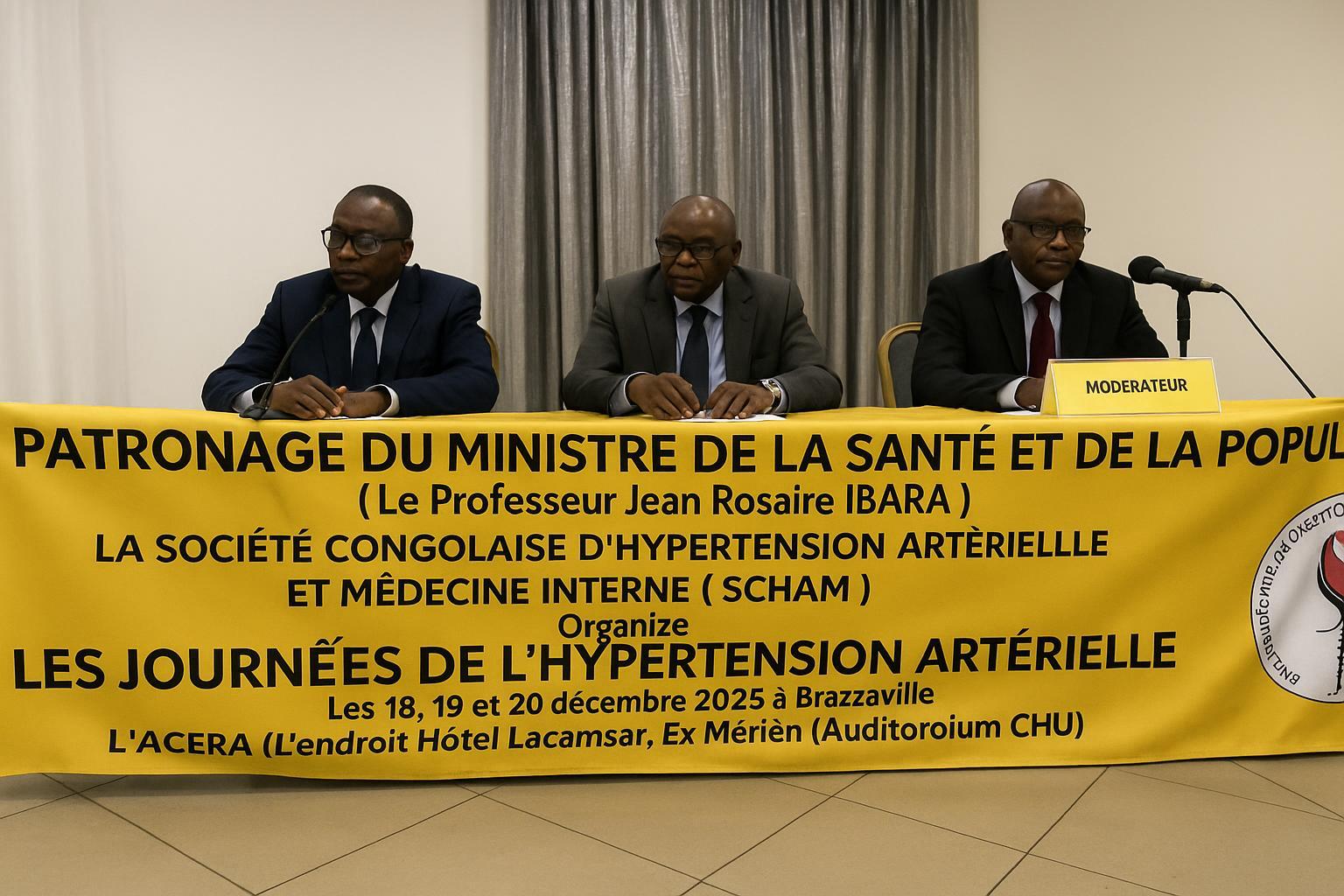
The December meeting, co-chaired by Health Ministry chief of staff Donatien Moukassa and Professor Mbolla, drew physicians from Brazzaville, Pointe-Noire and even Bangui for thirty-five lectures, thirty-six oral communications and two very practical electrocardiogram workshops.
Under the banner Hypertension and Public Health, presenters unpacked epidemiology, diagnosis, prevention and treatment, insisting that better primary care protocols and reliable monitoring devices could swiftly improve outcomes if paired with sustained community education.
Findings will be archived for policymakers, and organisers say the event will henceforth be annual, giving clinicians a shared dashboard to track progress toward the national goal of curbing cardiovascular mortality by the end of the decade.
Government Initiatives Strengthen Care
The government has increased investment in specialised units inside new departmental hospitals, expanded the Universal Health Insurance Fund and launched the National Institute of Biology and Health Surveillance to coordinate early warning and research on non-communicable diseases.
Officials highlight that insured patients now receive subsidised antihypertensive drugs, while electronic registries being piloted in Brazzaville clinics should soon give nurses real-time dashboards to flag missed appointments and adjust therapy faster.
Outside the capital, solar-powered telemedicine booths are being tested along busy transport corridors, letting commuters drop in for a quick blood pressure check and instant referral before minor symptoms turn severe.
Within the same reform package, specialists receive refresher training on interpreting kidney filtration rates, an early marker of hypertension-related damage, enabling them to tailor treatment before complications such as chronic renal failure demand more expensive dialysis.
Lifestyle Choices Shape Blood Pressure
Clinicians stress that hypertension rarely originates from genes alone; salty processed food, sedentary habits, excess weight, alcohol and tobacco remain the main culprits, factors that have risen with rapid urban growth.
Dr Moukassa told reporters that simple decisions such as opting for fresh market produce, walking short distances, or measuring salt with a teaspoon can keep systolic pressure within safe limits and save households hefty hospital bills.
Public campaigns timed with popular football matches and radio talk shows are planned to reinforce these messages, banking on community leaders and digital influencers to translate medical jargon into everyday advice.
Researchers attending the forum noted that glomerular filtration assessments, now routine in tertiary hospitals, could soon reach district facilities, helping physicians connect high salt intake with impaired kidney clearance and adjust medication dosages with greater precision.
Mobile Screening Bridges Urban–Rural Gap
Since 2005, Professor Mbolla’s team has spent every May touring villages, farms and city markets, bringing portable cuffs and counselling materials to people who rarely visit a clinic unless symptoms become alarming.
In last year’s campaign more than six thousand adults were screened; forty-one percent had elevated readings, and half of those were entirely unaware, underscoring the value of going to the patient rather than waiting in hospital corridors.
Partnerships with local administrations ensure that follow-up visits include nutrition workshops and group exercise sessions on school playgrounds, promoting a climate of shared responsibility rather than one-off medical interventions.
Challenges Still Casting a Shadow
Despite progress, half of hypertensive citizens remain undiagnosed, and medicine stock-outs in remote districts can interrupt therapy, causing dangerous rebounds in pressure levels.
Workforce gaps persist; one recent survey counted fewer than two hundred cardiologists for a nation of six million, compelling many general practitioners to juggle complex cases alongside everyday ailments.
Civil society groups argue that more affordable digital cuffs and a national text-message alert system could empower families to monitor at home between clinic visits, easing pressure on frontline staff.
To tackle drug costs, the Ministry is negotiating bulk procurement deals with generic manufacturers, a strategy expected to lower retail prices by up to thirty percent once new contracts take effect next quarter.
Experts Call for Unified Action
Closing the forum, Professor Mbolla praised the ministry’s leadership and urged all stakeholders, from insurers to food processors, to integrate blood-pressure goals into their strategies, saying ‘Cardiovascular health is not the business of hospitals alone—it’s everyone’s business’.
A final communique promised quarterly progress reviews and fresh collaborations with regional partners, aligning Congo’s fight against hypertension with continental targets set by the African Union for non-communicable diseases.